Putin Agrees to Trilateral Ceasefire Talks — What Changes Now
Putin has signaled willingness to resume trilateral ceasefire negotiations with the US and Ukraine, while Zelenskyy floats freezing along current front lines. The move could redraw military aid flows and fracture NATO cohesion if it sticks.
The line in the sand
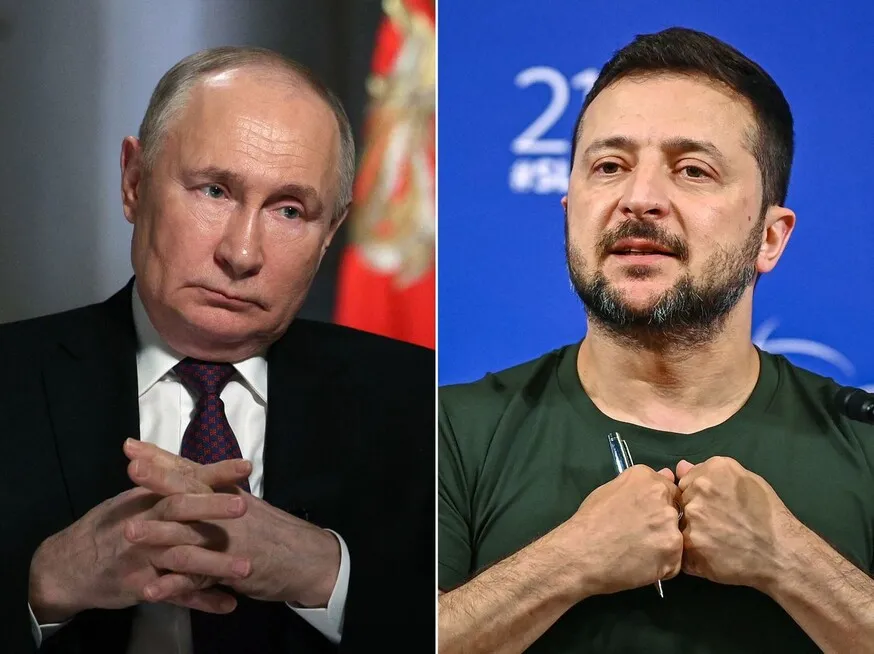
Nine months of stalled peace talk have moved with unusual speed. Vladimir Putin agreed in principle to resume trilateral negotiations with the United States and Ukraine, according to Kremlin aide Yuri Ushakov. The talks, possibly held in Abu Dhabi after November 10, would focus on a postwar security architecture between Moscow and Kyiv.
Volodymyr Zelenskyy told Fox News the same day that freezing the war along current front lines is now Ukraine’s position. He called it a realistic way to end the fighting — and described it as the minimum Ukraine currently demands from Russia.
The shift is significant. Kyiv had insisted on Russian withdrawal to the 1991 borders as a non-negotiable starting point. That demand has now softened to a line-of-contact freeze, the kind of arrangement that has frozen conflicts in Transnistria, South Ossetia, and Donbas before.
What makes this moment different is the involvement of Washington as a direct party. Previous Ukrainian-Russian talks in 2022 took place through Turkish mediation or backchannel contacts. This time, the United States is sitting at the table with both sides — a structure that mirrors the North Korea peace process framework and raises questions about whose interests are being prioritized.
What the numbers say
The Russian army has made incremental gains over the past year but has failed to achieve its stated objectives of capturing Kharkiv, Odesa, or toppling the government in Kyiv. Ukraine has retained its southern corridor to the Black Sea and continues to receive substantial Western military aid.
A ceasefire along the current line of contact would likely leave millions of people under Russian control in eastern and southern Ukraine — territory larger than some European countries. Donetsk and Luhansk regions would remain largely occupied. Zaporizhzhia and Kherson fronts would stabilize where they are now.
The human cost of that scenario is measurable. International organizations have estimated roughly ten million Ukrainians displaced, with significant portions living in areas that would fall on the wrong side of a frozen line. The infrastructure damage across these territories exceeds $150 billion according to World Bank assessments, with reconstruction costs that could consume Ukraine’s GDP for a decade even under optimistic scenarios.
Critically, a freeze would not resolve the status of Crimea, which Russia annexed in 2014. The peninsula remains outside the proposed line-of-contact framework, leaving Ukraine’s Black Sea access partially constrained and creating a perpetual grievance that could reignite conflict.
Who wins and who loses
For Russia, a frozen conflict preserves territorial gains without further expenditure of blood and materiel. It also denies Ukraine NATO membership in the near term — a core Russian war aim. The Kremlin can frame the outcome domestically as a victory, pointing to controlled territories and the absence of further mobilization orders.
For Ukraine, the freeze offers a pause, not peace. It buys time to rebuild forces and seek security guarantees from Trump and European capitals. Whether those guarantees materialize depends on American politics and European capacity, both of which remain uncertain. The risk is that a frozen conflict becomes permanent — similar to Georgia’s situation, where limited international attention has allowed Russia to maintain de facto control over occupied territories without meaningful consequences.
For the United States, a deal offers Trump a foreign policy victory ahead of the midterm elections. The president has consistently criticized unlimited aid to Ukraine while simultaneously recognizing the strategic importance of preventing Russian expansion. A negotiated settlement allows him to claim he achieved both objectives — stopping the fighting while maintaining deterrence through diplomatic engagement.
The aid recalibration
Military assistance flows will be the first measure of what this deal means. European defense budgets were already trending upward before any talks. A ceasefire could slow that acceleration — or redirect it toward longer-term reinforcement of Poland, the Baltic states, and Finland.
Germany has committed to substantial increases in defense spending. France has shifted toward a more independent strategic posture. The UK has restructured its armed forces for high-intensity conflict.
Any ceasefire that does not include enforceable security guarantees for Ukraine risks becoming a pause rather than an endpoint. Armed factions on both sides could resume fighting with little warning — as happened in 2022 before the full-scale invasion. The Minsk agreements, signed in 2014 and 2015, demonstrated how quickly frozen conflicts can thaw into renewed violence when neither side commits to implementation.
NATO’s unity test
The alliance has shown remarkable cohesion since 2022. A rushed ceasefire that leaves Ukraine vulnerable would test that unity. Eastern European members, particularly Poland and the Baltics, have consistently argued for a strong deterrence posture. Their security calculus depends on visible American commitment — not just rhetoric.
If Washington moves toward a deal without European consultation, it could create friction at the next NATO summit. The question is whether Europe can sustain its defense buildup independently if American leadership shifts away from Ukraine. Germany’s recent defense procurement decisions suggest preparation for exactly this scenario, with increased investments in air defense, artillery ammunition, and naval capabilities for the Baltic Sea.
The China angle
Separately, Russia is pushing for a trilateral meeting between Trump, Putin, and Xi Jinping at the APEC summit in Shenzhen on November 18–19. According to Ushakov, China is preparing for this encounter.
Trump told reporters the meeting would focus on nuclear issues and denuclearization rather than Ukraine. That framing is telling. It suggests Washington wants to separate the China competition from the European theater — a diplomatic choice with its own risks. By isolating the Ukraine discussion from broader geopolitical competition, the administration may be underestimating how interconnected these theaters have become.
China’s stance on the Ukraine war remains formally neutral but practically favorable to Russia. Beijing has provided economic lifelines that sustain the Russian war effort while stopping short of direct military assistance. A successful US-Russia deal could alter this calculus, potentially bringing China into a more constructive role — or convincing Moscow it needs fewer Chinese concessions in other areas.
What happens next
The next weeks will be decisive. Practical-level negotiations between technical teams will determine whether the political signals translate into something actionable.
If a line-of-contact freeze holds, the immediate effect will be a reduction in active combat deaths and a shift in Western military aid from ammunition deliveries toward long-range systems and air defense. Ukraine will need these capabilities to deter renewed Russian attacks during any demilitarized zone implementation.
If the talks collapse, Ukraine will face a renewed Russian offensive with depleted stocks and a political system questioning whether its Western partners honored their commitments. The domestic political consequences for Zelenskyy could be severe — particularly if Russian forces exploit a negotiation period to reposition troops and launch surprise attacks.
Either way, the architecture of European security is being renegotiated — and Ukraine is at the center of it. The question is whether the resulting framework provides durable stability or merely delays the next crisis.