America's Thermal Weapon at the Mexico Border
The US is trial-deploying an infrared crowd-control weapon at the Mexican border for the first time. It's a tactical gamble with legal and diplomatic fallout that could reshape how the world polices migration.
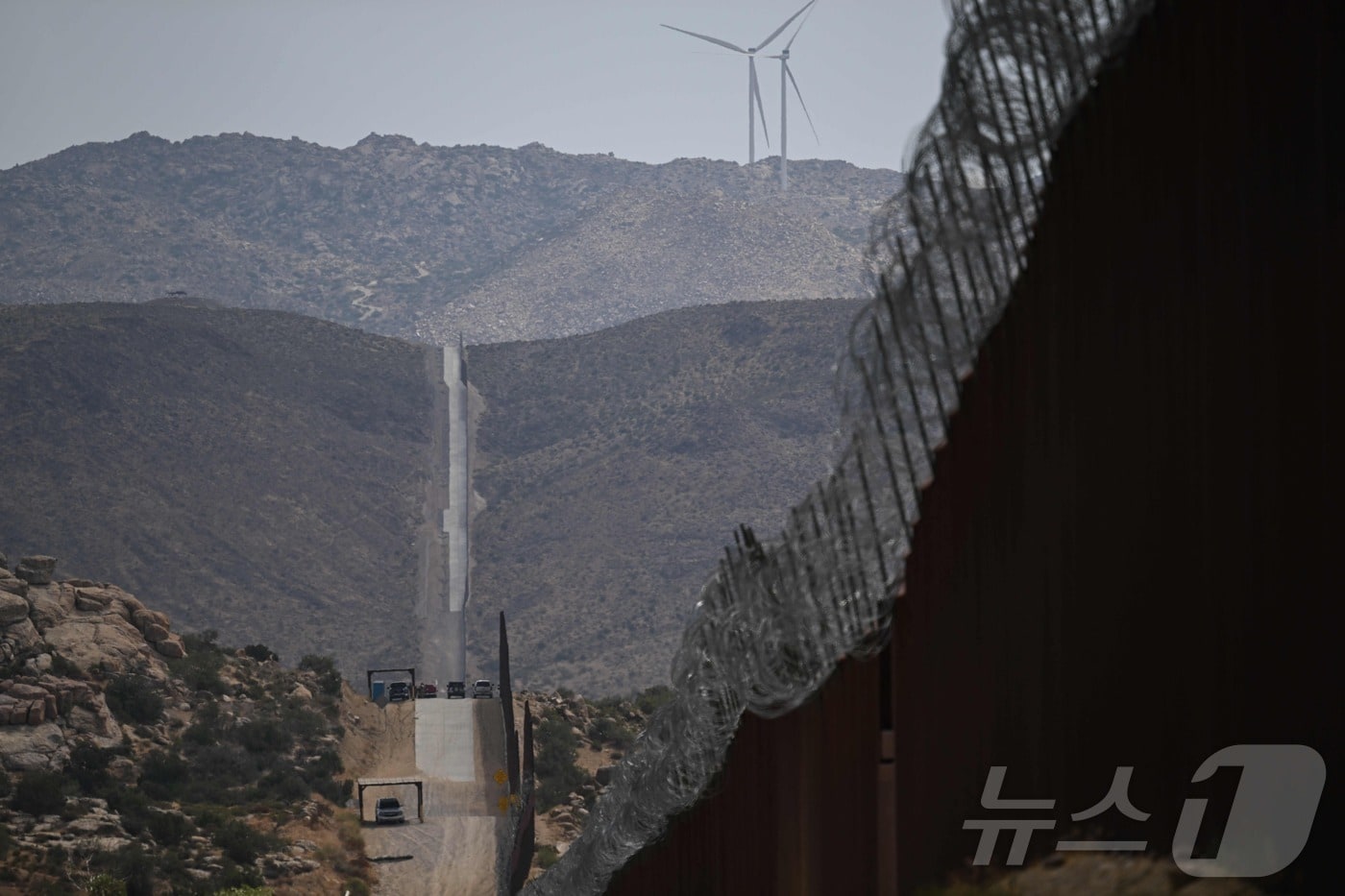
A weapon tested on migrants, not militants
The Pentagon has quietly handed the Department of Homeland Security a single Active Denial System for a seven-month trial along the southern border. First deployed by the military in Afghanistan nearly two decades ago, the device was never used in combat. Now, it may be pointed at people attempting to cross into the United States.
The ADS fires an invisible beam of millimeter-wave radiation that produces an intense burning sensation on exposed skin — a feeling victims describe as being doused in hot water from several meters away. The effect lasts 10 to 15 minutes after exposure ends. It is officially classified as non-lethal. That distinction, as this deployment will test, is far more fragile than the name suggests.
Origins: from battlefield doctrine to border patrol
The Active Denial System was born inside the US military’s non-lethal weapons program, which began in earnest after the 1990s produced a string of crowded urban encounters — the 1992 Los Angeles riots, the 1999 WTO protests in Seattle — where police forces struggled with traditional batons, tear gas, and rubber bullets. Law enforcement wanted tools that could disperse crowds without generating the long-term injuries and political backlash those older methods produced.
The Pentagon funded years of research, and by 2007 the Army had enough confidence to deploy the system in Afghanistan. There, operators reported using it against large groups of Afghan protesters and suspected militants approaching military positions. The device’s effect was dramatic: people could not consciously resist the sensation. But crucially, it was never fired in a civilian context there either — never against an American city, never against a community that had legal standing to demand accountability.
Now, the same technology is being placed in the hands of Customs and Border Protection, an agency that operates in one of the most legally ambiguous zones in American governance. Border agents enjoy expanded authority that does not exist anywhere else in the country. The ADS was designed for a military chain of command with rules of engagement. It was not designed for agents patrolling desert terrain with limited oversight and no clear legal framework for its use against civilians.
What the trial actually changes
The Department of Defense approved the trial last month and transferred operational responsibility entirely to DHS. This is not a routine equipment loan. It is the first time the United States has taken a weapon designed for military crowd control and placed it on domestic soil for immigration enforcement purposes.
CBP officers have lobbied for the system for years. In 2018, the agency floated the idea and was overruled by DHS leadership. A former official told CNN the objection was simple: using a weapon against migrants treated them as enemy combatants. The reasoning held — until now.
The transfer of the system from DOD to DHS is procedurally significant. The Posse Comitatus Act restricts the use of federal military personnel and equipment for domestic law enforcement. While the ADS was never directly covered by that statute — it is equipment, not personnel — the political and legal optics of moving a military-designed device from the Pentagon to a civilian border agency represent a normalization that bypasses the very legislative process that would normally be required to authorize such a shift.
Why the timing matters
Illegal crossings have fallen from their pandemic-era peaks. Border patrol staffing has increased. The tactical need for a new crowd-control tool is not self-evident. That makes the deployment harder to dismiss as a response to immediate operational pressure.
What it signals is doctrinal. The government is testing whether force designs built for anti-insurgency can be repurposed for immigration management. If the trial proceeds without incident, the boundary between military hardware and civilian border enforcement narrows further — not through legislation, but through administrative borrowing.
There is also a political dimension. Immigration enforcement is a recurring campaign issue, and the sight of a high-tech weapon at the border carries symbolic weight that transcends its tactical utility. Even if the trial generates no extraordinary outcomes, the message sent is unambiguous: the United States is willing to treat unauthorized migration with the same calibrated force traditionally reserved for hostile populations abroad.
Who is watching
European governments are already tracking this. Border authorities in Italy, Spain, and Hungary have explored or procured similar non-lethal systems. A US deployment would provide a legal and political reference point for officials facing their own migration pressures along the Mediterranean and Eastern Flank.
The precedent runs both ways. If American agencies normalize ADS use on their own soil, other governments gain a template. They can point to Washington as evidence that such tools are administratively viable, even when human-rights concerns persist. This is particularly relevant for regimes that have faced international criticism for harsh border practices — the United States lending credibility to such systems through its own domestic trial represents a form of legitimation that no amount of diplomatic rhetoric could achieve through conversation alone.
Chinese and Russian state media are also monitoring the deployment closely. Both have used crowd-control technology against their own populations and would welcome any international framing that portrays such systems as routine and acceptable.
The legal exposure
The United States has no domestic law explicitly authorizing the ADS for immigration enforcement. The Geneva Conventions and the Convention Against Torture create obligations that apply regardless of the weapon’s non-lethal designation. A burning sensation that drives people away is not a minor discomfort — it is an intentional infliction of pain for coercive purposes.
Civil-rights groups are expected to challenge the trial. The legal question will not be whether the device causes harm. It will be whether the harm is proportionate to the government’s stated objective and whether it violates existing statutory constraints on border-agent use of force.
There is also the Fourth Amendment dimension. Courts have yet to rule definitively on whether technology that inflicts pain without physical contact constitutes a search or a seizure. A successful challenge on those grounds could invalidate not just the ADS but any future deployment of similar systems. Conversely, if the trial proceeds without litigation — or if courts decline to intervene — the device gains a legal gray-area immunity that could prove durable.
The human cost
Migrants with pre-existing skin conditions, cardiovascular issues, or psychological trauma are disproportionately vulnerable. Children, pregnant women, and elderly individuals would be exposed to the same beam as able-bodied adults. The 800-meter range means there is little margin for miscalculation — a beam meant for a single pursuer can easily sweep across a group.
The 2020 unrest in American cities produced its own debates about non-lethal crowd control. Reports at the time indicated the ADS was considered for domestic deployment then as well. It was not used. The current trial bypasses that kind of scrutiny by targeting a population that lacks the political visibility of city protesters.
This disparity is the trial’s most consequential feature. Migrants at the border do not have the legal protections, media access, or advocacy infrastructure that urban demonstrators possessed. Their exposure to the ADS will be asymmetric in ways that go beyond physiology — they will also be politically invisible, making it harder to document harm, mobilize opposition, or build the kind of public pressure that typically constrains government force.
Second-order effects
Even a technically successful trial — one that generates no major injuries and no public scandal — carries consequences. Normalization is the primary risk. Each deployment without catastrophic outcome strengthens the institutional argument that the technology is safe, effective, and appropriate. That argument compounds. Future administrations will face increasingly weak counterarguments when considering further expansions.
There is also a training and capability effect. The existence of the ADS along the border will change how CBP officers perceive their own authority and options. Once a tool is available, even a rarely used one, it becomes part of the operational imagination. Decisions that would previously have seemed unreasonable may begin to look like plausible choices.
Internationally, the trial sends a signal about American willingness to externalize its own internal security dilemmas. For decades, the United States has criticized other nations for using military-grade technology against their own citizens. That criticism becomes harder to sustain when the same technology is being tested domestically.
What happens next
The seven-month window begins in September. DHS will publish its own assessment when the trial ends. If the agency reports no significant adverse events, it will likely recommend permanent procurement. If injuries occur, the debate will shift to whether the device should be modified or abandoned entirely.
Either outcome carries consequences beyond the border. A successful deployment strengthens the case for other nations pursuing similar systems. A failure does not necessarily disqualify them — it merely removes Washington’s endorsement.
The Active Denial System was built to make people move without killing them. Deployed at the border, it does something more complicated: it tests whether the United States will accept the moral and legal costs of turning a military tool into a border-policy instrument — and what that acceptance means for everyone who watches from the outside.