The Quiet Escalation in the Fight Over Mail-in Voting
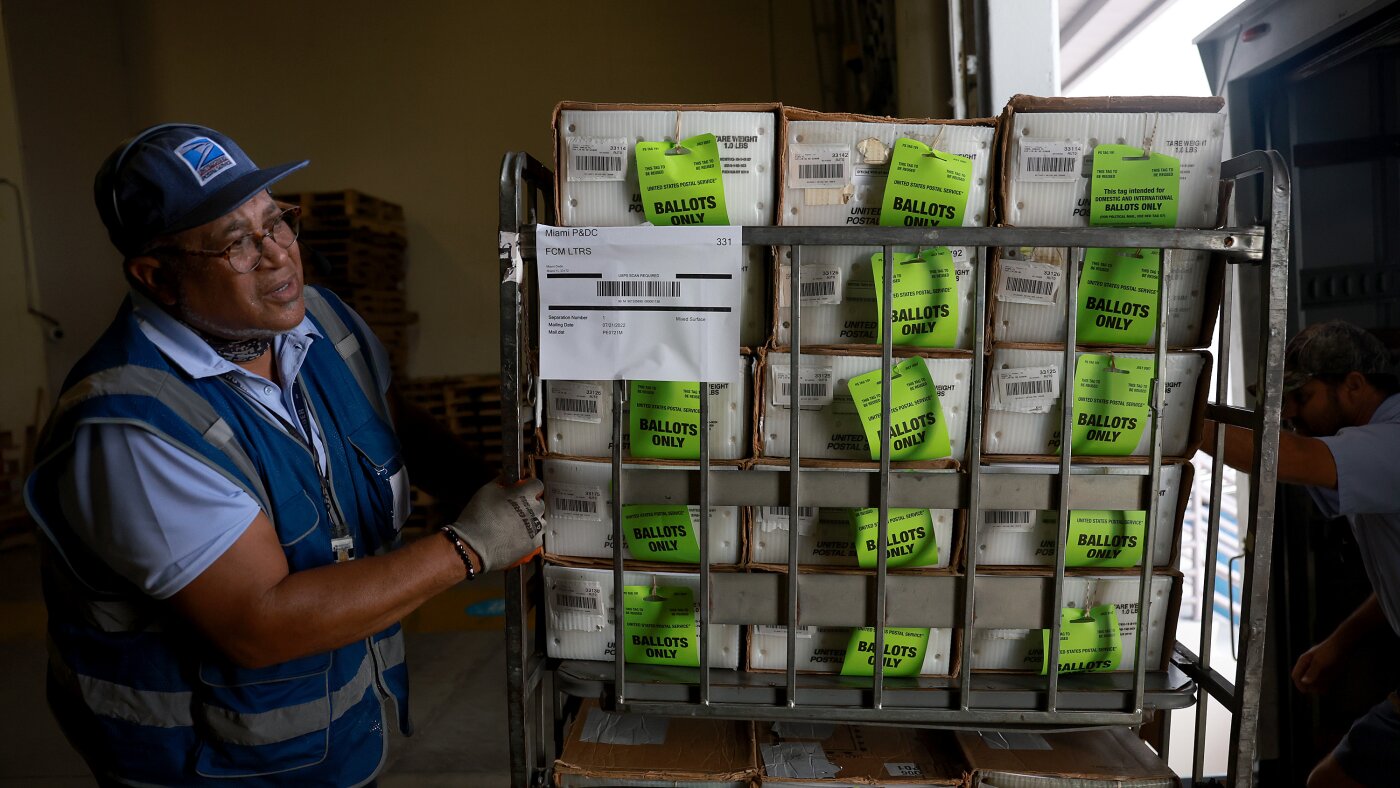
A federal judge has lifted the nationwide block on Trump's mail-in voting order, allowing the Postal Service to begin implementing directives that could reshape how ballots are delivered in the 2026 midterms.
The procedural game is the real story
A federal judge in Boston didn’t actually decide whether Trump’s mail-in voting order is legal. She decided it was too early to say. That distinction matters more than it might sound — and it may determine who wins this fight before it even reaches the merits.
U.S. District Judge Indira Talwani on Wednesday canceled her own nationwide injunction that had blocked the Postal Service from carrying out the president’s directives. The Supreme Court had already signaled, in a procedural ruling last month, that she had jumped the gun by issuing her first block in June before USPS had finalized any plan for implementing the order.
USPS released that final rule on August 21. Talwani cited the high court’s reasoning directly. The nationwide block is gone. The administration can now move forward — at least temporarily.
What USPS just finalized
The August 21 rule is where the actual policy lives, and it is more invasive than the executive order’s framing suggests. The most controversial provision requires states to turn over lists of their registered absentee voters to the Postal Service. Ballots would then be mailed only to people on those lists.
That sounds like a verification step. It is also a structural shift in who controls the mail-ballot pipeline. Historically, states have managed their own voter rolls and ballot distribution with minimal federal interference. This rule places a new layer of federal oversight — administered by an executive agency — on top of a process that Congress has left to the states.
The Trump administration argues this prevents illegal voting by non-citizens. Multiple studies and audits have found that problem to be extremely rare. The challengers argue the order exceeds presidential authority under the Constitution, which vests the power to set federal election rules in Congress and the states. Neither side has been fully heard.
The Supreme Court is watching, but not yet weighing in
So far, the Supreme Court has ruled only on procedure — whether Talwani acted too soon. It has not weighed in on whether Trump’s order is lawful. That question is now coming due.
The administration is expected to push for the Court to allow USPS to proceed with its finalized plan while the underlying lawsuit continues. Voting rights groups and Democratic-led states are likely to ask Talwani and another federal judge in Washington, D.C., to issue fresh blocks based on the merits. Those rulings will almost certainly be appealed.
What makes this trajectory consequential is timing. The 2026 midterms are weeks away. Every procedural win for the administration compresses the window for challengers to get a substantive ruling before Election Day. Every delay favors implementation.
Who wins, who loses
The immediate winner is the executive branch. A lifted nationwide injunction removes the most visible obstacle to USPS moving forward. The administration gains operational space to execute the order’s provisions without immediate judicial interference.
The loser is electoral certainty. Voters in states that planned to distribute ballots under the previous framework now face disruption. Election administrators who spent months preparing for mail-ballot logistics must reassess. The chaos itself is the point — and the consequence.
States lose something deeper. The requirement to share absentee voter lists with USPS represents a federal encroachment on a domain the Constitution reserves largely to state authority. If this survives, it establishes a precedent that could be expanded. If it falls, it still sets a template for future attempts.
Why this goes beyond mail ballots
This case is not really about envelopes and postage. It is about institutional boundaries — specifically, whether the president can redirect a federal agency to reshape election administration through executive order when Congress has not authorized that action.
The constitutional text is clear: “The Times, Places and Manner of holding Elections for Senators and Representatives, shall be prescribed in each State by the Legislature thereof; but the Congress may at any time by Law make or alter such Regulations.” That language gives Congress override power, but it does not grant the president unilateral authority to rewrite election rules.
USPS argues it has the statutory authority to carry out the order. Critics say the Postal Reorganization Act and related statutes do not give the agency power to control who receives federal mail ballots or to verify voter eligibility. That legal question remains unanswered.
What happens next
The lawsuit will continue. Multiple judges are involved. Multiple states are parties. The Supreme Court will eventually have to decide whether to intervene on the merits or let the lower courts work through it — a decision that itself carries political weight given the Court’s current composition.
USPS will proceed with its August 21 rule unless and until a court orders it to stop. Some states may comply with the voter-list requirement. Others may resist, triggering separate legal battles. The logistical reality is that ballot printing, mailing, and tracking are time-sensitive operations — and the legal limbo creates friction at every stage.
The midterms will test whether the courts can resolve this before ballots are in voters’ hands. They may not. And if they don’t, the aftermath will define the boundary between executive power and congressional authority over elections for a generation.
The longer view
n
Trump has voted by mail in Florida. His order targets a problem he describes as widespread and his opponents describe as virtually nonexistent. The gap between the rhetoric and the evidence is itself a signal: this is less about fraud prevention than about establishing a new mechanism of federal control over a process traditionally managed at the state level.
If the order survives, it changes how mail-in voting works in America. If it falls, it still leaves a blueprint ready for the next attempt. Either outcome shapes the 2026 midterms and the legal landscape that follows.