RAF Fairford Arrests Reveal How Close the UK-US Counter-Terror Front Runs to Escalation
Armed police cordons and Army bomb squads at a UK village two miles from RAF Fairford are not routine. They signal a British counter-terrorism apparatus responding to a direct threat against the base that the US and Iran have been circling for months.
The Village Two Miles from the Front Line
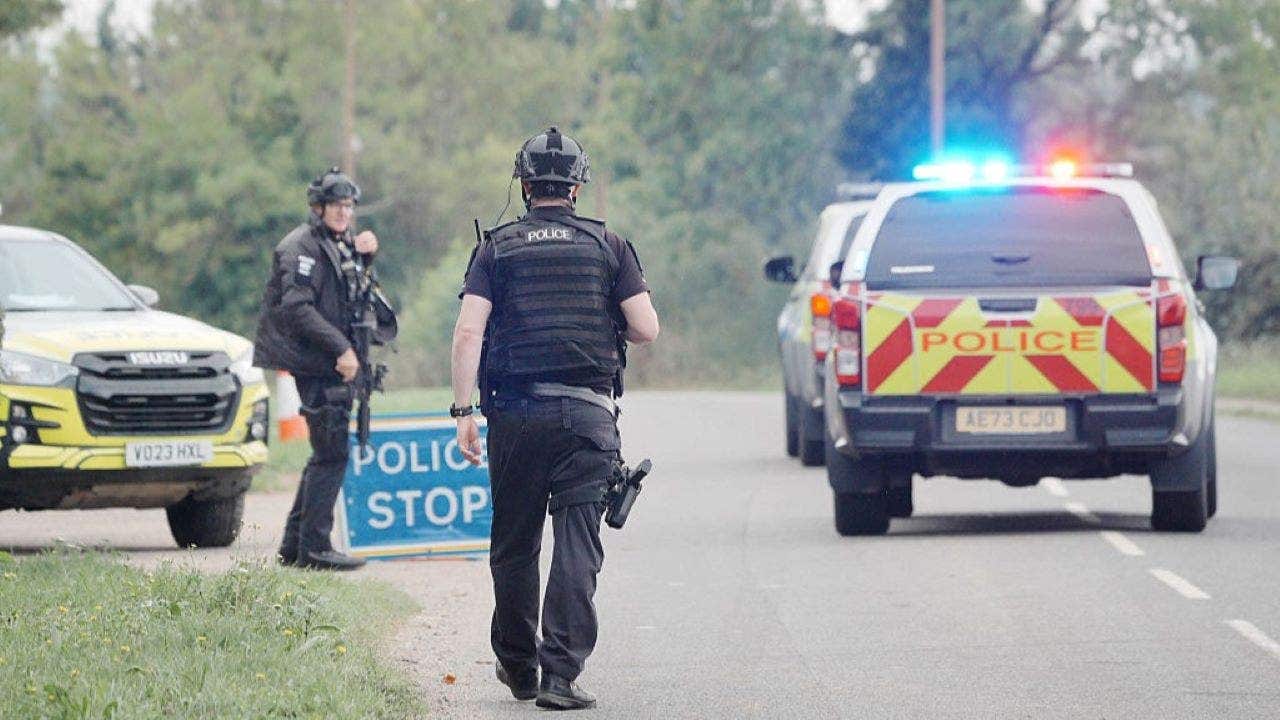
Gloucestershire Police declared a major incident on a quiet Sunday in September 2026. Armed officers set up roadblocks around Whelford, a village two miles from RAF Fairford, the British airbase that has quietly become one of the most strategically significant locations in the Middle East campaign. The Army’s explosive ordnance disposal team combed through vehicles. Several men were arrested under the Explosives Act. Properties were evacuated.
The suspects were not named. The scale of the operation was.
This is not a standard domestic policing response. The UK does not deploy Army bomb disposal teams and declare major incidents over suspicious packages. It does so when intelligence suggests an active, coordinated threat — and when the target is not just any airfield but a base from which US B-1B Lancer bombers have launched sorties against Iranian positions.
Why RAF Fairford Matters Now
RAF Fairford is no longer a standby hosting facility. It is an active strike node. In late July, a B-1B was photographed at the base. Within weeks, Iran’s Islamic Revolutionary Guard Corps issued a declaration that would make any Western military planner uneasy: RAF Fairford was a legitimate target.
That phrasing is deliberate. The IRGC uses the language of Islamic jurisprudence to justify strikes. Declaring a UK base legitimate is not merely rhetoric — it is a planning instruction that moves through the chain of command, and it creates obligations for adversaries everywhere with access to that logic.
The base is also linked to another US asset in the region: Diego Garcia, the British Indian Ocean Territory from which B-52 bombers have operated. Prime Minister Keir Starmer approved the use of both bases for strikes on Iranian missile sites after Gulf countries came under Iranian retaliation. That authorization did not go unchallenged. Iran has long maintained networks of sympathetic actors and logistical facilitators inside Europe, and the Fairford incident suggests at least one of those channels was being tested.
The Cyber Layer Makes This a Multi-Domain Event
To read this as a single police operation is to miss the broader pattern. Roughly a month before the Whelford arrests, a small British power generator went offline for several days. Cybersecurity investigators pointed to Iran-linked actors. Around the same time, more than thirty community water systems in Minnesota experienced intrusions, with officials citing Iranian affiliation.
The pattern is clear: soft infrastructure — power grids, water pumps, industrial controls — is under persistent pressure from Iranian-connected networks. The Fairford arrests shift the axis from digital intrusion to physical explosives. Whether the two are operationally linked remains unconfirmed. But the proximity is notable. A threat to a base like Fairford does not require sophisticated cyber capability; it requires logistics, access, and someone willing to move material. That is exactly the kind of operation that intelligence services monitor in parallel across domains.
What the Arrests Reveal About UK-US Coordination
The speed of the response is itself an indicator. Gloucestershire Police, the Ministry of Defence, and the armed forces moved within hours. That coordination is not accidental. It reflects the deep intelligence-sharing architecture between the Five Eyes, and specifically the embedded US security presence at RAF Fairford.
British Defense Secretary Wes Streeting confirmed the situation was being handled. Prime Minister Andy Burnham, newly installed and still defining his security posture, was kept updated. The UK government is signaling competence at a moment when transparency is carefully calibrated — too little detail invites speculation, too much invites the adversary to adjust.
The arrest under the Explosives Act is significant. It means UK authorities identified not just intent but material. Suspects were held for offenses related to explosives, not merely conspiracy or terrorist surveillance. The EOD team examining vehicles suggests recovered or intercepted materials were found. That shifts the assessment from disruption to prevention of an imminent attack.
Who Wins, Who Loses, What Comes Next
The immediate winner is the UK security establishment. Disrupting a plot before execution is the goal, and the mechanics of this operation — cordon, evacuation, arrests, EOD sweep — were executed cleanly.
The loser, if the intelligence assessment holds, is whoever stood to gain from a strike on RAF Fairford. That could be the IRGC itself, or a proxy network operating with varying degrees of autonomy. In either case, the blowback is significant. A disrupted cell is less dangerous than an active one, but it is also a cell that now knows its cover is burned and will likely operate elsewhere or restructure.
What happens next depends on whether this is a single thread or part of a wider network. The UK’s counter-terrorism apparatus tends to escalate its posture after major incidents. Expect heightened surveillance around other UK airbases with US ties, particularly those hosting strategic airlift or bomber assets. The US will likely tighten its own base security protocols in response.
For Iran, the arithmetic is harder. The IRGC has staked credibility on its ability to strike at US-forward bases through proximate actors. If Fairford proves as defensible as the arrests suggest, the calculus shifts. But Iran does not measure success only in execution — attempted attacks also test the resolve and cohesion of adversaries. The psychological layer matters.
The Bigger Signal
This incident lands at a moment when the UK is navigating a fragile political transition and the US is engaged in an active campaign against Iranian targets. The overlap is not coincidental. Adversaries exploit transitions. They watch for hesitation, for competing priorities, for governments still learning how to speak with one voice.
The UK has not hesitated. The arrests near Fairford demonstrate a security apparatus that is alert, coordinated, and willing to act preemptively. That is the point of counter-terrorism in a theater like this — not to win battles but to deny adversaries the moments they are counting on.
The question now is whether the disruption runs deeper than Whelford.