The RAM Shortage Is the Silent Tax on Every AI Company's Future
HBM is devouring DRAM wafer capacity faster than anyone expected. What starts as a chip supply problem becomes a structural tax on AI infrastructure — and eventually every consumer gadget you buy.
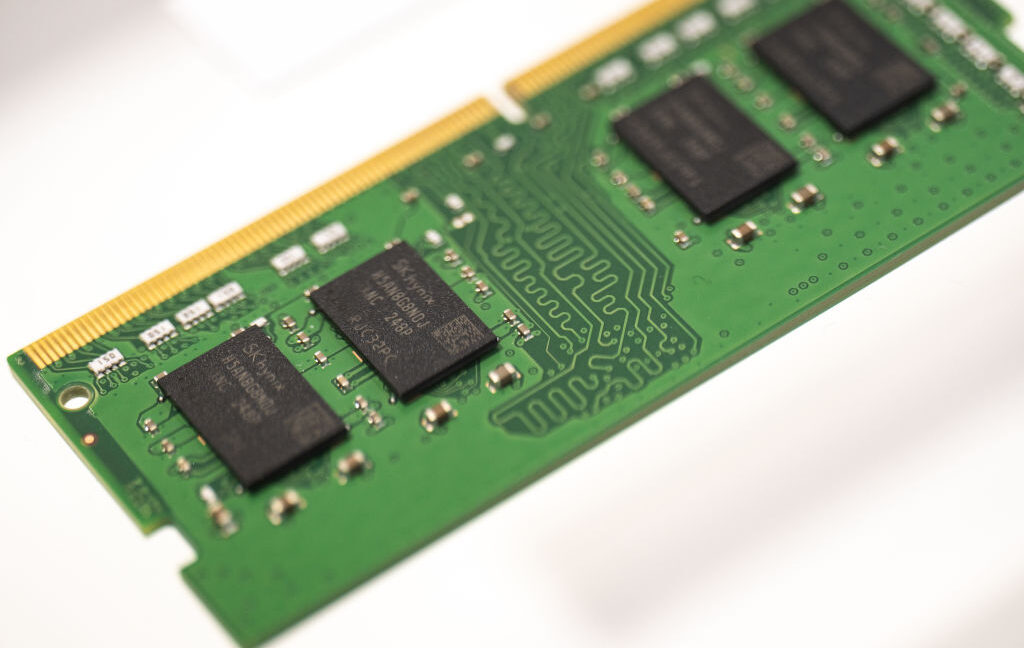
The Wafer That Changed Everything
HBM is not a product. It is a claim check on the future of the entire DRAM industry.
By 2027, it will consume nearly 30 percent of DRAM manufacturers’ wafer capacity, up from roughly 20 percent this year, according to Kim Taewoo, executive vice president at Samsung. That shift is not incremental. It is the point at which the economics of memory manufacturing rewire themselves permanently.
Micron CEO Sanjay Mehrotra told Ars Technica that most of Micron’s HBM volume for 2027 is already sold out, at prices significantly above 2026 levels. When a CEO says the company does not know when supply will catch up with demand, you do not read that as optimism about future capacity expansion. You read it as a warning that demand will keep moving faster than the industry can build for it.
The reason is structural, not cyclical. AI training and inference are both memory-hungry in ways that traditional computing workloads are not. Larger models require larger context windows. More concurrency means more sessions running simultaneously. Enterprise agent deployments multiply the number of parallel workloads a data center must serve. Each of those trends pulls harder on HBM specifically — the high-bandwidth memory stacked vertically and attached directly to GPUs — because raw bandwidth, not just raw capacity, is what determines whether a model runs at usable speed or crawls through token generation.
So the competition for memory is not between data centers and consumers in some abstract sense. It is between two very different buyers with very different willingness to pay, and the price discovery mechanism is breaking down in favor of one.
The First Casualty: The Consumer Channel
In December 2025, Micron announced that its Crucial brand would stop selling RAM to consumers. Sumit Sadana, then Micron’s EVP and chief business officer, framed the decision as a strategic reallocation toward “larger, strategic customers” in faster-growing segments. In plain language, Micron decided to stop acting as a retailer when its factory floor was already committed to data center buyers paying multiples of what a gamer would pay for the same silicon.
The effect has rippled outward. Prices for prebuilt PCs have risen. Original equipment manufacturers are offering lower RAM configurations at higher prices, a telling signal that cost pressure is being passed downstream rather than absorbed upstream. Smartphones, streaming sticks, gaming consoles — the memory crunch is not confined to servers. It is reaching into every category that uses DRAM, because the physical constraint is at the wafer level, where every chip, whether destined for a flagship laptop or a $20 streaming device, competes for the samefab capacity.
This is the part of the story that gets underreported. The RAM shortage is not only an AI infrastructure story. It is a story about the opportunity cost of every gigabyte of HBM produced. When Samsung dedicates another ten percent of its DRAM output to high-bandwidth memory, something else gets less. And right now, that something is increasingly consumer-facing products priced for price-sensitive buyers.
The Second Casualty: Data Center Margins
Data centers are winning the current bidding war for memory. They also may be losing on margin.
HBM prices being “much higher” in 2027 than in 2026 is not just a supplier triumph. It is a cost structure problem for everyone building AI infrastructure. Cloud providers and AI companies are committing to multi-year supply agreements at elevated prices, locking in capacity today while pricing power remains concentrated among a handful of manufacturers — Micron, Samsung, and SK Hynix.
The timeline matters here. Mehrotra said Micron cannot forecast when supply will meet demand. If that timeline extends toward 2028 and beyond, as the Ars Technica headline suggests, then data center operators are looking at several more quarters of constrained HBM availability at rising prices. That pushes total cost of ownership up for AI inference and training runs, compresses margins for operators who have priced their cloud GPU hours competitively, and creates an incentive for some buyers to shift toward smaller models or less memory-intensive architectures — changes that themselves slow the pace of capability gains.
The irony is sharp: the same memory that enables faster AI development also becomes a bottleneck on the economics of delivering AI at scale.
Who Wins, Who Loses
The winners are clear. Micron, Samsung, and SK Hynix are operating in a supplier’s market with strong pricing leverage and already-allocated volume through 2027. Their capital expenditure plans will likely favor HBM capacity expansion, reinforcing their position for years.
Large cloud providers and well-capitalized AI companies are the secondary winners, in the sense that they can afford to lock up supply and outbid smaller competitors. They are buying certainty at a premium.
The losers are more diffuse but economically real. Consumer hardware manufacturers are absorbing cost increases they did not plan for. OEMs are cutting RAM configurations rather than raising prices across the board, which degrades the user experience even for buyers who are not actively protesting the change. Smaller AI startups that cannot sign multi-year HBM contracts are effectively priced out of the frontier capability race — a dynamic that concentrates innovation capacity among incumbents.
And there is a third-order loser that rarely gets discussed: the global data center buildout itself. Every month of HBM delay is a month of delayed AI service deployment, which is a month of forgone productivity gains for the enterprises and developers building on top of those models. The RAM shortage is not just a hardware story. It is a delay tax on the AI economy.
The Long View
The semiconductor industry has a habit of solving its own crises through massive capital investment. New fabs open. Yield rates improve. Capacity comes online. That cycle is real, but it runs on multi-year time scales, and the demand curve for HBM is steeper than anything the industry has prioritized before.
If HBM reaches 30 percent of DRAM wafer capacity by 2027 and demand continues its current trajectory, the gap between supply and need may persist well past the end of the decade. That would make the current shortage not a temporary disruption but a new baseline — an industry where memory architecture is dominated by AI workloads and consumer and industrial applications bid for leftovers at rising prices.
The RAM shortage is the bottleneck that will quietly shape the next phase of the AI economy. Not through dramatic headlines, but through the slower, compounding effect of higher costs, longer lead times, and fewer players able to compete at the frontier. The question is not whether the industry will expand HBM capacity. The question is whether it will expand fast enough to keep the broader ecosystem from pricing itself out of the memory it needs.