RGG Studio's Stranger Than Heaven Is Its Boldest Pivot Yet
RGG Studio's next game spans five decades and three Japanese cities, trading yakuza crime for showbiz ambition. The Netflix film deal and genre shift signal a studio redefining itself after two decades of Yakuza.
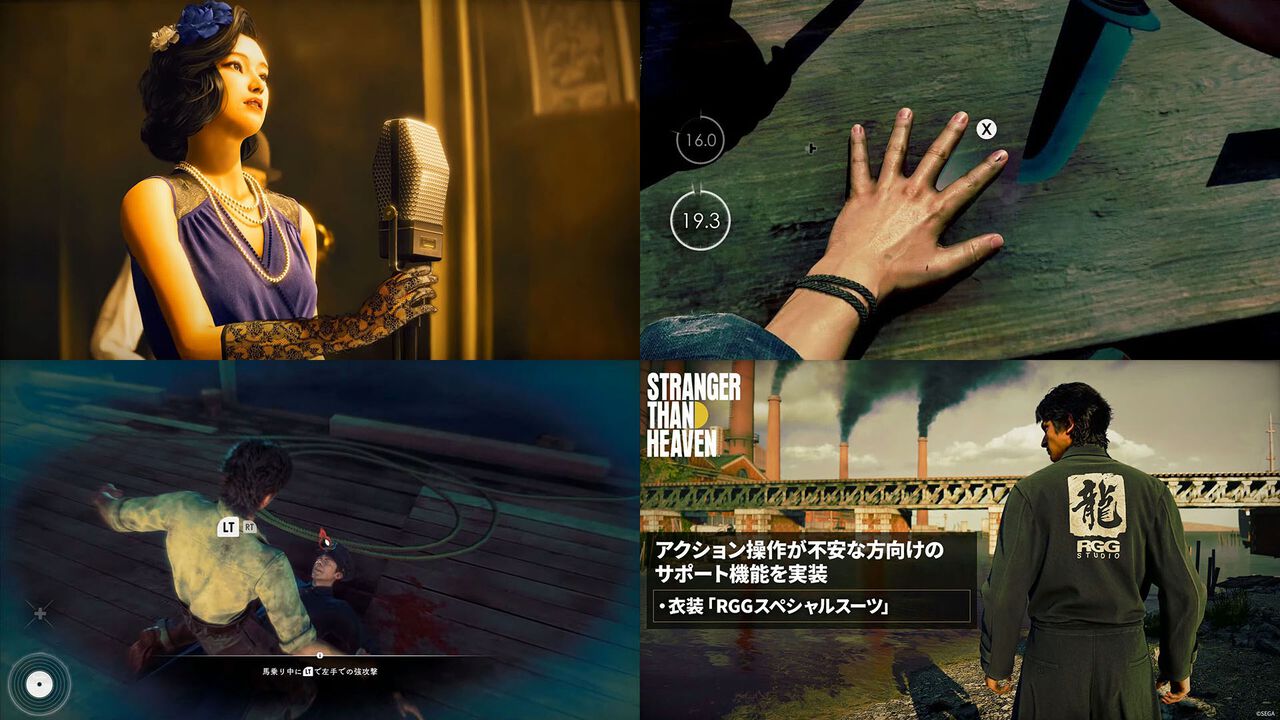
A Studio That Can’t Stay in One Genre
RGG Studio has spent twenty years making games about organized crime in fictionalized recreations of Japanese entertainment districts. Stranger Than Heaven marks its first deliberate step outside that lane, and the pivot is both riskier and more ambitious than the data so far suggests.
The game follows Daiko Makoto across five decades and five locations, beginning with glimpses of Fukuoka-Kitakyushu, Hiroshima-Kure, and Osaka-Minami. You do not play a yakuza successor or a detective. You build a showbiz empire — recruiting vocalists, forming bands, scripting performances, and chasing commercial success across a sprawling timeline that stretches fifty years. The tone, judging from the TGS2026 special broadcast on September 16, leans into spectacle and star power rather than street-level loyalty codes.
That shift matters because it reveals what RGG Studio is trying to become: not a studio trapped by its own brand identity, but a studio with a flexible engine for storytelling that can survive beyond the Yakuza franchise.
The Showbiz Mechanic Is the Real Innovation
The broadcast focused heavily on the showbiz gameplay loop, and it should. You collect artistic inspiration, select band lineups, choose arrangements, and then stage performances where success determines your trajectory. This is not a mini-game tacked onto a crime drama. It is a structural pillar of the experience, and one that has no precedent in RGG Studio’s catalog.
The voice cast backing this world is equally unconventional. The theme song STRANGER THAN HEAVEN will be performed by Ado, Snoop Dogg, Sou Fujihara of Official Hige Dandism, and Tori Kelly — a lineup that bridges J-pop, American hip-hop, and Western pop in a single track. Snoop Dogg also appears as a playable character alongside Dean Fujioka, Yuto Okada, and Moeka Hoshi. This is a game that intends to operate on a global cultural frequency from day one, not a localized afterthought.
The game launched its wishlist campaign at 1 million pre-registrations before any gameplay footage had been fully shown. That number is the highest for an RGG Studio title ahead of release, according to Famitsu. It signals appetite, but appetite alone does not guarantee the game delivers on its premise.
The Netflix Film Was Not the Blueprint
Perhaps the most revealing detail came out sideways. A live-action film was announced suddenly on September 15, one day before the broadcast. The production came from a Netflix offer, not from RGG Studio’s initial plans. According to the studio, discussions began around the Summer Game Fest in June 2025, when the project was still under the working title PROJECT CENTURY. The film was not part of the original development scope.
This sequence is worth tracking. A game first conceived as a standalone narrative product suddenly acquired a companion film after external interest from a streaming giant. That is not how RGG Studio operated during the Yakuza era, where the games stood alone and adaptations followed later, if at all. This is a modern IP strategy — film and game designed to amplify each other, not sequentially but potentially simultaneously.
Whether that amplification works depends entirely on the quality of the underlying game. A weak product dragged into a film deal becomes a cautionary tale. A strong one becomes a template.
What This Means for RGG Studio’s Future
RGG Studio built its reputation on atmospheric immersion — the smell of ramen in Kamurocho, the weight of history in every district, the way a side quest could make you care about a stranger. Stranger Than Heaven attempts to transplant that sensibility into a different world. The question is whether the atmosphere survives the migration.
The five-era structure suggests the studio is tackling longevity — not just the lifespan of one protagonist, but the cultural evolution of Japan’s entertainment industry across half a century. That is a scope few Japanese game studios would attempt without a pre-existing franchise anchor. RGG Studio is doing it with a completely original IP, and that is either confidence or desperation. The data from the wishlist numbers suggests confidence, but the genre leap means the studio has not yet proven it can execute.
The pricing structure — ¥9,990 for the standard edition, ¥18,000 for the Collector’s Edition — places it firmly in AAA territory. The CERO D rating and the January 15, 2027 release date mean there is still a long runway before anyone can judge whether this pivot lands. The film announcement adds pressure: Netflix does not greenlight projects without commercial expectations, and those expectations now attach to a game that has not been fully revealed.
Who Wins and Who Loses
If Stranger Than Heaven succeeds, RGG Studio proves it can operate beyond the shadow of Yakuza. That opens the door for future original IPs and positions the studio as a multiplex narrative engine rather than a single-genre specialist. The global casting and musical ambitions suggest Sega is betting that RGG can compete in a space occupied by Western indie studios — games where personality, music, and cultural specificity are the selling points.
If it fails, the studio risks being remembered as a franchise that could not escape its own formula. The Netflix film, designed to amplify a successful game, becomes a footnote to a misfire. The five-era ambition becomes a cautionary tale about scope exceeding capacity.
The only certain outcome right now is that Stranger Than Heaven is the most ambitious original IP RGG Studio has ever attempted, and it arrives at a moment when Japanese game studios are under pressure to prove they can create globally resonant franchises without relying on legacy properties. The wishlists are high. The cultural cast is bold. The schedule is tight. January 2027 will tell whether ambition translated into execution.