Riyadh Airport Attack Could Redraw US Forces in the Gulf
A Houthi missile strike on Riyadh's international airport killing 12 is the deadliest attack on a Gulf state since the Iran war began. It forces Washington to confront whether indirect support is enough — or whether the US must commit combat troops to a second front.
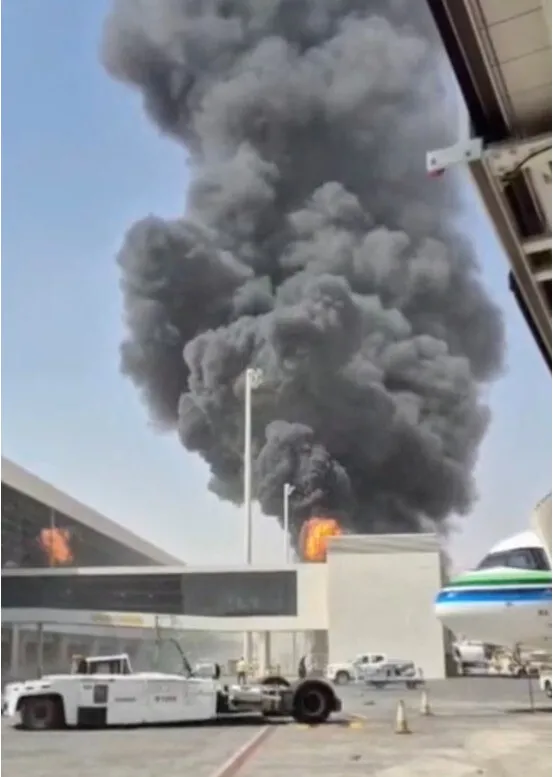
The Day Riyadh Stopped Feeling Safe
King Khalid International Airport does not look like a target. It is one of the busiest hubs in the Middle East, a symbol of Saudi Arabia’s ambition to become a logistics crossroads between three continents. On October 10, a single missile struck the domestic terminals and turned that symbol into a graveyard: 12 dead, 309 wounded, including four Saudis and one American. By every metric that matters, it is the deadliest single attack on a Gulf state since the Iran war began on February 28.
The numbers themselves are sobering. But the real shock is what this attack signals about the war’s trajectory. The Houthi movement — long confined to Yemen’s highlands and Red Sea corridors — has just demonstrated it can reach the Saudi capital at will and choose soft civilian targets over military ones. That is not a tactical adjustment. It is a strategic escalation.
Who Decided to Hit an Airport
Muhammad Al-Bukhaiti, a senior Houthi official, claimed responsibility within hours. His explanation was pointed. He said the strike was retaliation for Saudi-led coalition airstrikes on Yemen’s civilian infrastructure — airports, ports, hospitals, wedding venues, funeral halls. His message carried a dark symmetry: if the world accepts that these facilities can be bombed in Yemen, the same rules must apply everywhere else.
That framing matters more than the bomb itself. The Houthis are no longer fighting only for territorial control of Yemen. They are trying to impose a new moral equivalence on the war — to make the costs of Saudi bombing campaigns visible inside Saudi cities, not just inside Yemeni provinces. An airport in Riyadh, where families wait for flights and travelers collect luggage, is exactly the kind of target that communicates that point.
The timing reinforces the message. On October 4, the Saudi-led coalition announced a major counteroffensive to retake Houthi-held territory. Houthi air strikes on Saudi soil escalated immediately after. This was not a spontaneous act of vengeance. It was calibrated retaliation designed to show that the coalition’s ground offensive had opened a second front — one inside Saudi Arabia itself.
The Missile Shortage Problem
Here is what English-language coverage has largely missed: Saudi Arabia is running dangerously low on interceptor missiles. According to an April report from Reuters citing Saudi officials, the kingdom has been requesting air defense deployments from France, Britain, Pakistan, and Egypt precisely because its stockpiles are thin. The United States faces the same problem. Its own interceptor inventory has been drawn down by the Iran war.
This creates a dangerous gap. A country with the world’s thickest air-defense network on paper — THAAD batteries, Patriot arrays, Abrams-based systems — cannot necessarily shoot down a sustained wave of missiles if the interceptors are gone. The Houthi attack on Riyadh proves they do not need waves. They need one lucky shot at the right terminal.
The broader implication is that the Gulf states, for all their spending power, have built their security architectures around American missile stocks. When those stocks run low, the architecture develops cracks. Riyadh just showed us where one of those cracks is.
What Trump Will Do Next
President Donald Trump said he had just received news of the attack and would decide quickly. “We may participate,” he said. “We will look into it.”
Those words carry weight because they represent a shift from a position the president held only weeks ago. In September, Trump had explicitly refused Crown Prince Mohammed bin Salman’s request for direct US strikes against Houthi targets. Washington offered technical personnel and intelligence support instead — the minimum commitment short of combat troops. Now the calculus has changed, at least rhetorically.
But rhetoric is not deployment. The United States is already committed to an active war against Iran. Adding a direct combat role in Yemen would open a second front in a theater where the US has barely any footprint beyond occasional drone strikes. The Pentagon’s force posture in the Gulf was already optimized for an Iranian conflict, not a ground war in Yemen’s mountains. Stretching it further risks creating gaps elsewhere.
Turkey and Pakistan have both announced troop deployments to support Saudi Arabia under the Mecca Defense Agreement. Syria has also expressed willingness to send forces. These are meaningful signals, but none of them replaces American air-defense coverage or strategic lift capacity. If Washington chooses to respond militarily, it will likely do so through the same indirect model it has followed since September: special operations advisors, intelligence sharing, and increased technical support for Saudi air-defense coordination. Direct combat participation remains unlikely unless the attack casualties rise dramatically or US forces are directly targeted.
The Yemen War Is No Longer Contained
What makes this moment distinct from previous rounds of Houthi-Saudi tension is the context of the wider Iran war. Before February, the conflict was regional. After Iran’s involvement escalated, Yemen became one front in a larger struggle. The Houthi movement is Iran’s most capable proxy, but it is also an independent actor with its own survival calculus.
The civil war in Yemen reignited in July 2024, and the fighting has been brutal. Since September 3, Houthi health officials say 91 people — mostly women and children — have been killed in Saudi-led airstrikes. The Houthis have captured the port city of Mocha and besieged Taiz, Yemen’s third-largest city. The Saudi coalition claims to have retaken Mocha; that claim remains unverified. What is verified is that the fighting has expanded geographically and demographically, drawing in more civilians and more collateral damage.
The Riyadh airport attack is the logical extension of that expansion. When a war spreads, its shockwaves reach places that were never supposed to be part of it. Riyadh was not supposed to be a battlefield. Now it is.
What Comes Next
Three things are likely in the coming weeks. First, Saudi Arabia will accelerate its requests for air-defense support from external partners, knowing that its existing interceptors may not survive another sustained barrage. Second, the United States will face pressure to commit more directly, even as it tries to avoid being drawn into a ground war. Third, the Houthis will test whether Riyadh is a one-time target or a recurring one — and the answer will shape US force posture across the entire Gulf for years.
The attack killed 12 people and wounded 309. The real cost, however, will be measured in decisions made in Washington, Riyadh, and Sana’a over the next months. The Gulf has spent years pretending it could fence off the Yemen conflict. That illusion ended on October 10.