Japan's ICC Clash With the US Changes Everything
Japan's public 'deep concern' over US sanctions on the ICC is the sharpest public disagreement between Tokyo and Washington in years. What's behind it — and what it means for allies everywhere.
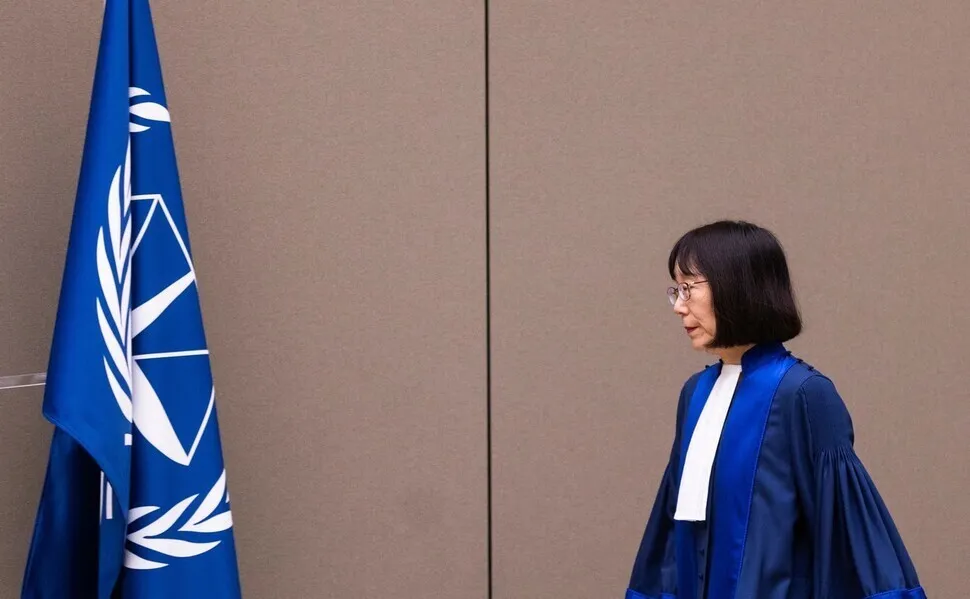
Japan’s quiet eruption
Japan’s Prime Minister Sanae Takachi did something unusual on November 9. He posted on X — formerly Twitter — that he was “deeply concerned” about the United States sanctioning the International Criminal Court. Not a quiet diplomatic note. Not a carefully worded statement through channels. A public post from a sitting prime minister, directed at Washington’s policy.
That kind of direct, public disagreement between Tokyo and Washington is rare. It has happened — not since the 2003 Iraq War dispute, when Japan quietly refused to join the US-led invasion coalition, and not since the 2014 Okinawa base transfer standoff, which played out more privately. But not recently enough that most people alive today remember it vividly. The habit of consensus between allies who share Article 5–style commitments has hardened into something approaching ritual. Breaking it sends a signal far louder than the words themselves.
Two days later, Foreign Minister Toshimitsu Motegi did the same thing in phone calls. He spoke with ICC President Tomoko Akane — a Japanese national — about the sanctions. Then he called US Secretary of State Marco Rubio to deliver Japan’s position directly. The US State Department confirmed the call. It described Japan as having “conveyed its position on the issue.” That bureaucratic phrasing, deliberately neutral, could not mask the gravity of what had just occurred: a G7 ally had publicly contradicted its security patron on a matter of institutional integrity.
Japan also joined a joint statement with Germany, the UK, France, Italy, Denmark, Canada, and the Netherlands. The eight nations called the US sanctions “a regrettable move” and pledged continued support for the ICC’s independence. That is a significant grouping. These are not neutral countries. They are the core of America’s alliance network in Europe and the developed world. Their coordinated language — restrained but unmistakable — suggested the dispute was not confined to Tokyo. Washington had alienated a bloc it could no longer simply command.
Why timing matters
The Nobel Peace Prize changed the texture of this moment. The ICC just received the world’s most visible recognition for its work — and within days, the United States moved to sanction the court itself. Japan’s concern reads differently now than it would have without the Nobel. It carries more weight because the court has just been legitimized on a global stage. The timing was not lost on anyone. Critics of the sanctions framed it as retaliation against an institution that had just been validated by the very body the US claims to champion.
Japan had already positioned itself as the ICC’s strongest financial backer among member states. Since joining in 2007, it has contributed more than any other country. Having a Japanese national — Tomoko Akane — serving as president of the court is not coincidental. Tokyo has treated the ICC as a pillar of the rules-based order it has bet its postwar identity on. That identity is not abstract. It is embedded in constitutional interpretation, in defense white papers, in the very architecture of Japan’s post-1945 foreign policy. To abandon the ICC would be to abandon a piece of what Japan believes it is.
Now the US is asking those same allies to turn against it.
What Washington wants
Secretary Rubio was blunt. He told Motegi that the sanctions were a response to the ICC’s “unlawful actions” threatening US sovereignty. He framed the court’s investigation into alleged war crimes by US forces in Afghanistan and its arrest warrants for Israeli leaders over Gaza as existential threats. The legal reasoning is disputed — the ICC’s jurisdiction over non-member states remains contested even among international law scholars — but the political message was unambiguous.
The message to allies was equally direct: countries that benefit from US defense protection should not be sheltering an institution that targets Americans. Rubio specifically called out allied nations that are ICC members while relying on American military guarantees. This framing — security for compliance — has long underwritten the alliance system. But applying it to an institution with universal moral authority rather than a rival power creates a different kind of demand. It asks allies to police not just behavior but legal legitimacy itself.
This is not a new demand. The US has sanctioned ICC officials before — 13 individuals including President Akane. This time it escalated to institutional sanctions, freezing ICC assets in the US and restricting transactions with American companies. A six-month grace period was granted for ongoing operational obligations, but the direction is clear: full decoupling from the court. The grace period is not generosity. It is operational breathing room, bought at the expense of allies who now face a deadline with no clear resolution.
Who loses
Japan loses face with its Western allies who see the ICC as essential to international justice. But it also loses credibility with the Global South, where the court is viewed by many as the last check on powerful nations. For countries that have suffered aggression, occupation, and impunity, the ICC is not an abstraction. It is the only forum where their grievances can be heard without the veto power of a permanent Security Council member.
The ICC loses its most reliable financier. Japan’s contributions are not symbolic. They fund operations, victim assistance programs, and outreach — the parts of the court that do not generate headlines but make it functional. When Japan hesitates, other donors hesitate too. The ripple effect is immediate: budget shortfalls delay cases, victim compensation stalls, and the court’s ability to operate in conflict zones diminishes.
Alliance cohesion suffers. The US is asking allies to pick between security guarantees and legal institutions. That is a demand that fractures the very multilateral framework Washington claims to uphold. The contradiction is sharp: a nation that built the postwar order around institutions like the UN and NATO is now pressuring allies to abandon a court that operates within that same order. The philosophical incoherence is not lost on observers.
Second-order effects
The consequences extend beyond the immediate dispute. Defense planners in Tokyo are reassessing the assumptions that have guided Japan-US coordination for decades. If the US can weaponize economic leverage against an institution its closest ally supports, what other tools might be deployed? The precedent stretches far beyond the ICC.
Within Japan, the debate is already reshaping political calculus. Nationalist voices that have long argued for strategic autonomy are finding ammunition. Progressive voices that champion multilateralism are gaining credibility. The government’s positioning — public dissent without alliance rupture — walks a narrow ridge, but one that may prove structurally important as other middle powers face similar pressure.
European capitals are watching with unease. The joint statement masks differences that are likely emerging behind closed doors. Some allies may follow Japan’s lead; others may defer to Washington privately while moderating their language publicly. The fracture is not binary. It is spectrums.
Who might win
Russia and China are watching closely. Both countries are not ICC members and have long opposed the court. Japan’s resistance to US pressure — and the broader alliance fracture over the sanctions — reinforces their narrative that the US imposes unilateral will on international institutions. Every ally that defects from the US position weakens Washington’s leverage and strengthens the argument that American dominance is eroding.
Japan itself may gain strategically within Asia. A visible stand for multilateralism strengthens its position as a leader among democracies that share concern about American unpredictability. India, South Korea, and other middle powers face the same dilemma — they are not ICC members, but they depend on the rule-based order the court represents. Japan’s courage may become contagious, not because these countries want to confront the US, but because Tokyo has demonstrated that confrontation is possible without catastrophe.
What happens next
Japan will not sever ties with the US. The security alliance is non-negotiable for Tokyo. But the language it used — “deeply concerned” — and the joint statement with seven other nations signal that Japan has drawn a line. The line is not extreme. It does not reject the alliance. It does not deny shared values. It says, simply: this particular demand crosses a threshold.
Other allies face the same pressure now. South Korea is not an ICC member but has a complex relationship with the court, having cooperated on investigations while maintaining strategic distance. Australia, a US ally and non-member, has its own tensions with ICC jurisdiction, particularly regarding operations in the Asia-Pacific region. The question spreading through capitals is simple: if Japan — the United States’ closest ally in Asia — publicly disagrees, who is next?
The six-month exception for ICC operations creates a window. Washington is buying time, not resolution. Japan and its partners will use it to build coalitions, raise the political cost of further escalation, and prepare for a longer contest over what international institutions mean when the US decides they threaten American interests.
The Nobel Peace Prize gave the ICC a moment of visibility. The US sanctions tried to bury it. Japan’s response suggests the burial may not stick — and that the allies who built the postwar order are beginning to remember that the order was never meant to be unconditional.