Riyadh Skyscraper Strike Signals Houthi Escalation and Gulf
A Houthi missile struck Saudi Arabia's sovereign wealth fund tower in Riyadh — a bold escalation that exposes the limits of Gulf air defenses and threatens Crown Prince Mohammed bin Salman's economic transformation.
The Strike That Changes Everything
Riyadh had not been hit this way before.
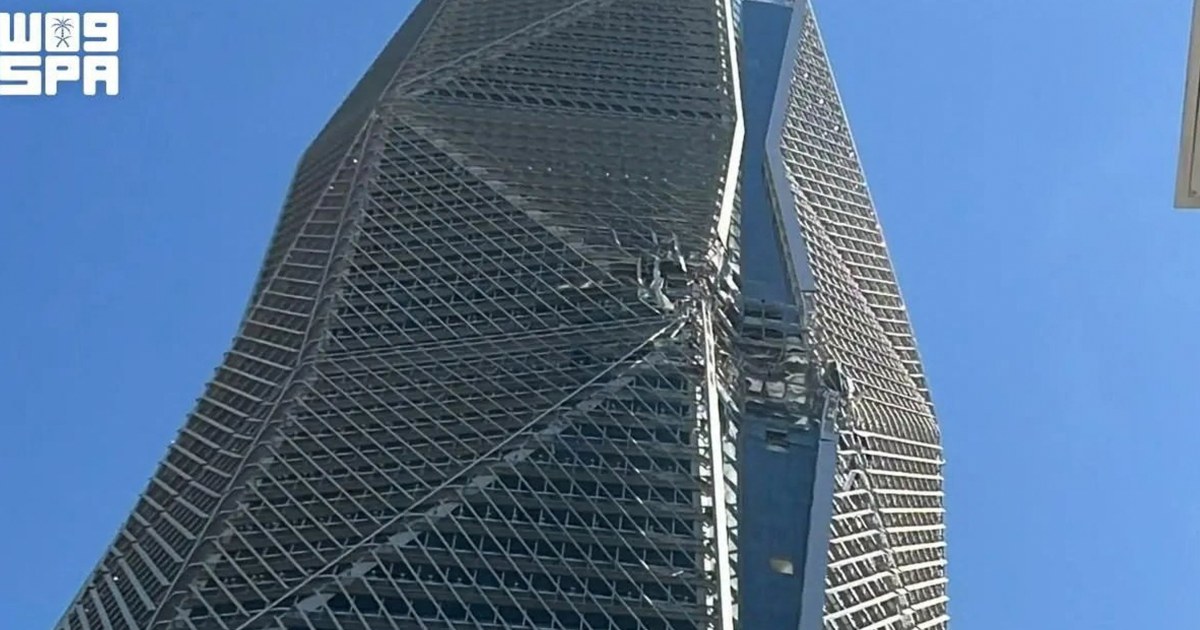
On Thursday morning, a Houthi missile punched through the glass facade of the PIF Tower — the kingdom’s tallest skyscraper and the physical headquarters of the Public Investment Fund, the sovereign wealth engine behind Crown Prince Mohammed bin Salman’s Vision 2030. Seven or eight floors were damaged. Windows blew out across multiple levels. Nearby buildings took hits too. No one was killed. But the symbolism was unmistakable.
This was not a stray drone intercepted over the desert or a missile diverted by allied defense systems. This was a calculated strike on the most visible symbol of Saudi economic ambition, fired from Yemen into the heart of the kingdom’s financial district.
What Happened
Saudi civil defense confirmed material damage but offered no specifics beyond a statement that the attack came against the King Abdullah Financial District (KAFD). An accompanying SPA photograph made the target clear: the PIF Tower, a gleaming 45-story structure that has come to represent the crown prince’s attempt to reshape the kingdom’s economy away from oil dependence.
Two sources told Reuters the building was struck by an incoming Houthi missile. The Saudi-led coalition said it had “dealt with a missile threat” launched toward Riyadh, with debris falling afterward.
The Houthis claimed they had targeted Riyadh’s financial center twice that day — once at dawn, again in the evening — along with King Khalid International Airport, Khamis Mushait airbase in the south, and the SADAF Petrochemical Company in Jubail on the eastern coast. There was no immediate Saudi confirmation of those latter strikes.
The PIF itself acknowledged a Reuters request for comment without elaborating further.
Residents were woken by a loud boom in the early hours. Civil defense issued multiple warnings throughout the day before declaring the threat had passed.
Why This Is Different
The last time a landmark in Riyadh’s financial district was struck, the target was Aramco’s headquarters on November 8. That was already alarming. Now, less than two weeks later, the same district has been hit again — this time on the taller, more symbolic building.
What separates this from previous incidents is the trajectory of the attack. These missiles came from inside Yemen, traveling hundreds of kilometers over populated Saudi territory before striking one of the most fortified cities in the region. That the PIF Tower was hit suggests either a penetration of Saudi air defenses or a deliberate targeting strategy aimed at testing their limits.
The broader context matters too. Since July, when Yemen’s frozen civil war reignited amid the wider US-Iran conflict, the Houthis have steadily expanded their ground control — seizing Saudi-backed forces’ positions, capturing the entire Red Sea coastline including the Bab el-Mandeb Strait, and surrounding Taiz.
On the ground in Yemen, the picture looks worse for Saudi Arabia’s allies. The kingdom replaced its coalition commander this week, a sign of institutional frustration. Sources familiar with Saudi planning told Reuters that officials now expect the military campaign to stretch into 2027 — up to six months of active combat.
Who Wins and Who Loses
The Houthis win this round. They demonstrated the ability to reach deep into Saudi territory, pick a high-value symbolic target, and inflict physical damage without suffering any visible retaliation on equivalent scale. Their claim of a second wave of attacks on Riyadh later the same day suggests they are building operational momentum.
Saudi Arabia loses something harder to quantify: credibility. The kingdom has spent billions on air defense systems sourced from Israel, the United States, and elsewhere. The PIF Tower strike adds to a pattern — like the Aramco building hit in November — that undermines confidence in those investments.
Global investors lose perspective. Every strike on Riyadh’s financial district reinforces a nagging question for anyone watching from London, New York, or Singapore: Can Vision 2030 actually survive in a neighborhood this unstable?
The Gulf’s insurance markets already adjust premiums upward after each incident. But the psychological cost falls hardest on the foreign consultants, engineers, and executives whose presence underpins the NEOM and Red Sea Project promises.
The Broader War Context
This conflict did not start in Yemen alone. It began in February when the United States and Israel attacked Iran, pulling the regional fault lines back into open warfare. Qatar-mediated negotiations between Washington and Tehran have stalled entirely.
Meanwhile, the violence is spreading sideways. Iran fired at Bahrain and Kuwait in recent days. US airstrikes hit Iran’s Qeshm Island in the Strait of Hormuz on Tuesday — the narrowest chokepoint between the Persian Gulf and the open ocean.
The Saudis meet regularly with American commanders to coordinate. Admiral Brad Cooper, head of US Central Command, visited Riyadh on Wednesday — his third publicly reported trip since the Yemen fighting resumed. He spoke with Crown Prince Mohammed bin Salman directly.
That the US is this deeply involved makes the PIF Tower strike diplomatically sensitive. It is not only a Saudi problem; it is a problem for American forces stationed across the Gulf and for the commercial shipping lanes that run past their bases.
What Comes Next
Saudi Arabia’s foreign ministry reserved the right to take “all necessary measures,” a phrase that carries weight in diplomatic language. Expect retaliatory airstrikes on Yemeni targets in the coming days — likely intensifying rather than de-escalating.
But history suggests that airstrikes alone will not stop the Houthis from launching long-range missiles. The group has survived years of them. Their launch capabilities appear embedded deep inside Yemen, making preemption difficult even for the most sophisticated intelligence apparatus.
For the PIF specifically, the physical damage is repairable. The real cost is reputational. The fund manages over $1 trillion in assets and has spent heavily building its global portfolio — stakes in Uber, Lucid Motors, Newcastle United, and countless European and American firms. Every headline about Riyadh under fire makes those partners wonder whether their investments are anchored somewhere permanent or somewhere vulnerable.
Vision 2030 was sold as the bridge from an oil monarchy to a diversified superpower. Bridges require stability. The Houthis just reminded the world that stability in this part of the world is still negotiable.