Rockstar Just Turned Car Theft Into A Skill Tree — And That Changes Everything About Open-World Design
GTA 6's layered car-stealing system isn't just a gameplay upgrade — it's evidence of a broader industry shift toward friction as feature, not bug. Why the 25-year franchise finally made stealing cars hard reveals what every open-world game is quietly learning.
The Binary Button Is Dead
For nearly thirty years, stealing a car in Grand Theft Auto was a single button press. Walk up. Press triangle. Animation plays. You have the car. It was the series’ namesake mechanic — and also, frankly, one of its most soul-crushing ones. You could have stolen a supercar worth half a million in-game dollars with the same effort as a rusted-out sedan from 1998. The game was named after a crime you never actually had to think about committing.
GTA 6 just killed that binary. What Rockstar has delivered isn’t merely a new toy; it’s a philosophy shift that could reshape how every open-world game approaches player agency for the next decade.
What GTA 6 Actually Changed
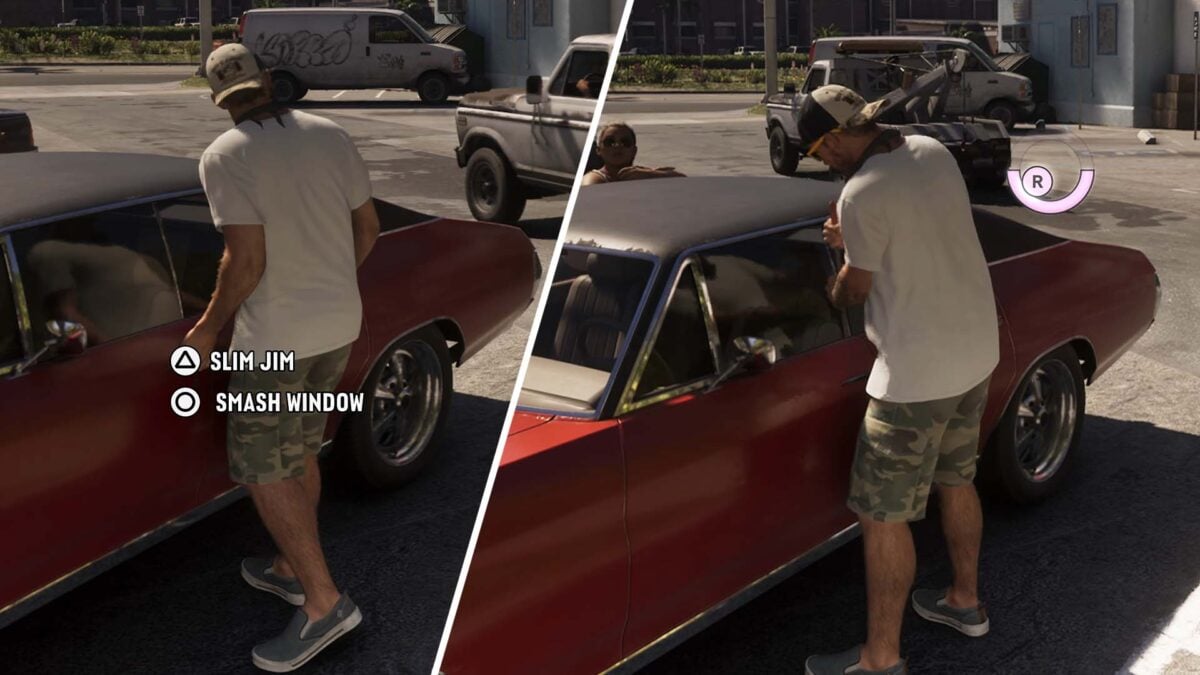
The new system layers stratification onto vehicle theft in ways that feel almost academic in their design rigor. Jason and Lucia can’t just walk up to any car and drive away. Older vehicles respond to a Slim Jim tool — but newer ones need a key cloner. Break the window on a modern car and you still might not be able to start it. Some vehicles have trackers. Some require Waink, the in-game phone app, to scan for weaknesses before you even know where to begin.
“We felt like that left a lot of potential gameplay on the table in terms of progression and decision-making for players,” Rob Nelson, head of development at Rockstar North, told IGN. The phrase “left a lot of potential gameplay on the table” is doing a lot of heavy lifting here. Nelson is admitting what the industry has been whispering for years: the open-world sandbox wasn’t actually open at all. It was a museum where every painting cost the same to steal.
The implications extend far beyond Vice City. When a 25-year-old franchise named after car theft finally makes stealing cars interesting, something fundamental has shifted in how we think about player choice, consequence, and reward.
Friction as Feature, Not Bug
This is the broader trend that GTA 6 exposes: friction is no longer the enemy of good design. For decades, game designers treated every obstacle between player and goal as something to minimize. Walk up to car. Press button. Drive away. Why add steps? Why slow down the dopamine loop?
Rockstar just reversed that assumption. The new system gives every vehicle meaning. An old beat-up piece of shit is easy to hijack. A supercar involves multiple steps, planning, and skill. Pulling off a successful hijack of a badass supercar is so much more rewarding in GTA 6 than it ever has been in past games. The friction isn’t there to punish the player. It’s there to make the reward matter.
This reflects evolving game-design philosophy around player agency and consequences. When you remove the binary button and replace it with a small toolkit — Slim Jim, key cloner, Waink scanner — you’re not reducing freedom. You’re expanding it. Every theft becomes a decision tree instead of a single path.
What This Means for Open-World Design
Consider what this shift demands from other developers. If Rockstar can make the series’ most iconic mechanic take actual skill and planning, what does that say about every other open-world game where the core loop is still a button press? The elder scrolls? The last of us? Red Dead Redemption 2?
GTA 6’s car-theft system is a notable shift for a 25+ year franchise and reflects exactly this: games are learning that player agency isn’t about making everything easy. It’s about making every action feel earned. When a car vanishes when you reboot because you never registered it in a garage with limited space, you’re not being punished. You’re being asked to commit to your choices.
The Waink app’s scanning mechanic is particularly elegant. It tells you: this car is locked, has an alarm, no tracker, worth this much at Pay n’ Spray, costs this much to register. Every decision becomes informed. Every risk becomes quantified. The player isn’t just stealing a car; they’re conducting an assessment.
This is what happens when a game stops treating its players like tourists and starts treating them like criminals. You don’t just walk up to a Lamborghini and drive away. You plan. You scout. You choose your tool. You accept the consequences.
The Consequence Economy
Even early in the game, players can run up to fancy cars while stopped at a light and yank the driver out — no key cloner required. But the car might still have a tracker. The police will find you. You’ll still have to deal with that problem.
This is the consequence economy that GTA 6 has built: every shortcut has a cost. Every easy choice has a hidden layer. The tracker isn’t there to force you to use the key cloner; it’s there to remind you that the world doesn’t care how smart you think you are.
The garage registration mechanic deepens this further. Stolen cars aren’t yours right away. You need to register them and store them in a garage with limited space. Otherwise they vanish when you reboot. You’re not being told what to do; you’re being asked to choose what you value.
This is the opposite of every open-world game that came before it. Instead of infinite choice with infinite emptiness, you have constrained choice with infinite meaning. The garage isn’t a limitation; it’s a statement. What will you keep? What will you let go?
Why This Matters Beyond GTA
The open-world genre has spent twenty-five years optimizing for accessibility. Press button, get car. Open door, get loot. Enter building, get quest. The industry called this good design. Rockstar just called it lazy.
GTA 6’s hardest car-theft system yet reveals a broader industry trend: friction as a feature, not a bug. When a game named after stealing cars finally makes it difficult, exciting, and interesting, something has changed in how we understand player engagement. It’s not about removing obstacles. It’s about making every obstacle feel like part of the story.
Rockstar isn’t just updating a mechanic. They’re updating the contract between game and player. You won’t just press a button and get the reward. You’ll earn it. You’ll plan for it. You’ll suffer for it. And when you finally hold the keys to that supercar, it will mean something.
That’s not a bug in open-world design. That’s the feature we’ve been waiting twenty-five years to receive.
Grand Theft Auto 6 arrives November 19 on PS5 and Xbox. By then, every open-world developer will have a lot of thinking to do about the buttons they’re asking players to press.
The binary era is over. The skill era has begun.