RTX 5070 Sweep in Korea Signals GPU Market Shift
Steam survey data reveals the RTX 5070 is reshaping GPU adoption faster than any recent card. Korean gamers are upgrading despite component prices that have tripled.
The Numbers Don’t Lie
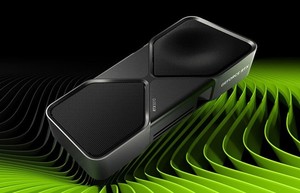
The RTX 5070 didn’t just enter the market this month. It sprinted. According to the latest Steam hardware survey data, the card went from 3.77 percent of active users in August to over 6.15 percent by September. That kind of acceleration is almost unheard of in a segment where adoption curves are typically measured in decimal points, not percentage jumps. For comparison, the RTX 4060 took roughly six months to climb from launch adoption into double digits. The 5070 is on a trajectory that would have been impossible under the previous generation’s release cadence.
More importantly, the 5070 has already overtaken two cards that dominated for years. The RTX 3060 and RTX 4060, long fixtures at the top of these surveys, have been pushed down. Even newer siblings like the RTX 5060 and 5060 Ti, which also posted impressive gains last month, couldn’t hold the lead. The 5070 stands alone now, sitting at 6.15 percent while its closer cousins trail behind it in a configuration hierarchy that signals exactly where consumer dollars are concentrating.
Price Is Irrelevant
The most striking detail isn’t just that the 5070 is popular. It’s that it’s popular while costing nearly $850 in South Korea, according to ExtremeTech estimates, up from a $550 launch MSRP. That’s roughly a 55 percent increase from street price at release. And it’s still selling through faster than cards priced far below it. This isn’t a scarcity-driven spike either — supply chain reports indicate steady production volumes across NVIDIA’s blackwell lineup, meaning demand is outpacing supply rather than being artificially constrained.
For context, the RX 9070 XT from AMD offers performance that’s 20 to 30 percent better than the 5070 in certain titles and carries 33 percent more VRAM. It should be the obvious upgrade path on paper. It isn’t. The 5070 dominates regardless. Third-party reviewers in the Korean market have noted that the gap narrows considerably when ray tracing and DLSS 4 workloads are factored in, which skews real-world usage toward NVIDIA’s ecosystem advantages even when raw rasterization benchmarks favor AMD.
This disconnect between price, performance specifications, and actual consumer behavior is the story here. Buyers aren’t optimizing. They’re choosing what they perceive as the safer bet, and NVIDIA has built enough brand gravity around this product to override rational price-to-performance comparisons. The effect is compounded by firmware and driver maturity — AMD’s latest offerings still carry a perception penalty from earlier-generation launch issues that continues to influence purchasing decisions well beyond the initial release window.
RAM Costs Have Tripled
The 5070 story is only one layer of a broader PC upgrade trend in Korea. Memory prices tell a deeper picture. According to ChannelLeft, 32 gigabytes of RAM now costs more than three times what it did a few years ago. DRAM commodity markets have tightened significantly following capacity reductions by major fabricators and sustained demand from data center procurement, creating a feedback loop that has pushed consumer memory prices well beyond historical norms.
That should suppress upgrades. Instead, 32 GB has become the de facto standard, used by 42.22 percent of surveyed Steam gamers. Sixteen-gigabyte rigs still exist at 37.82 percent, but configurations below that have dropped to roughly 10 percent. The shift isn’t gradual — it’s a structural realignment of what constitutes a baseline gaming build. Ten-gigabyte and 8-gigabyte configurations have become effectively invisible in the data, suggesting that manufacturers and retailers have already stopped promoting builds below 16 GB as viable options.
Gamers are absorbing cost increases across multiple components simultaneously. Graphics cards, RAM, storage — all moving upward. Yet the willingness to upgrade hasn’t weakened. It has intensified. One likely factor is the maturation of game requirements: titles like Alan Wake 2, Starfield, and the newer Unreal Engine 5 releases have raised the floor for acceptable memory and GPU configurations, making incremental upgrades feel less like luxury and more like necessity.
The AMD Counter-Narrative
While the GPU narrative centers on NVIDIA’s dominance, the CPU side tells a different story. AMD’s market share in Korea has been climbing steadily and now sits at 47.4 percent, just behind Intel’s 52.6 percent. The gap is narrow enough that AMD is expected to overtake Intel on Steam’s survey within the next reporting cycle, ending a decade-long position where Intel held the top spot consistently.
That shift matters less for immediate buying decisions than the GPU story does, but it signals a structural change. The 10-year Intel dominance on Steam’s hardware survey is ending. For the first time, AMD’s Ryzen lineup is becoming the default recommendation in Korean gaming discussions rather than an alternative. The Ryzen 7000 and 9000 series have found particular traction in the mid-range tier, where competitive pricing and strong multi-core performance have made them attractive for users building complete systems rather than upgrading components in isolation.
The coexistence of these two trends — NVIDIA dominating GPU sales while AMD gains ground on CPUs — suggests that Korean buyers are approaching upgrades as whole-system decisions rather than component-by-component replacements. This behavior has implications for pricing power across both markets, as it gives consumers a framework for balancing spend between GPU and CPU categories rather than allocating entirely to one or the other.
Why This Matters Beyond Korea
Steam hardware surveys are global, but regional adoption patterns often lead broader trends. Korea’s gaming market operates with distinct pricing dynamics, import tax structures, and consumer behavior that differ from North America and Europe. When a card like the 5070 captures share this aggressively in a market where component costs are rising faster than in most Western countries, it suggests demand drivers that go beyond price sensitivity. Korean consumers are willing to absorb cost increases that would trigger hesitation in other markets, and that willingness may spread as global supply chains recalibrate.
English-language outlets haven’t fully chased the secondary effects yet. Used RTX 5080 prices, for instance, have fallen sharply as buyers reallocate toward the 5070. That’s a market signal that hasn’t received proportional coverage relative to its implications for the secondary hardware economy. The depreciation of higher-tier cards during early generational transitions is a recurring pattern, but the speed of this particular shift is notable — it compresses the profitable ownership window for 5080 owners and signals that the 5070 is cannibalizing demand from a category that previously occupied a separate price band.
The ripple effects extend to motherboard and PSU markets as well. The 5070’s power efficiency improvements have reduced the minimum recommended wattage for new builds, which is beginning to show up in system builder recommendations and pre-built configuration shifts. Meanwhile, the DDR5 transition that accompanied earlier generations has fully consolidated, and the current upgrade cycle is being driven primarily by GPU and storage replacements rather than platform migrations.
What Happens Next
Expect the 5070 to maintain or extend its survey lead through the end of the year. The adoption momentum is too strong for a reversal, and there’s no competitor at the same price tier with comparable appeal. Even if the RX 9070 XT undercuts the 5070 significantly, the brand inertia favors NVIDIA. Historical patterns show that once a card crosses the 6 percent adoption threshold on Steam surveys, it tends to plateau between 8 and 12 percent over the following six to eight months before the next generation enters the conversation.
What’s less predictable is how long Korean gamers can sustain this upgrade cycle. Component prices have risen sharply across RAM, storage, and GPUs simultaneously. The current willingness to pay isn’t infinite. But for now, the data shows a market that’s spending more to get more, and the RTX 5070 is the clearest beneficiary.
The broader implication is straightforward. NVIDIA has regained initiative in the mid-range segment after years of playing defense. AMD’s CPU progress is real but incremental. The GPU war, at least for the moment, has a clear frontrunner — and the Korean market, traditionally one of the first to signal where global demand is heading, is pointing squarely at the 5070.