Russia's Grain Emergency Is a MENA and North Africa Problem
Krasnodar's state of emergency signals a supply shock that will hit Egypt, Lebanon, and Sub-Saharan importers hardest. The FAO price index will test whether a limited grain ceasefire can reverse the damage before winter stocking.
A Regional Emergency With a Global Ripple
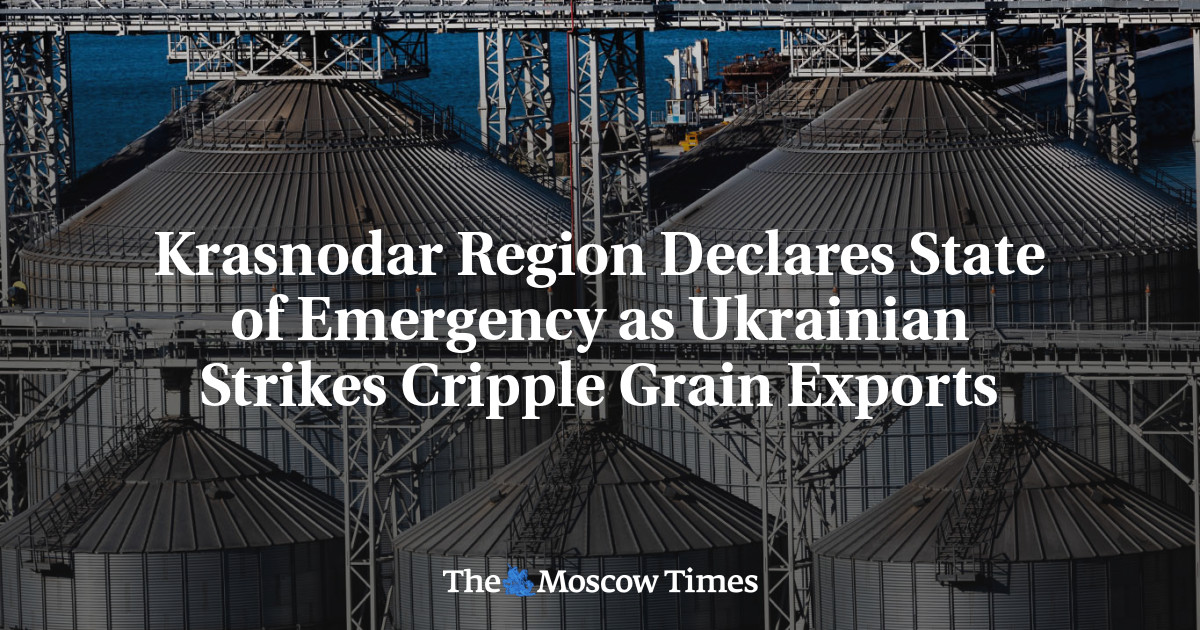
The headline reads like a domestic Russian story: a governor signs a decree, a region braces for shortages. But the non-obvious fact buried in Krasnodar’s state of emergency is that the problem is no longer confined to Russian farms. Ninety percent of the region’s grain export capacity went offline in August. The region’s harvest is running ahead of last year’s output, yet the grain is stacking up in silos because the ships can’t leave. That oversupply is a Russian price problem. The undersupply of everything else — the grain that never reached its intended buyers — is a global one, and it lands hardest on importers in the Middle East and North Africa who treat Russian and Ukrainian wheat as their baseline.
Egypt alone imports roughly half its wheat. Lebanon, Yemen, and several West African nations anchor their food budgets on the same Black Sea corridor. When a quarter of the world’s seaborne wheat trade gets disrupted, the shock doesn’t travel evenly. It hits the poorest importers first, because they have no buffer stock and no diversified supplier list. The Krasnodar emergency, in other words, is a warning shot aimed at Cairo, Beirut, and Conakry, not just Rostov.
What the Numbers Actually Say
Governor Veniamin Kondratyev backdated the emergency order to August 12, which tells you the disruption wasn’t a single event but a slow bleed that authorities only formalized weeks later. Industry analysts put the offline export capacity at 90% for August, and the decree’s own language — “mass attacks on logistics facilities, suspended port operations and disrupted shipping in the Azov-Black Sea basin” — confirms the damage is structural, not incidental. Port cranes are down. Barges aren’t moving. Vessels that would normally queue at Novorossiysk or Taman are idling or diverting.
The Central Bank’s warning this week added a different dimension: prolonged export disruption will depress farmer income, which in turn will suppress planting decisions for the next season. That’s a lead time of eight to twelve months. By the time the FAO releases its spring planting surveys for 2027, the damage to Russian sown acreage may already be locked in. The emergency is not just about this harvest sitting in a field. It’s about next year’s field.
The Rerouting Trick Won’t Clean Up the Gap
Moscow has announced it will shift grain shipments to Baltic and Arctic ports, repurposing fertilizer and coal terminals to handle rail-transported grain. On paper, that moves the volume out of the contested Black Sea corridor. In practice, it introduces a 3,000-to-5,000-kilometer rail leg that did not exist before. Grain that once sailed 80 nautical miles from a river port to a bulk carrier now needs to cross the country by train, sit in a St. Petersburg or Murmansk terminal, and then enter a global freight lane that is already congested with potash and coal.
Shipping analysts have flagged that Baltic grain exports add two to four weeks to delivery times compared with Black Sea routes. For a country like Egypt, where the wheat arrives, gets milled, and feeds a 105-million-person population within a tight inventory window, those extra weeks are the difference between managing a seasonal price bump and triggering a bread-subsidy crisis. The Arctic option is worse: ice-class vessel availability is limited, and the Murmansk corridor is a secondary lane that was never built for high-volume bulk grain in winter.
The result is not zero loss, but a sustained friction cost layered onto every tonne. That friction shows up as freight premium, and freight premium shows up as landed cost in Alexandria or Port Said.
The FAO Cycle and What Comes Next
The FAO Food Price Index publishes a monthly composite of cereal, oilseed, dairy, meat, and sugar. The October reading, due in mid-November, will absorb two full months of Black Sea disruption. The November reading will carry the December forward curve. If the rerouting hasn’t restored even 50% of normal throughput by early December, the index will post a sharp cereal sub-index jump — likely the largest monthly move since the 2022 spike.
For policymakers in import-heavy economies, that jump is the trigger point. Egypt’s Ministry of Finance uses a threshold on the monthly cereal price to activate its import bid on the open market. Lebanon’s central bank ties its wheat purchase program to a similar benchmark. A two-month sustained uptick in the FAO index will force those programs to buy at the top, exactly when the grain is most expensive and the weakest buyers have the least negotiating leverage.
There is also a second-order effect on oilseeds and feed grain. If wheat becomes prohibitively expensive for some buyers, a portion of demand shifts to maize and barley, tightening those markets as well. The FAO’s oilseed sub-index and the meat sub-index, which normally lag the cereal cycle by two to three months, will start to respond by February or March 2027. The food-price pressure won’t be a single spike. It will be a rolling wave.
The Ceasefire Wildcard
The one variable that could bend the curve is the grain-and-energy ceasefire that both Moscow and Kyiv signalled interest in during the Lavrov-Rubio talks on Wednesday. If that framework holds and Black Sea shipping corridors reopen even partially, the 90% offline number becomes a historical footnote rather than a new baseline. But the talks produced no agreed mechanism, no monitoring body, no enforcement clause. Both sides have been attacking each other’s grain vessels for months. Trust is not the constraint here; verification is. Without a neutral monitoring arrangement, any truce is a series of bilateral pauses, and the moment one side perceives an advantage, the strikes resume.
The most likely scenario for the next two quarters is not a clean resolution. It is a grinding partial reopening — some lanes work, some don’t, insurance premiums stay elevated, and the global price settles at a new, higher equilibrium rather than returning to pre-conflict levels. That’s the scenario the FAO index will confirm or deny starting in November.
What to Watch
Three data points will tell you whether the Krasnodar emergency is a contained blip or the start of a structural supply gap:
- UN Comtrade shipment data for Novorossiysk and Odessa, released monthly. If total Black Sea grain exports stay below 70% of the 2024 baseline for two consecutive months, the rerouting story is not working.
- The FAO October index, due mid-November. A cereal sub-index move of more than 4% month-over-month will confirm the importers are feeling it.
- The Egyptian and Turkish tender results for December-march wheat lots. If buyers are paying a war-risk premium above $15 per tonne on freight, the friction cost is permanent, not transitional.
Krasnodar’s silos are full. The world’s tables are not. That gap is where the next few months of food politics will be decided.