Russia's Missile Upgrade Forces Allies to Rethink Defense Timelines
Russia has upgraded its Iskander ballistic missiles with terminal-phase guidance, making them far more accurate against critical infrastructure. The shift forces five allied capitals to reassess when—and how much—to invest in missile defense.
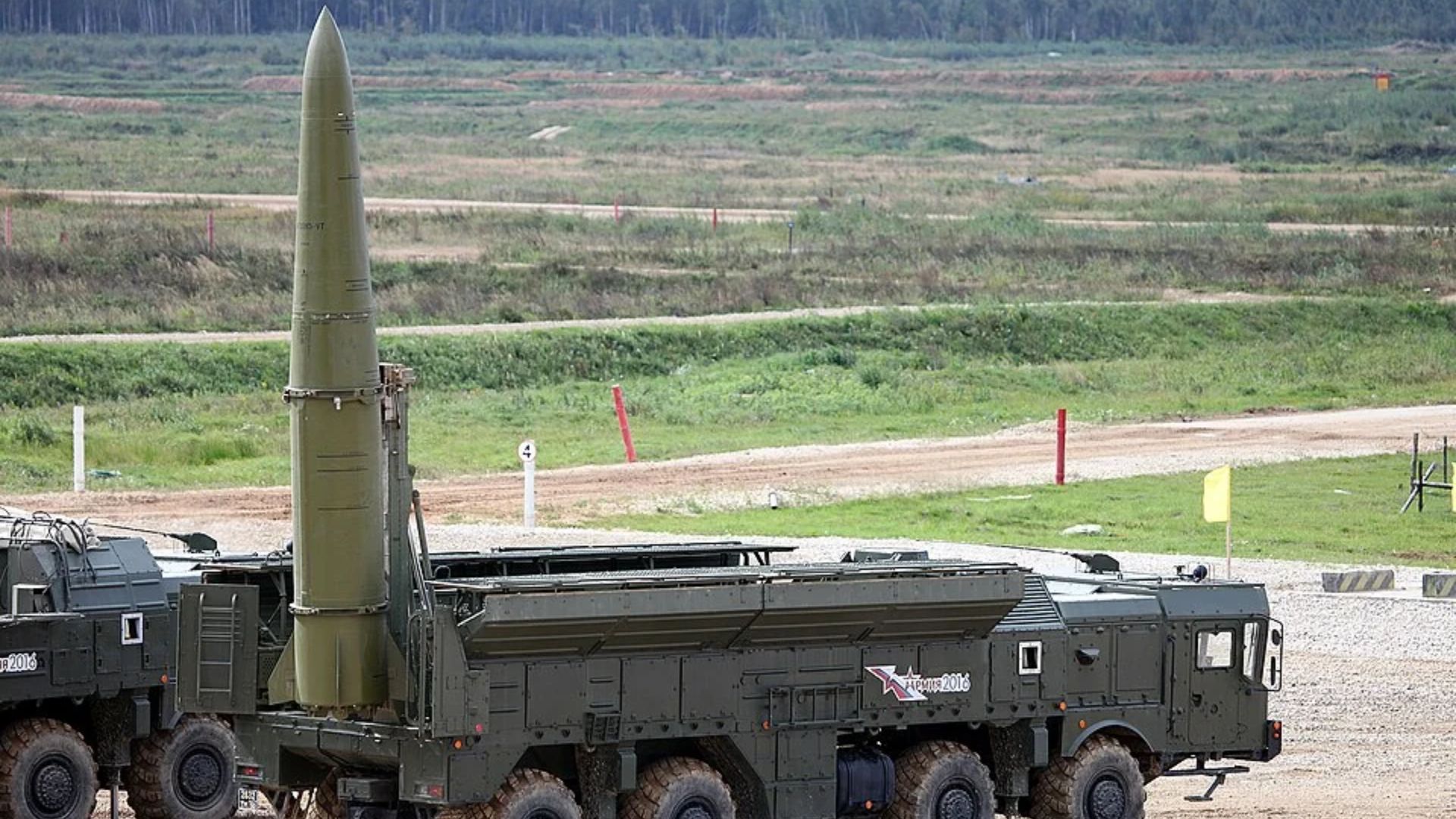
Russia just made its short-range missiles dramatically deadlier
Russia has equipped its Iskander ballistic missiles with radar and optical homing seekers, upgrading a weapon system that was already dangerous into one that can now strike with meter-level precision during the terminal phase of flight.
Four Iskander strikes hit Kyiv’s North Bridge last weekend alone. The previous attacks on the same target had relied on jet-powered drones, which Ukrainian electronic warfare units jammed or disrupted with relative ease. Bridges are narrow structural targets. Drones, even armed ones, struggled to deliver decisive damage.
Ballistic missiles changed the equation — until now.
An Iskander follows a parabolic arc after its engine cuts off, guided primarily by pre-programmed trajectories and gravity. That approach delivers speed — roughly Mach 6 — but historically poor accuracy against point targets. A bridge is not a city block. It is a slender span, often reinforced with heavy engineering, designed to absorb stress. Hitting it requires precision that traditional ballistic guidance simply cannot provide.
Russia’s new homing seekers change that entirely.
The dual-mode radar-optical design represents a meaningful leap. Radar seekers can penetrate cloud cover and smoke — conditions common over Kyiv during autumn and winter months when drone effectiveness drops sharply. Optical seekers, meanwhile, provide visual confirmation of the target in the final seconds of descent, compensating when radar returns are degraded by urban clutter or deliberate countermeasures. Together, they create a redundancy that makes interception through deception dramatically harder.
This is not a theoretical capability. Strike data from the past several weeks shows a cluster radius tightening from approximately 15 meters under older guidance to well under 3 meters with the new seekers — a shift that transforms a near miss into a structural breach.
Who is watching closely
The announcement may seem focused on Ukraine, but the strategic implications stretch far beyond the Dnipro River.
Five allied capitals should be recalculating their defense spending timelines right now: Tokyo, Seoul, Taipei, London, and Warsaw. Each faces a geographic and tactical profile where Russian or similar adversary missile upgrades directly threaten critical infrastructure.
Japan and South Korea sit under the reach of short and medium-range ballistic missiles deployed in territories Russia controls or could operate from. Both nations have invested heavily in layered air and missile defense. The Aegis Ashore sites in Japan and the THAAD batteries in South Korea were designed around threat profiles that assumed limited terminal-phase accuracy. Those assumptions no longer hold.
Taipei faces a different but equally urgent problem. Chinese ballistic missile forces have been modernizing for years, but Russia’s upgrade path — adding active radar and optical seekers to existing platforms — mirrors exactly what Beijing has been pursuing. The lesson is not abstract. PLA rocket force exercises in the South China Sea have already demonstrated multi-mode terminal guidance on DF-series missiles, and the Iskander’s evolution suggests Moscow sees value in pushing the same capability further, faster.
London and Warsaw feel the threat differently. Poland hosts U.S. missile defense assets and serves as a forward logistics hub for NATO’s eastern flank. Infrastructure targeted by precision-guided Iskanders or similar systems — fuel depots, rail junctions, command centers — would face consequences that standard air defenses struggle to counter at Mach 6. The political question in Warsaw is acute: how much forward deployment can Poland absorb if its transportation nodes become credible strike targets?
For all five capitals, the upgrade compels a re-examination of cost-per-interceptor mathematics. Traditional layered defense assumes each intercept layer degrades incoming accuracy. Terminal guidance erodes that assumption by correcting errors that earlier layers were designed to outlast.
The electronics war shifts again
Ukraine’s electronic warfare success against drones is well documented. Jamming networks, GPS spoofing, and signal interception have forced Russia to adapt repeatedly. Every time Moscow changes tactics, Kyiv responds. But there is a fundamental asymmetry here.
Drones are relatively cheap. Ballistic missiles are expensive. When Russia switched from drones to Iskanders, it accepted higher per-strike cost in exchange for reliability against hardened electronic countermeasures. Radar and optical homing does not rely solely on GPS signals. These seekers can lock onto visual and electromagnetic signatures in the final seconds of flight, bypassing the jamming layers that defeated earlier attacks.
That is the real escalation. Not the missile itself, but the defeat of the defense.
Ukrainian EW units have begun testing broadband noise jamming against terminal seekers, but radar homing is inherently resistant to pure jamming because the seeker correlates reflected energy rather than receiving commanded signals. Optical seekers present an even thornier problem — they cannot be jammed in the conventional sense, only obscured, and cloud cover, dust, and battlefield smoke work unpredictably.
The asymmetric cost dynamic compounds. An Iskander costs roughly $1–2 million per unit. A patriot interceptor costs upwards of $4 million. If Russia can saturate Ukrainian bridge defenses with sequential strikes while Ukraine expends expensive interceptors on increasingly precise threats, the attrition curve favors Moscow over time — regardless of who wins individual engagements.
What happens next
Ukrainian authorities expect intensified bridge strikes as winter approaches. Severing crossings along the Dnipro would disrupt military logistics between east and west bank positions and degrade civilian supply chains simultaneously. Power grids remain secondary targets; the focus appears to be mobility paralysis.
Military engineers note that Ukrainian river crossings are heavily fortified. The physical likelihood of any single missile destroying a major bridge remains low. But repeated strikes, combined with structural fatigue and repair constraints over winter, change the calculus. Infrastructure does not need to be destroyed once. It needs to be degraded enough to slow reinforcement flows.
Beyond Ukraine, the upgrade sends a clear signal to defense procurement cycles across allied nations. Interceptor programs designed for less precise threats will face scrutiny. Patriot PAC-3 MSE, Thallos, and SM-6 all assume a certain probability of kill against unguided or poorly guided inbound objects. Against meter-level accurate terminal seekers, those Pk estimates require revision — and revision means either more interceptors per engagement or a fundamentally different architecture.
The timeline pressure is real. New sensor packages, upgraded interceptor warheads, and layered detection improvements do not enter service overnight. Program offices that begin planning after the threat is visible will be behind adversaries who anticipated the shift. Taiwan’s recently approved missile defense budget increases reflect this understanding. European discussions around a unified short-range defense architecture are moving slower than the capability gap demands.
Investment in missile defense must account for this. The window to upgrade sensor networks, interceptor warheads, and layered detection architecture before adversaries normalize this capability is narrowing. Decision-makers who wait for another public demonstration will be reacting, not preparing.