Russia's Oreshnik Deployment in Belarus Changes the Chessboard
Russia has deployed units of its 101st Missile Brigade, equipped with Oreshnik intermediate-range ballistic missiles, in Belarus. The move escalates NATO's eastern flank calculus and could reshape European defense industrial strategy ahead of 2027.
The Deployment Nobody Asked For But Everyone Feels
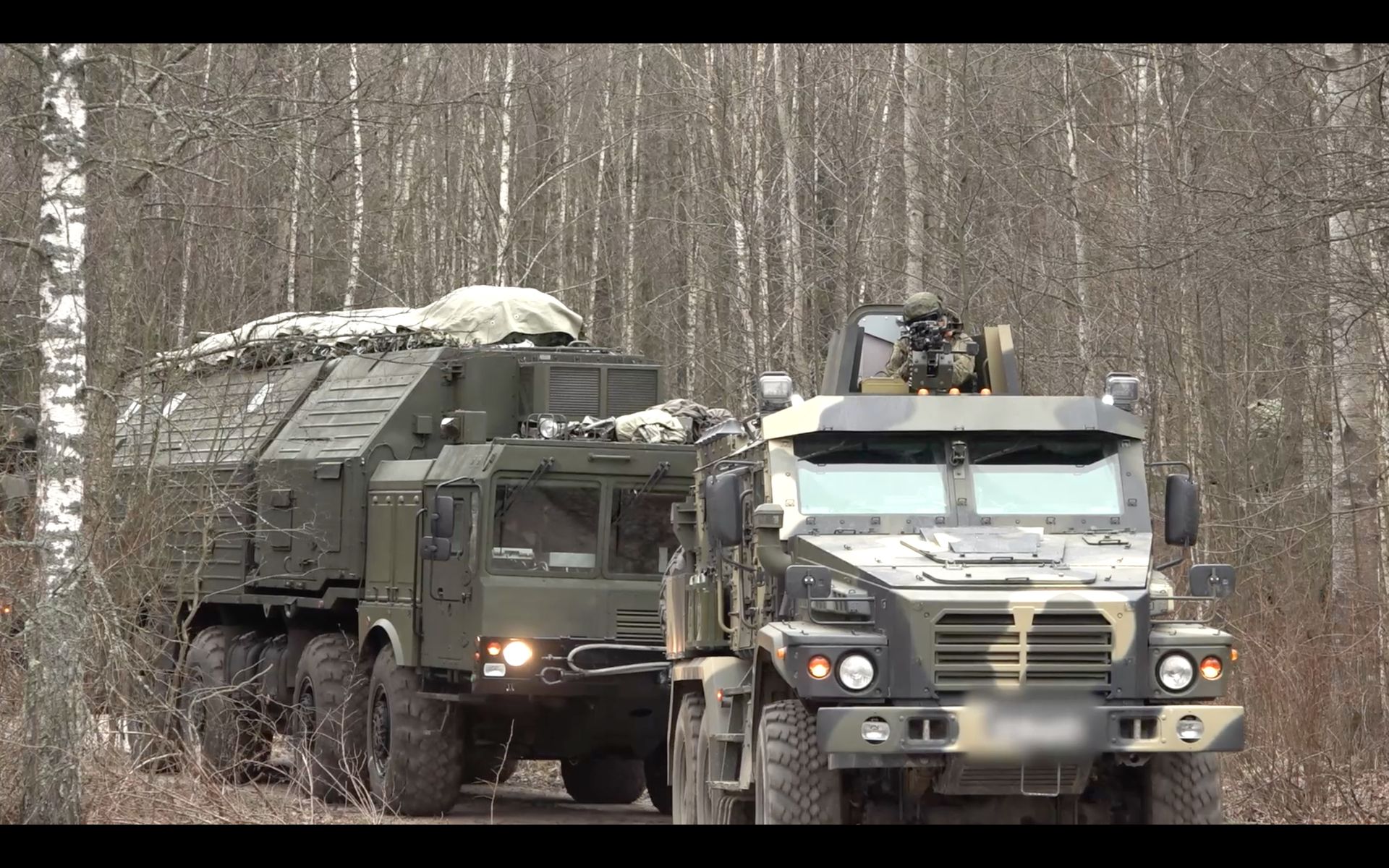
Russia has moved the 101st Missile Brigade into Belarus. Not a promise. Not a threat. Actual units, with actual Oreshnik intermediate-range ballistic missiles, sitting on Belarusian soil as of late December 2025.
Ukraine’s military intelligence chief Oleh Ivashchenko confirmed the deployment in an interview published September 7, 2026. The information chain is precise: Russian Defense Ministry imagery shows the Oreshnik system installed at an undisclosed Belarus location, and Kyiv’s own intelligence confirms the brigade is there. This is not speculation. It is a fait accompli.
What makes this moment significant goes well beyond the missile itself. The Oreshnik’s placement in Belarus changes the geometry of deterrence in Eastern Europe in ways that will reverberate through NATO planning and European defense industrial policy for years.
Why the Oreshnik Is Different From What Came Before
The Oreshnik is believed to be a modified version of the Rubezh surface-to-surface missile. Its defining characteristic is speed. High speed makes it exceptionally difficult to intercept. That is the entire point of its design.
It can carry nuclear warheads. It does not have to. Russia has launched the Oreshnik at Ukraine three times — against Dnipro in November 2024, against western Ukraine including Lviv, and most recently against Bila Tserkva in May 2026, roughly 80 kilometers south of Kyiv. None carried nuclear warheads. The damage from all three attacks has been minimal, which complicates the narrative President Vladimir Putin has constructed around the system being unstoppable.
But minimal damage does not equal minimal threat. An interceptable missile is a nuisance. An intercept-resistant missile is a structural problem.
The Oreshnik’s deployment in Belarus means Ukrainian air defenses now face a system that originates from further north, with less warning time, and against targets that are harder to shoot down. The geography has shifted. The defense calculus has shifted with it.
The Real Escalation Is Strategic, Not Tactical
President Volodymyr Zelensky first flagged the deployment risk more than six months ago. He stated that Belarus was hosting the Oreshnik system and described the preparatory and technical work as already complete. At the time, it was a warning. Now it is a report.
The escalation here is not measured in bomb吨nage or casualty figures. It is measured in the erosion of strategic distance. Belarus has served as a staging ground for Russian operations, but the permanent stationing of an intermediate-range missile brigade changes the nature of that role. It transforms Belarus from a logistical partner into a forward deployment zone for strategic strike capability.
NATO’s eastern flank was already under pressure. The Oreshnik deployment adds a layer of complexity that existing deterrence postures were not designed to handle. European air defense systems that could track and engage slower, conventional threats now face a platform that demands entirely different engagement protocols.
The Radio Repeater Question
Ivashchenko raised a second concern that deserves equal attention. Belarus has granted Russia permission to deploy radio signal repeaters on its territory. These repeaters adjust Shahed drone strikes on Ukrainian civilian infrastructure and critical installations.
This is not a military formality. It is operational infrastructure. Radio signal repeaters extend the effective range and precision of Iranian-designed Shahed drones, which have become a central instrument of Russian strategic bombing. Without them, the drones operate at reduced effectiveness. With them, they are more dangerous.
Ivashchenko’s assessment was blunt: if Belarus did not grant this permission, it would indicate that Minsk no longer controls Russian activities on its territory. The implication cuts both ways. Either Minsk has lost control of its sovereign space, or it has willingly opened it to Russia’s war machine. Neither scenario is reassuring for Kyiv or for NATO.
What This Means for European Defense Planning
The Oreshnik deployment in Belarus forces a recalibration. European defense industrial strategy heading into 2027 must account for a new reality: an intermediate-range ballistic missile system, capable of nuclear delivery, operating from a NATO-adjacent state that is not itself a NATO member.
The existing European air defense architecture was designed for threats that launch from Russian territory or from occupied Ukrainian ground. It was not designed for threats that launch from a third country with ambiguous political commitments and deepening military integration with Moscow.
This has concrete implications. Air defense systems need to engage targets from new azimuths. Early warning assets need to cover new trajectories. Interceptor stocks need to account for a threat profile that is faster, higher, and harder to predict than anything currently facing European forces.
The timeline matters. If European defense production does not accelerate before 2027, the window to respond to this deployment meaningfully will have closed. The Oreshnik is already in place. The countermeasures are not.
The Belarus Threat Assessment
Kyiv currently sees no signs that Belarus is preparing to enter the war directly. The threat from the north remains low in terms of offensive capability. But low offensive threat does not mean low strategic risk. Belarus is already providing the infrastructure that makes Russia’s war more effective — missile bases, radio repeaters, staging areas.
Alexander Lukashenko has ruled Belarus since 1994. His government has provided political and military support to Russia since the full-scale invasion began in 2022. The Oreshnik deployment is the logical extension of that relationship, not a rupture from it.
What Comes Next
The deployment of the 101st Missile Brigade in Belarus is a tangible escalation. It challenges NATO’s eastern deterrence posture directly. It reshapes the defensive calculations that European militaries have been making for years.
The question is no longer whether the Oreshnik is in Belarus. It is how quickly Europe can adapt to the fact that it is there.
The answer will determine whether NATO’s eastern flank remains deterrent or becomes merely reactive.