The Diesel Deal That Could Fracture NATO
Trump's temporary lifting of sanctions on Russian diesel isn't just a fuel purchase — it's a geopolitical pivot that rewards Putin, angers Kyiv, and tests alliance cohesion ahead of midterms.
The Diesel Deal That Could Fracture NATO
Donald Trump confirmed what his advisers had been quietly preparing for months: the United States will once again buy Russian diesel, and the sanctions designed to punish Vladimir Putin for invading Ukraine will be paused to make room.
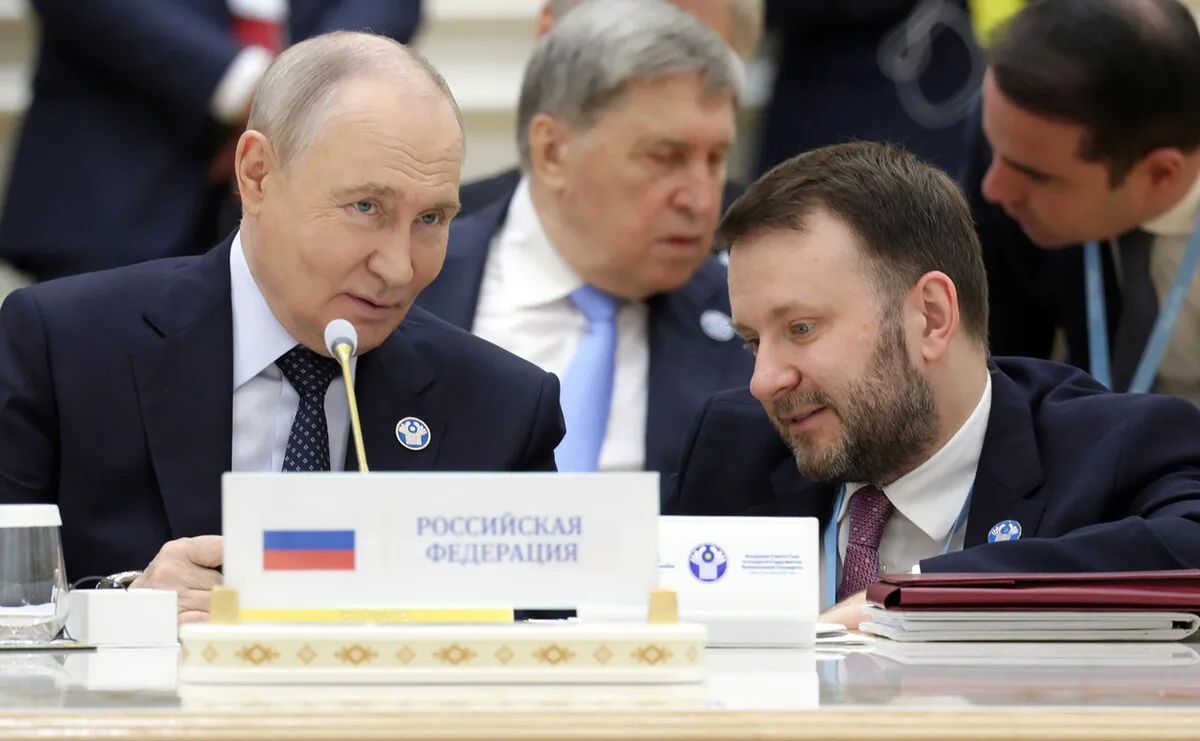
The announcement came October 9 at the Caspian Sea summit in Turkmenistan, where Trump posted on Truth Social that he and Putin had reached agreement for Moscow to supply at least 300,000 metric tons of diesel to the US and global markets immediately, with an additional 500,000 tons coming in November and a million more shortly after. The total pipeline — including a potential 3 million ton stretch later — reaches 4.8 million tons. That is not a marginal shipment. It is a material reopening of a channel the United States sealed shut in 2022.
The US Treasury Department moved quickly to formalize the deal. The Office of Foreign Assets Control issued a temporary general license allowing the sale, delivery, and importation of Russian diesel through April 6, 2026. The measure is framed as a one-time exemption, but its existence alone reframes how Washington communicates about Russian energy — even if the shipments are destined for global buyers rather than American refineries exclusively, the precedent matters more than the volume.
Why the Timing Is Everything
The domestic political calculus is blunt. US diesel prices have climbed roughly 70 percent since the onset of tensions involving Iran, a spike that has landed directly on American consumers and intensified pressure on the Trump administration ahead of the November midterm elections. Energy costs are not abstract macro indicators when they show up at the pump and in heating bills. Midterms punish incumbents, and fuel affordability is one of the fastest ways to measure that punishment.
But the timing cuts deeper than election math. The Iranian crisis triggered a genuine supply shock in global refined products, not merely a speculative run-up. Shipping routes through the Strait of Hormuz were disrupted, and insurers pushed premiums to levels that made many cargoes uneconomic to move. European refineries, already operating under margin pressure from reduced Russian crude inputs, found themselves bidding against Asian buyers for alternative feedstocks. The result was a cascading effect: less gasoline blending capacity, tighter distillate markets, and rising wholesale heating oil prices heading into winter.
Russia, for its part, signaled readiness within hours. Deputy Prime Minister Alexander Novak said Moscow would begin lifting its own diesel export restrictions immediately, with October supplies of 300,000 tons already targeted at global markets. Russian refineries are coming back online after maintenance windows, and the timing suggests a coordinated rollout between the two governments rather than a spontaneous market adjustment. The Kremlin has been watching US domestic pain from the Iran shock with clear interest, and this deal represents a direct monetization of that leverage.
The Ukrainian Reaction Was Immediate and Predictable
Volodymyr Zelensky did not mince words. He called the arrangement a gift to Putin on his birthday and labeled it a “war investment” — a phrase that carries more economic weight than it might initially suggest. Zelensky argued on X that allowing Russia to sell petroleum products effectively extends the war by giving Moscow revenue it would otherwise lose under sanctions. “Russia will repay the diesel deal with more terror and betrayal,” he wrote.
Zelensky’s framing is accurate in narrow terms. Sanctions on Russian energy were never intended to cripple Russia’s economy overnight — they were designed to create a durable financial floor under which Moscow’s war machine would gradually starve. A temporary suspension of that pressure does not erase the war, but it does weaken the specific mechanism that has constrained Russian spending. Even a few months of elevated export revenue matters when your defense budget is under strain.
The second-order effects of that revenue are where Zelensky’s warning gains even more urgency. Russian defense spending has already absorbed roughly 30 percent of the federal budget, and every additional billion in energy exports eases the pressure on that allocation. It means fewer trade-offs between munitions production and social spending, fewer delays in weapon refurbishment cycles, and more flexibility for Putin to sustain offensive operations along the entire front. The diesel deal does not win Russia the war, but it removes one of the constraints that was slowly forcing Moscow to adjust its strategy.
What European Allies Will See
The deeper damage may not be to Ukraine but to NATO cohesion. European governments have spent three years aligning their energy policy with the principle that Russian fossil fuels are a weapon to be restricted, not a commodity to be reimported selectively. The US lifting its ban creates a moral hazard for European capitals: if Washington can relax sanctions for domestic political gain, why should Europe continue to absorb higher energy costs and slower industrial growth?
Germany, Poland, and the Baltic states will read this as a signal that American commitment to the sanctions regime is conditional rather than structural. That distinction matters. Conditional solidarity is harder to build policy around than unconditional solidarity, and it gives Moscow an opening it has been seeking since 2022. Russian diplomats have already begun circulating talking points that frame the diesel deal as evidence that Western unity is a performance, not a constraint.
The French and Italian governments are particularly vulnerable here. Both have smaller fiscal buffers than Germany and face their own political pressures from industrial manufacturers who blame energy costs for declining competitiveness. A US exemption on Russian diesel gives those governments a ready-made argument for recalibrating their own energy stances — not an outright reversal, but a gradual softening that Moscow needs far more than it needs a single shipment of fuel. The erosion is incremental, which is precisely what makes it dangerous.
There is also a procedural concern that will reverberate through allied capitals. The Treasury license was issued unilaterally, without consultation with NATO partners or the European Union. That pattern — action first, explanation later — reinforces a growing perception that American energy policy is becoming increasingly transactional and domestically driven, even when it touches collective security arrangements. European officials have privately expressed frustration with this approach before; the diesel deal gives them fresh ammunition to press for greater strategic autonomy in energy and defense policy, something France has championed and Germany has cautiously explored.
The Global Market and Shipping Dimensions
Beyond the political fallout, the diesel deal reshapes certain corners of global energy logistics. The 4.8 million tons authorized represent roughly 1.5 to 2 percent of annual Russian diesel exports — not enough to collapse prices, but enough to tighten a market that has been fragile since the Iran disruptions. Refineries in India, Turkey, and West Africa that had pivoted away from Russian product during the sanctions peak may now reassess their supply chains, and that reallocation will move slowly through the market.
The shipping dimension matters too. A significant portion of Russian diesel exports moves on owned or chartered Russian fleet vessels rather than on spot-market tankers. Those ships do not need western insurance or financing, which is precisely why the sanctions regime originally targeted those enablers. The Treasury license appears to carve out a pathway that sidesteps some of those restrictions, effectively allowing Russian-flagged or Russian-controlled vessels to move product to paying buyers with reduced legal risk. That loophole, even if narrow, will be tested immediately by traders who have been waiting for an opening.
What Happens Next
The April 2026 expiration date on the Treasury license is the key variable. If the exemption lapses without renewal, the deal will look like a short-term market intervention. If it is extended — as is plausible given the same political incentives that drove the original decision — the sanctions architecture will have undergone a quiet revision rather than a dramatic collapse.
Either way, the immediate trajectory is clear. Russian diesel will flow. Global prices will soften somewhat, particularly in markets that were already buying Russian product at discounted rates. Ukraine will receive less financial and diplomatic support from Washington than Kyiv expects, at least in the period surrounding the midterms. And NATO partners will reassess how much they can rely on American consistency when American domestic politics shift.
The longer-term consequence may be harder to quantify but more consequential. The post-2022 sanctions order was built on the assumption that economic pressure could be sustained across multiple administrations and electoral cycles. This deal demonstrates that assumption was fragile. When the primary enforcer of sanctions treats them as reversible policy tools rather than structural commitments, every other actor recalibrates accordingly. Russia learns that patience pays. European allies learn that American leadership may be unreliable under domestic pressure. Ukrainian partners learn that their security cannot be contingent on American political calendars.
The deal is larger than 4.8 million tons of fuel. It is a test of whether the post-2022 sanctions order was ever as solid as its architects assumed — and the early reading suggests it was not.