Russia's Plague Lab Incident Tests Global Biosecurity Norms
A researcher's death at a Siberian plague institute has triggered quarantines and international scrutiny, reigniting debates over lab transparency and the durability of post-Soviet biosafety frameworks.
A Death in Siberia
The first thing anyone should know about the Irkutsk incident is not that a researcher died — it is that no one knows why she died, and that uncertainty is spreading faster than any pathogen could.
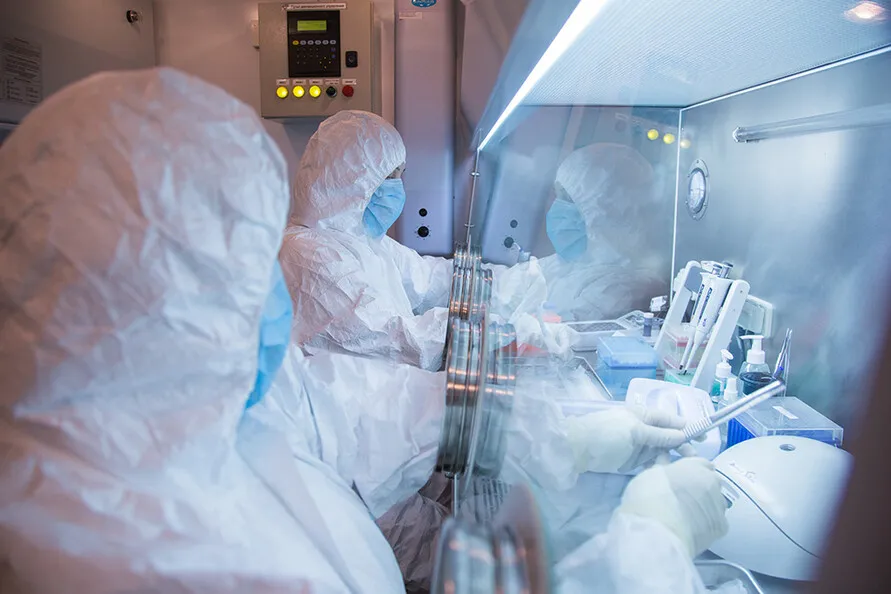
Darya Shipilova, 28, worked at the Siberian Research Anti-Plague Institute in Irkutsk, a facility that has been part of Russia’s public health infrastructure since the Soviet era. She died between January 1 and 2 at a hospital in Shelyab, a town outside Irkutsk. The official cause: pneumonia of unknown origin. A local outlet, Lyudi Baikala, reported that a source close to regional security authorities believed Shipilova had broken a test tube containing pneumonic plague bacteria on January 25 — and that this could be the real explanation.
If that report is accurate, Russia would be facing its first confirmed plague case in a decade. If it is not — and Russian authorities insist it is not — then something else killed a young researcher who handled deadly pathogens for a living, and the world still does not know what.
Who Wins, Who Loses
The immediate loser is Shipilova. The secondary losers are everyone within a two-hundred-meter radius of the Shelyab hospital, roughly 200 people now in quarantine, and the aluminum plant across town that has been ordered to mask up its workforce. The primary winner, strangely enough, is the Russian government’s institutional credibility — which has taken a hit it may not recover from.
Moscow has moved quickly to contain the narrative. Igor Kobzev, the governor of Irkutsk Oblast, held a press conference on January 5 and stated that tests by Rospotrebnadzor, Russia’s public health watchdog, found no work-related microorganisms in Shipilova’s biological samples. He called the situation “under control.” Kremlin spokesperson Dmitry Peskov told reporters the same day: follow the official statement, not rumors.
But the speed and specificity of that response raises its own question. Why rush to deny a plague link so aggressively? The answer, in any authoritarian-adjacent state, is obvious: acknowledgment of a lab-acquired plague infection would force a public health response far beyond quarantine and face masks. It would trigger travel restrictions. It would trigger insurance claims. It would trigger a conversation about whether Russia’s anti-plague research program — which has been criticized in the past for aging infrastructure and insufficient oversight — is safe.
The international community is watching, and not entirely quietly.
The Geopolitical Layer
The United States has taken a peculiarly muted but pointed stance. President Donald Trump told reporters the incident was “a big problem for Russia” and offered assistance “to the best of our ability.” Secretary of State Marco Rubio said officials are monitoring the situation closely but added: “There is no reason to be alarmed.” Axios, citing unnamed Trump administration officials, reported that the White House is aware of the situation and reviewing response options.
The European Union was similarly measured. A European Commission spokesperson told AFP on January 5 that the EU Disease Prevention and Control Centre (ECDC) is in close contact with experts and that Europe is “much better prepared” for any infectious disease than during the coronavirus pandemic.
The World Health Organization issued a brief statement calling the risk to the general public “low” based on current information, while Ian Jones, a virology professor at the University of Reading, told the AP that plague remains a real — though historically contained — threat in Russia and elsewhere.
None of those statements say what anyone actually wants to hear: whether the test tube really broke.
What We Actually Know
Let us list the facts, because they are few and fragile:
- A 28-year-old woman who worked at a plague research institute in Irkutsk died of pneumonia.
- Local media reported she may have been exposed to pneumonic plague bacteria on January 25.
- Russian authorities tested her samples and found no plague bacteria.
- Two of her contacts tested positive for COVID-19 and rhinovirus respectively; no other infections were detected.
- No additional cases have been identified at the institute.
- Approximately 200 people have been quarantined.
- The Shelyab hospital has suspended admissions and discharges.
That is the full inventory. Everything else — the test tube theory, the timeline, the true cause of death — remains speculation dressed in authority or journalism depending on who you trust.
Why This Matters Beyond Siberia
Plague is not a new threat. It killed millions in the medieval period and has killed thousands in the twenty-first century alone, mostly in Africa and Central Asia. Russia has endemic foci in its southern regions, and the Irkutsk institute has been studying the pathogen since 1949. Pneumonic plague — the form that spreads through the air via respiratory droplets — is the most dangerous variant: untreated, it kills within days. Treated with antibiotics early, most patients survive.
The real story here is not the disease. It is the institution. Russia’s Soviet-era biosafety infrastructure was never fully modernized after 1991. Funding has been inconsistent. Oversight has been opaque. The world watched with deep concern during the 2014 anthrax leak in Siberia, which killed one person and was initially denied by authorities. That incident was supposed to be a warning.
This one is a reckoning.
The Transparency Deficit
What makes the Irkutsk incident difficult to assess is not the science — plague is well understood, its transmission routes mapped, its treatments available. What makes it difficult is the information environment. Russian authorities are controlling the narrative with speed and precision. Independent journalists are working from anonymous sources and unverified claims. International observers are issuing cautious statements calibrated to avoid escalation.
No one is lying, necessarily. But no one is telling the whole truth either.
The EU and the United States have every reason to be cautious here. Direct criticism of a Russian lab incident would look like geopolitical opportunism. Silence would look like indifference to a genuine biosafety failure. The balancing act is exhausting and ultimately unsatisfying for everyone.
What Comes Next
The quarantine in Shelyab will expire. The aluminum plant will lift its masking mandate. The Irkutsk institute will resume work. And then the world will move on — as it always does — until the next incident forces the same conversation again.
But this time the conversation should be harder and clearer. Lab accidents happen. They happen in wealthy countries and poor ones, in democratic states and authoritarian ones. The difference between a contained incident and a crisis is transparency, preparedness, and trust. Russia has failed on all three in this case.
The 200 people in quarantine deserve to know why. The residents of Irkutsk deserve to know what pathogens their government studies and whether the buildings are safe. The international community deserves to know whether the Irkutsk incident is an isolated failure or a symptom of a systemic problem that has been festering since the Soviet collapse.
So far, the answers are coming slowly, and they are not complete.
That is the real plague here — not Yersinia pestis, but uncertainty. And uncertainty, unlike bacteria, does not respond to antibiotics.