Russian Spies Are Leaving Feces in Politicians' Toilets — A Dark New
A series of home invasions targeting Finnish lawmakers has revealed an unsettling cold war tactic resurfacing in modern hybrid warfare. The message left behind is unmistakable: you are not safe, even here.
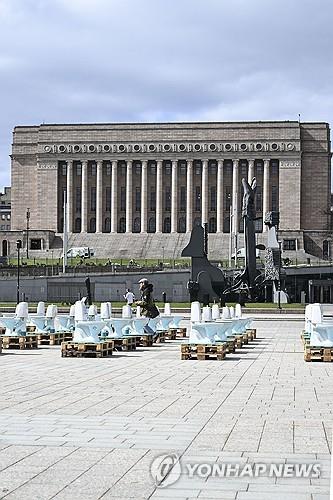
The Bowl as a Weapon
Twenty Finnish Members of Parliament reported home invasions in a single week. One lawmaker found something inside their toilet bowl that no one should ever find — and no one in modern Europe should have to process as a political threat. But that is exactly what has happened. Finland’s ruling party has publicly blamed Russian intelligence for a campaign of domestic intrusions designed to do more than steal documents or plant bugs. The intruders are leaving messages.
The message is crude, visceral, and deliberate. It says: we were in your home, we used your facilities, we left something behind as a calling card. You are watched. You are not safe. Even here, in the most private corner of your life, someone is keeping count.
This is not a new tactic. It is one of the oldest tricks in the Soviet intelligence playbook, deployed against political opponents during the Cold War with the specific intent of inducing paranoia, isolating targets, and eroding the psychological stability of people already under surveillance. What is new is the context. Finland joined NATO less than two years ago. It is now on the front line of a continent-wide information war that Russia has been waging for over a decade. And what was once reserved for dissidents in Moscow-controlled territory is now being used against sitting legislators in a Western democratic alliance.
Who Is Being Targeted and Why
The scale matters. Twenty intrusions in seven days against elected officials is not a coincidence. It is a pattern. Each incident sends a signal to the rest of the parliamentary body. Every MP who finds their home violated learns the same lesson: nothing is off limits. The state cannot protect you from every breach, and you cannot trust your own walls.
A senior figure in Finland’s ruling coalition told the BBC that the intrusions were clearly designed to demonstrate that politicians are being watched. That is the entire point. The feces left in the toilet is not random vandalism. It is a signature. It tells the target that Russian operatives were close enough to use their bathroom, close enough to leave a biological trace, close enough to know exactly when the occupant would be absent and when they would return.
The psychological effect compounds with each incident. Sleep disruption. Heightened anxiety. The erosion of the basic sense of domestic security that every citizen in a functioning democracy takes for granted. These are not abstract concerns. A lawmaker who cannot sleep is a lawmaker who makes worse decisions. A parliament that cannot trust its own members is a parliament that cannot govern.
The Broader Campaign
This is happening at a moment when Finland’s geopolitical position has shifted dramatically. The country shares a 1,340-kilometer border with Russia. For centuries it balanced between powers. For decades it pursued armed neutrality. Last year it formally joined NATO. Russia has responded with everything from cyberattacks on government infrastructure to the detonation of underwater cables in the Baltic Sea to low-level harassment of military aircraft along the new NATO border. The home invasions are another tool in the same toolkit.
The Telegraph reported that at least one Finnish MP discovered the substance in their toilet. Finnish police have opened investigations. The ruling party has gone public with the accusation. That public attribution is itself a significant development — it signals that Helsinki sees this not as a series of isolated break-ins but as a coordinated campaign and is willing to name the actor.
Similar incidents have surfaced elsewhere. In 2023, the Wall Street Journal reported that a senior U.S. official traveling to Russia found human feces packed inside a sealed travel bag — an act attributed to the FSB. Sarah Rainsford, the BBC’s former Russia correspondent, described in her 2024 memoir How Do You Fight a Monster? that spies had entered her apartment and left large stools in multiple toilets without flushing them. Each incident follows the same logic: maximize humiliation and dread while staying just far enough below the threshold that triggers a military or overt diplomatic response.
The Calculated Ambiguity
This is what makes the tactic so effective and so dangerous. It is designed to exist in a gray zone. If a government responds with the same force it would deploy against a conventional military attack, it looks unstable. If it does nothing, it looks weak. The intrusions are serious but not lethal. They violate privacy and safety norms without crossing into physical harm. They are meant to generate fear without provoking a proportional response.
That ambiguity is the entire strategy. Hybrid warfare operates precisely in these spaces between peace and conflict. It targets the weakest point in a democratic system: the expectation of normalcy. Once that expectation is broken, the damage spreads far beyond the individual victim. Other politicians withdraw. Other citizens feel vulnerable. Other institutions look incapable. The goal is not to topple a government in a single stroke but to erode confidence slowly, incrementally, until the cost of governance itself feels unsustainable.
What Comes Next
Finland is not alone. Sweden has reported similar intrusions. Estonia, Latvia, and Lithuania have all faced relentless cyber and physical intimidation campaigns linked to Russian intelligence services. The pattern is continental. NATO’s eastern flank is being subjected to a sustained campaign of domestic disruption that has so far received far less attention than kinetic conflicts or election interference operations.
The response from democratic governments has been inconsistent. Some countries have treated individual incidents as criminal matters and moved on. Others have raised public alarms. Few have built comprehensive countermeasures that address the full spectrum of threats — from digital surveillance to physical break-ins to psychological operations aimed at the personal lives of public officials.
Protecting democratic institutions requires more than securing voting systems and critical infrastructure. It requires understanding that the battlefield now includes bedrooms, bathrooms, and the private lives of the people who govern. The feces in the toilet is grotesque and absurd, but it is also a signal that a very serious campaign is underway. The question for European democracies is not whether Russia will keep escalating. The question is whether they will recognize the escalation for what it is before the next target is someone other than a politician.
The Bigger Picture
What English-language readers often miss about these stories is how routine they have become for Finns and Baltic citizens. For two decades, Russian hybrid tactics have been tested, refined, and adapted against smaller European democracies. The 2022 invasion of Ukraine forced a reckoning across the continent. But the slow, grinding campaign against political elites — the break-ins, the surveillance, the threats dressed up as pranks — continued almost uninterrupted after that invasion began.
The domestic intrusion campaign against Finnish lawmakers is a case study in how hybrid warfare actually works in practice. It is not dramatic. It does not make headline graphics. It happens in quiet neighborhoods, in private homes, in the vulnerable hours between midnight and dawn. And its impact is measured not in territory lost but in trust eroded, in paranoia installed, in the slow realization that in the twenty-first century, your government may not be able to keep you safe in your own home.
The bowels of democracy may not be the most glamorous battleground, but they are where the psychological war is being fought — one violation at a time.