Russia's Secret Missile Deal with Iran Is a Masterstroke
A Financial Times investigation reveals Russia has been secretly helping Iran build supersonic cruise missiles since 2023 — a technology exchange that could redraw the balance of power in the Middle East and stretch US military posture thin.
A Second Front Opens Before the First Ends
The Financial Times report that surfaced Tuesday is not merely another entry in the long ledger of Russia-Iran military cooperation. It is a quiet acknowledgment of something far more consequential: Moscow has deliberately created a second theater of strategic competition while its war in Ukraine rages on the first.
According to the report, codenamed C430L, the program began preparing before it was formally signed in November 2023 — just one month after the October 7 attacks reshaped the Middle East. That timing is not incidental. The war in Gaza and the widening regional crisis gave Russia a window. While Washington’s attention fractured between Europe and the Middle East, Moscow moved.
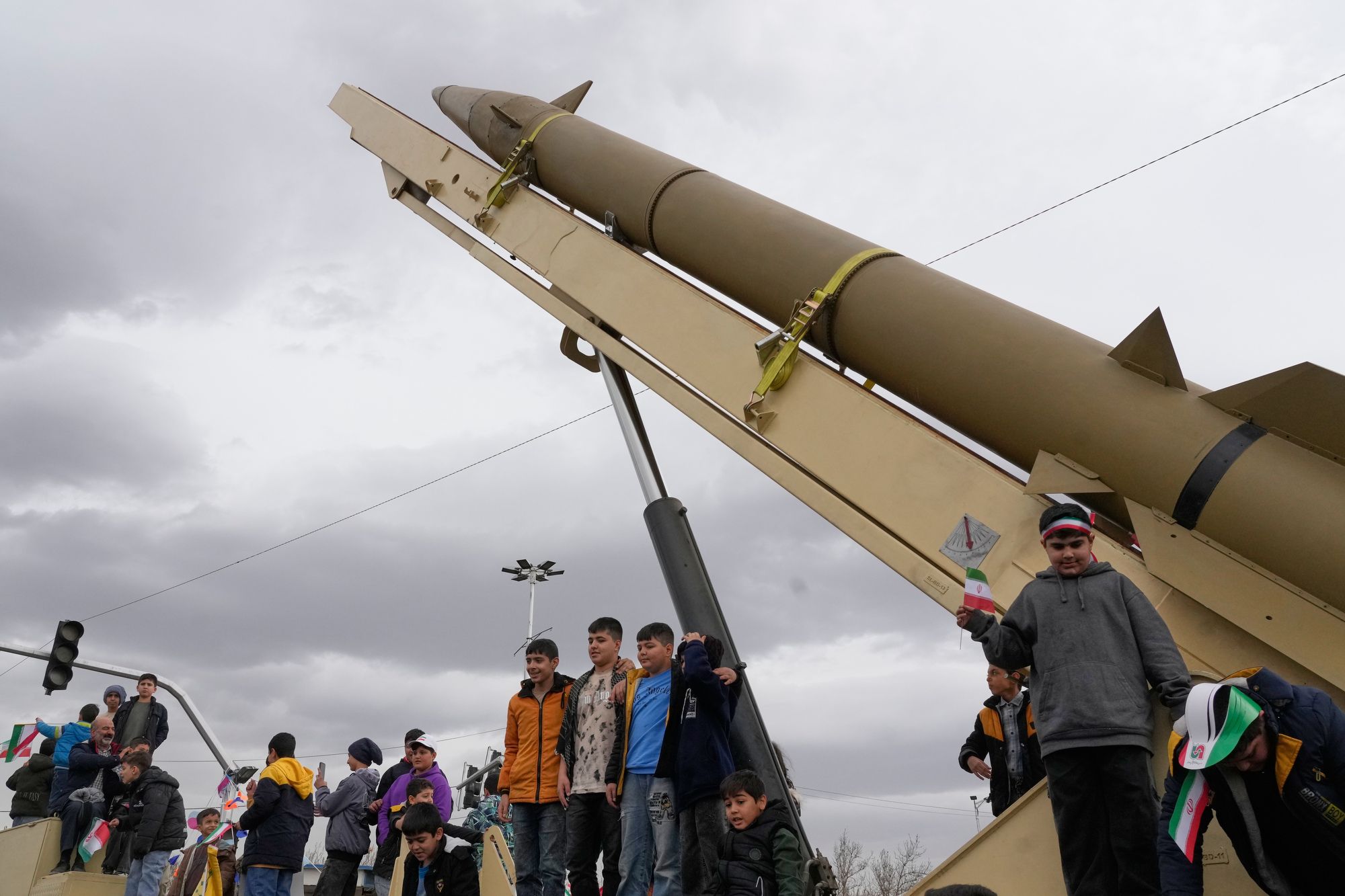
The objective was specific and ominous: help Iran develop ramjet-propelled supersonic cruise missiles capable of striking US Navy aircraft carriers operating in the region. Ramjet engines allow missiles to maintain high speeds at low altitudes, compressing the time Western air defense systems have to detect, track, and intercept them. At several times the speed of sound, these weapons change the calculus of carrier group protection — a problem the US Pentagon has warned about for years but never faced in practice against a near-peer adversary’s supply chain.
The Exchange No One Saw Coming
The most revealing detail is not what Russia gave Iran, but what it received in return. Multiple sources indicate this was a technology exchange: Iran provided drone technology that has proved decisive on the Ukrainian front, while Russia supplied advanced propulsion know-how. This reciprocity suggests the arrangement was not improvised — it required approval from the highest echelons of the Russian government and was designed to endure.
Iran had been pursuing ramjet capability since at least 2019, when Supreme Leader Ali Khamenei was photographed inspecting development sites. Iranian state media documented ramjet prototype testing in August 2023. What Russia’s assistance appears to have done is accelerate that timeline and push it past the prototype stage toward operational deployment.
The FT investigation found that support did not pause when the US-Iran war erupted in February 2026. On the contrary, Moscow provided significant assistance during Iran’s attacks on Gulf states. That trajectory — from secret preparation in late 2023 through active battlefield support in 2026 — indicates institutional commitment far deeper than the covert procurement arrangements that characterized earlier phases of the relationship.
Who Wins, Who Loses
Russia wins immediately. Every Iranian drone that falls on Ukrainian positions is a Russian drone that does not need to be produced domestically. Every supersonic missile Iran deploys against a US carrier group is American defensive assets drawn away from the Baltic and Black Sea. As Nicole Grajewski of Sciences Po University told the FT, Moscow is explicitly trying to broaden the Ukraine war and draw the United States into different theaters. The C430L program is the mechanism.
Iran wins too, though with longer-term risks. Access to Russian propulsion technology closes the single most persistent gap in its missile arsenal. But dependence on a supply chain that runs through Russian territory and control introduces a vulnerability Iran has spent decades trying to escape. The regime gains a potent deterrent overnight but trades strategic autonomy for technical access — a bargain that may not hold if relations with Moscow shift.
The United States loses on both fronts. Its carrier groups in the Persian Gulf and eastern Mediterranean now face threats their defenses were not designed to counter at scale. And its military and diplomatic resources are pulled further thin, forced to respond to crises in two regions simultaneously while domestic political pressure mounts over where to allocate attention and budget.
Israel and the Gulf states occupy the ground between. They face the direct consequence of a militarily enhanced Iran while having limited ability to influence the geopolitical forces that made it possible.
Why the Timing Matters
The C430L program was conceived in the month following October 7. That is the most important date in this story. Russia did not wait for the Iran nuclear deal to collapse or for sanctions to tighten. It waited for American focus to split — and it calculated correctly that the conflict in the Middle East would consume Washington’s strategic bandwidth for months, if not years.
The subsequent US-Iran war in February 2026 was the moment Moscow chose to move from preparation to active support. The war did not create the program; it activated it. By then, the technology transfer infrastructure was already in place.
Meanwhile, the 14 people killed in a Russian missile strike on Kyiv this same week serve as a reminder that the original war continues unabated. Two conflicts, one strategy.
What Comes Next
The most immediate implication is doctrinal. US carrier battle group tactics in the Persian Gulf and Red Sea will require revision. Current defensive layers — the Aegis system, ESSM missiles, close-in weapon systems — were designed around subsonic and manhattan-speed threats. Supersonic ramjet cruise missiles flying low and fast compress reaction windows to seconds, not minutes. The Pentagon will need to invest heavily in sensor acceleration and layered intercept strategies, or accept that carrier presence in the region carries risk it has not faced since the Cold War.
Diplomatically, the report should force a reckoning in Washington over whether secondary sanctions on Russian defense firms are enforced with anything approaching consistency. The C430L program operated openly enough to be documented by Western intelligence yet apparently without consequence — a signal that will not go unobserved by other potential partners.
For Iran, the question is whether the new missile capability will be used defensively, as a deterrent against regime change, or offensively, as a bargaining chip in future negotiations. History suggests the latter. A weapons program this visible and this expensive is rarely kept quietly in the vault.
And for Russia, the C430L program represents something rare in its current strategic posture: a move that works. It weakens a rival without firing a shot in its direction. It secures material support for a war it cannot afford to lose. And it does so while keeping its own industrial base largely intact.
The FT report calls it secret cooperation. The record suggests something more accurate: calculated diversification. Moscow has learned that when the West looks one way, it can move another. The question now is whether Washington will keep looking.