Russia’s Kyiv Strike Signals a New Phase in the War
Russia’s missile and drone assault on Kyiv came hours after the departure of US envoys, ending a fragile truce that was never intended to hold. The timing reveals how peace diplomacy has become just another phase of the conflict.
The truce was never real
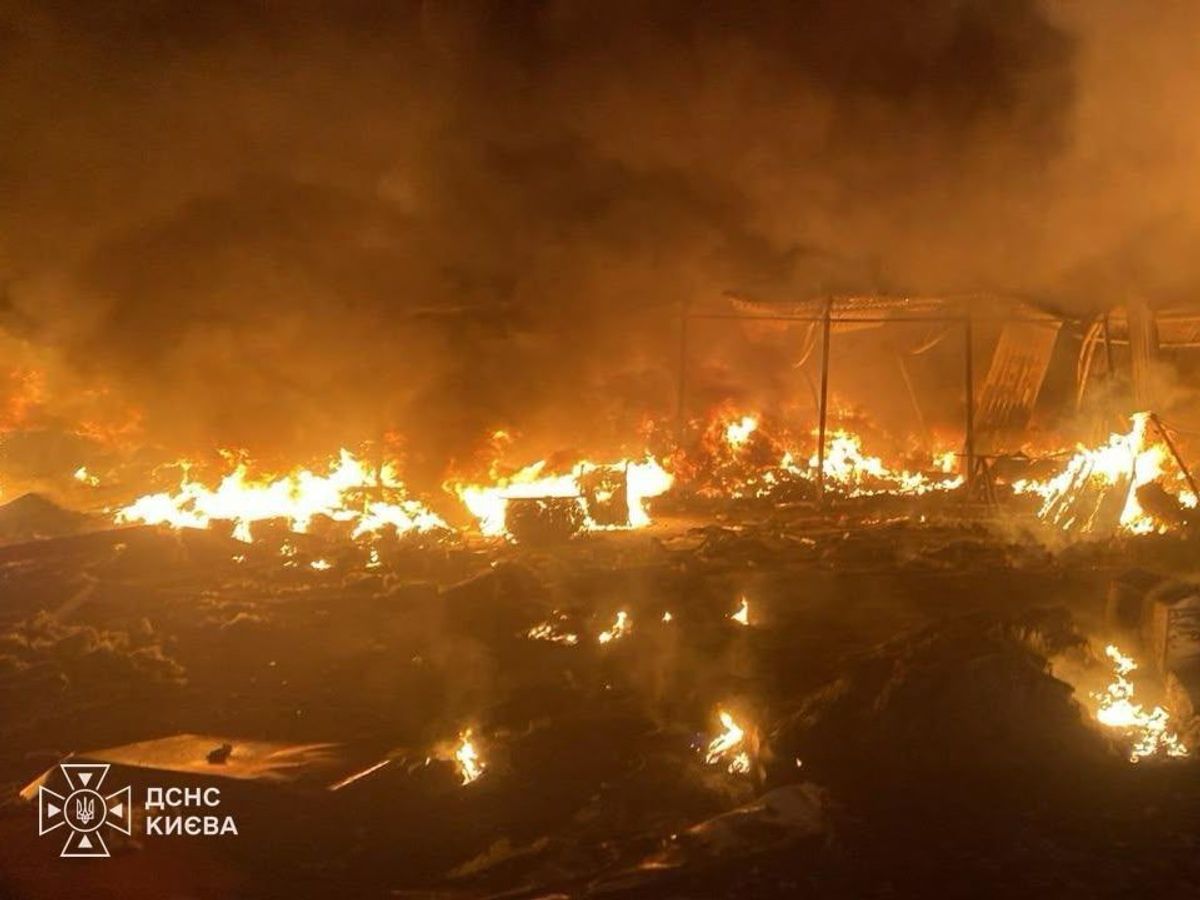
Russia attacked Kyiv at roughly 3:30 a.m. local time on Sept. 8. Twelve ballistic missiles and jet-powered drones struck in quick succession over an hour, leveling parts of a residential block, setting a school ablaze, and reducing a warehouse to smoldering rubble. Two people died. Ten were wounded. Three remain in hospitals.
The strikes came hours after the departure of US Special Envoy Steve Witkoff and Jared Kushner from Kyiv, where they had come for peace negotiations with Ukrainian officials. Russia had announced a three-day pause on aerial attacks against the Ukrainian capital on Sept. 6, explicitly tying the truce to the American diplomatic visit. By the morning of Sept. 8, the Kremlin had broken it.
Not that anyone should have expected it to last. The truce was always theatrical — a momentary pause to make room for photo opportunities and press conferences, not a genuine attempt at de-escalation. But its collapse nonetheless carries meaning far beyond the smoke rising over Kyiv’s Holosiivskyi and Solomianskyi districts.
A timing that speaks volumes
The most important detail in this entire episode is not what happened. It is when it happened.
Moscow waited until the American envoys had left. They let the cameras capture a city at peace for two days, then unleashed the full weight of their arsenal the moment those cameras would no longer be focused on the Russian military’s actions. It is a calculated message, delivered with ballistic precision: the war is not a negotiation. It is a contest of attrition, and Russia is willing to break whatever temporary rules exist the instant diplomatic cover disappears.
Kyiv Mayor Vitali Klitschko reported fires across at least five districts of the city. Rescuers pulled ten people from a damaged five-story apartment building and two more from a 16-story one. A production facility and a house were destroyed in Bila Tserkva, a town south of the capital. Air raid alarms also sounded in Rivne Oblast, far from any active front line.
Russia used Tu-95 and Tu-160 strategic bombers — the same long-range platforms that have become a regular feature of Kyiv’s nighttime routine — launching cruise missiles from positions deep inside Russian territory. This was not a limited, symbolic strike. It was a full-spectrum demonstration of capacity and intent.
What the collapse means for Washington
The United States entered this round of diplomacy with a clear objective: produce a framework for negotiation that could limit Russian advances and create political momentum back home. The trip by Witkoff and Kushner was meant to signal sustained American engagement even as institutional structures for formal peace talks remain fragile or nonexistent.
Russia’s immediate resumption of bombing — first with drones upon the envoys’ departure on Sept. 7, then with ballistic missiles on the morning of Sept. 8 — undermines that effort in a way that goes beyond the physical destruction. It tells Kyiv and its Western backers that Moscow views diplomacy as a performance, not a pathway. The bombing campaign is not being paused because Russia wants peace. It is being paused only when it serves Russia’s interests to let Americans feel like they are making progress.
That message matters in Washington right now. Congressional support for further Ukrainian aid faces mounting resistance. Every image of a bombed school and burned apartment block strengthens the argument from Republicans and isolationist-leaning Democrats that America is funding an unwinnable war. The alternative narrative — that Russia is negotiating in bad faith while demanding concessions — is harder to sell when the enemy clearly intends to keep fighting regardless of what anyone says in a meeting room.
What Kyiv will do next
Ukraine has learned, through two years of brutal experience, that Russian truces are ephemeral by design. The question now is not whether Kyiv can trust Moscow’s word but how it adjusts its strategy when the word proves worthless again.
Defensively, the attack will likely accelerate Ukraine’s push for more advanced air defense systems from its partners. The ballistic missiles that struck Kyiv overnight — at least twelve in roughly an hour — suggest Russia is testing Ukrainian interception capacity and looking for gaps. If Kyiv’s air defenses can be saturated, the calculus changes for every other city in Ukraine.
Diplomatically, Ukraine will face pressure to appear ready to negotiate even as Russia makes it increasingly difficult to do so from a position that feels defensible. The truce’s collapse removes any remaining veneer of good faith from Moscow’s side of the table. That is useful information, but it is not the same as a path forward.
The broader picture
The September 8 attack is part of a pattern Russia has repeated throughout this war: escalate when diplomacy stalls, offer a pause when the pause serves a purpose, then escalate again. The difference now is that the pause was specifically tied to an American diplomatic mission. Breaking it sends a direct signal to Washington that the Kremlin sees no benefit in maintaining even the appearance of restraint during peace talks.
For European capitals watching from a distance, the implication is equally stark. If Russia can resume a full-scale bombing campaign the moment US envoys leave a foreign capital, then the value of diplomatic engagement is being tested in real time. The question is no longer whether Russia is willing to bomb civilian targets. The question is whether the West will continue investing political capital in a process that its adversary treats as optional.
The bodies in Kyiv’s hospitals and the fires across five districts are the immediate cost. The longer-term cost is measured in credibility — for Moscow’s claim that it seeks a settlement, and for Washington’s ability to shape events through diplomacy alone.