Samsung's 110 Trillion Won Payout Changes the Chip Game
Samsung's planned 110 trillion won shareholder return paired with record earnings signals a fundamental shift in how the world's largest memory-chip maker allocates capital—away from pure growth spending and toward investor returns.
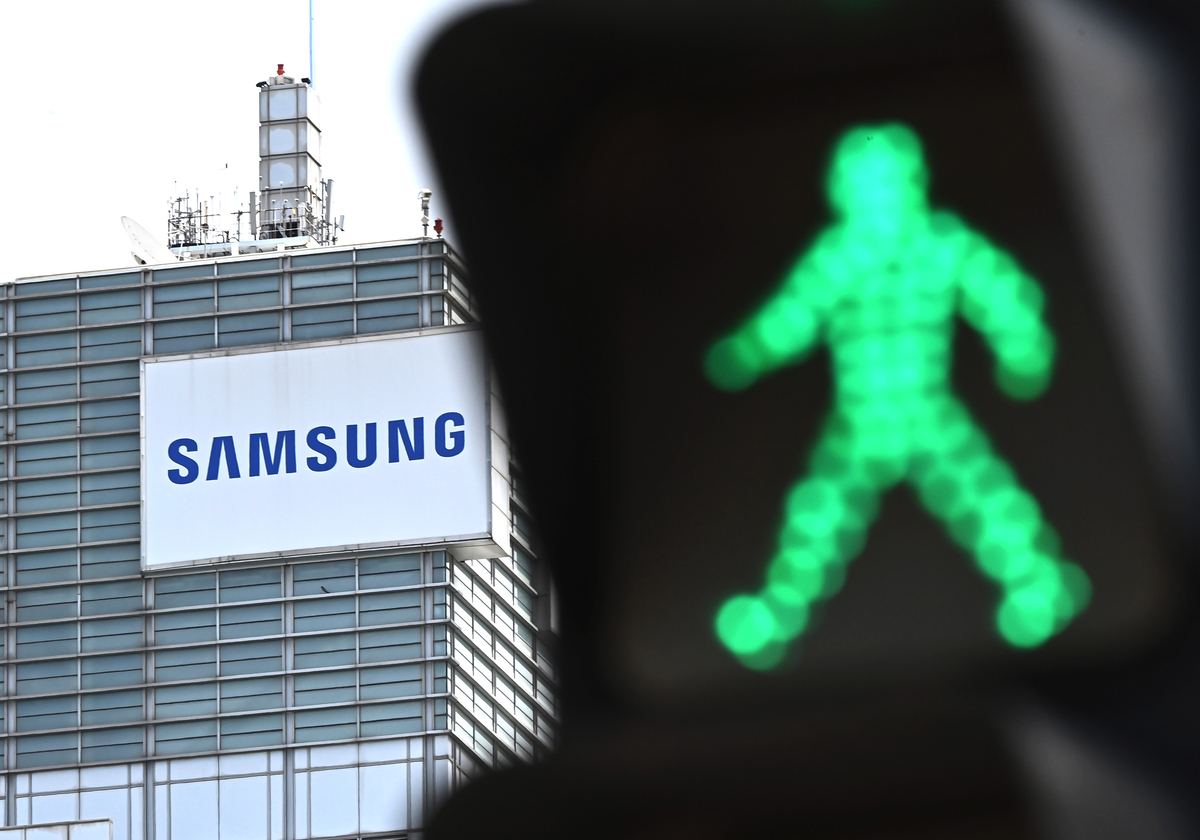
Samsung Is Betting the House on Investor Returns
KB Securities painted a picture of Samsung Electronics in November that would have sounded impossible five years ago: the company that built its empire on reinvesting every won into new fabs and R&D is now planning to hand 110 trillion won back to shareholders in a single fiscal year.
That is roughly $82 billion. It is also one of the largest capital-return decisions ever made by a semiconductor company, period. The number alone warrants attention. The context is what makes it transformative.
Kim Dong-won, head of research at KB Securities, described the coming period as a “double surprise” — record earnings and a structural expansion of shareholder returns hitting at the same time. Samsung’s third-quarter operating profit is projected at 111 trillion won, marking four consecutive quarters of all-time highs since the fourth quarter of last year. On the return side, the math breaks down to a 30 trillion won dividend in Q3, potentially 40 trillion won in Q4 once tax-friendly dividend treatment kicks in, and the remaining roughly 40 trillion won going toward share buybacks and cancellations.
Second-half cash dividends alone could reach 70 trillion won, which translates to a forward dividend yield above 4 percent based on current pricing. For a company that was long dismissed as a cyclical bellwether rather than a reliable income holder, that is a dramatic repositioning.
Why This Matters Beyond Seoul
Korean corporate governance has historically prioritized expansion over returns. The chaebol model, built on reinvestment and scale, rewarded shareholders in boom cycles and punished them in busts with neither the consistency nor the volume of capital distributions seen in mature markets. Samsung’s shift is not simply a Korean story — it is a signal about how the world’s largest memory-chip maker views its position in the global semiconductor hierarchy right now.
Memory-chip demand has been buoyed by AI-driven server builds, but the competitive gap between Samsung and SK Hynix at advanced nodes remains a known pressure point. SK Hynix has effectively locked in the bulk of high-bandwidth memory contracts tied to NVIDIA’s AI accelerator lines. Samsung is still running to catch up, and the capital intensity of that chase has not disappeared.
Yet the decision to return rather than hoard capital suggests management believes the current earnings peak is durable enough to support both continued capex and meaningful payouts. That is a bet on the longevity of the memory upcycle, and it is a bet that the company can fund its technology追赶 without sacrificing shareholder confidence.
If the bet holds, Samsung becomes something rare in semiconductors: a growth company that also generates investment-grade free cash flow relative to its market valuation. KB Securities notes that Samsung’s current price implies a forward P/E of just 3.8 times next year’s expected earnings — a multiple that entirely discounts the record profits and the scale of the return program.
The Valuation Gap Is the Story
A 3.8 times P/E for a company posting 380 trillion won in annual operating profit, planning 110 trillion won in returns, and sitting at the center of the AI memory-supply chain is a mispricing that will not stay invisible for long. The question is whether the market will reprice Samsung as a “growth value” stock — the term KB Securities used — or continue to treat it as a commodity cyclically driven by DRAM and NAND price swings.
The conventional narrative treats Samsung as a play on memory pricing. The emerging case is that Samsung’s balance sheet and earnings power have crossed a threshold where it can commit to returns without jeopardizing its technology roadmap. A 4 percent dividend yield on a stock priced at less than four times expected earnings creates a floor that did not exist two years ago. Institutional investors who previously avoided Samsung for its cash-flow unpredictability now have a new entry argument.
Who Wins, Who Loses
The immediate winners are shareholders. The structure of the return — dividends plus buybacks and cancellations — directly reduces share count and raises earnings per share on a compounding basis. A recurring 110 trillion won annual return is not a one-time event; it is a policy commitment that changes how the market prices risk.
SK Hynix faces an indirect consequence. The capital-return signal from Samsung validates memory-chip profitability to investors in a way that raises expectations across the sector. Competitors will feel pressure to match return commitments even if their earnings profiles differ. The broader loss, if there is one, belongs to the old paradigm that semiconductor companies must always spend before they distribute. That model no longer commands automatic credibility.
What Happens Next
Three outcomes are worth tracking. First, whether Samsung actually delivers on the Q4 dividend size — the 40 trillion won projection depends on tax regime details that have not been finalized. Second, whether the buyback and cancellation program is sustained quarter after quarter or scaled back if memory pricing softens. Third, whether other Korean tech giants follow with similar commitments, which would mark a genuine shift in Korean equity culture.
If Samsung’s return program holds through a downcycle, the company effectively becomes the first major Korean semiconductor firm to prove that shareholder returns and technology investment are not mutually exclusive. That would reprice the entire Korean technology complex, not just Samsung’s stock. If the program falters when chip prices drop, the “double surprise” thesis collapses and the market reverts to its old cyclical framing.
The odds, for now, favor the former. The earnings are already there. The capital discipline is still being tested. The window for Samsung to redefine itself as a compounder rather than a cyclone is open.
The Bigger Picture
The memory-chip industry has spent the last decade training investors to expect boom-and-bust cycles with minimal capital return. Samsung’s 110 trillion won payout is not just a large number — it is an argument that the cycle may be ending in a structural sense. AI workloads, data-center buildouts, and smartphone replacement cycles are creating demand conditions that are more durable than the historical pattern suggested.
Whether that durability is real or a temporary artifact of the current environment remains the central question. But even skeptics must account for the fact that Samsung is choosing to tell the market a different story by putting its money where its forecast is. A company does not commit 110 trillion won to shareholders unless it believes the earnings behind it can sustain that commitment. The market’s failure to price that belief in at 3.8 times earnings is the gap this story is built on.