Samsung's Galaxy S26 FE Is Fighting the $700 War for AI Phones
Samsung's new mid-range phone packs flagship-grade AI features at 104,500 won — a $700 battleground that could reshape Android competition against Google Pixel and iPhone.
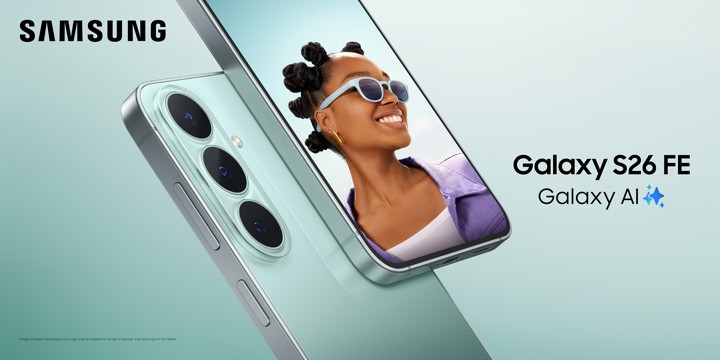
Samsung Just Declared War on Google Pixel — and It Won’t Be Cheap
Samsung announced the Galaxy S26 FE on August 27, with an October 4 domestic launch priced at 104,500 won for the 256GB model. That translates to roughly $700 — a number that should make semiconductor analysts nervous and smartphone strategists very awake.
This is not a discount flagship. This is Samsung positioning the Galaxy S26 FE as the first mid-range phone to ship with a complete suite of on-device AI capabilities that most competitors still reserve for $1,000-plus flagships. The implications are immediate and cross-border.
For the first time, Samsung is treating its “fan edition” lineup as a genuine product category rather than a clearance bin for last year’s hardware. The S26 FE carries the same AI engine as the S26 Ultra, the same One UI 9 software foundation, and the same commitment to on-device processing that defines Samsung’s 2025 strategy. The build materials are less premium, the battery is smaller, and the display lacks the adaptive refresh rates of the Ultra — but the AI layer is intentionally untouched. That choice, more than any single spec, signals where Samsung believes the next three years of smartphone competition will be won.
What the Specs Actually Mean
The camera array — 50MP wide, 12MP ultra-wide, and 8MP telephoto with 3x optical zoom and 30x digital zoom — is solid mid-range territory. But it’s the AI layer that changes everything.
Now Brief ingests weather, health, and traffic data and constructs natural-language briefings. Now Nudge reads context — your location, your schedule, your recent activity — and suggests next steps before you ask. Circle to Search lets you point your camera at any product or landmark and pull up information instantly.
These are not gimmicks. They are the same three AI features that made the Galaxy S24 series a talking point at CES 2024. Samsung is now shipping them in a phone that costs less than half the S26 Ultra. That is an unusual move for a manufacturer that historically segmented its AI features by price tier.
The phone runs Android 17 with One UI 9 — one of the earliest Android 17 shipments in a mid-range device. Samsung is clearly betting that early AI adoption is a competitive moat, not a feature checklist. And the bet extends beyond software: the S26 FE ships with Samsung’s dedicated NPU (Neural Processing Unit) architecture, borrowed directly from the S26 line. On-device AI inference, which previously required cloud round-trips on lower-tier devices, now happens locally. That distinction matters for latency, privacy, and functionality in areas with weak connectivity — a meaningful advantage in emerging markets where Samsung holds significant market share.
Battery life under sustained AI workloads remains an open question. Samsung has not released independent benchmarks for Now Brief or Now Nudge running concurrently with typical usage. Early hands-on reports suggest the 4,500mAh cell handles a full day with moderate AI use, but heavy reliance on real-time features could compress that significantly. How Samsung manages thermals and power management in this form factor will determine whether the AI suite feels like a differentiator or a liability.
The $700 Battleground
Google Pixel 10 launched in August 2025 at $649 for the base model. The Pixel 10 Pro sits at $899. Both phones ship with Google’s suite of on-device AI tools — Circle to Search, Live Translate, Now Playing, and the newer generative AI features powered by Google’s Gemini models.
Apple does not offer a true mid-range iPhone. The iPhone 16 starts at $799. The iPhone SE, once the budget option, was discontinued after the 2022 refresh. Apple’s entry-level AI experience is gated behind the $799 threshold.
Samsung’s S26 FE undercuts both. At $700, it lands below the Pixel 10 and well below the iPhone 16. That is the exact price bracket where the fiercest Android competition is taking place — and where consumers are most sensitive to AI feature parity.
The pricing itself is a strategic signal. Samsung’s FE line has traditionally launched at $600–$650 in the U.S. market. Pushing it to $700 represents a deliberate step upmarket — and an acknowledgment that AI capabilities now carry real cost, both in silicon and in software development. Samsung is effectively saying that the mid-range market has shifted, and it wants to define the new floor rather than chase it.
For carriers and retailers, the S26 FE also simplifies a fragmented pricing landscape. North American AT&T and T-Mobile have struggled to position mid-range phones against aggressive direct-to-consumer pricing from Google and Chinese brands. A $700 Samsung with carrier subsidies and trade-in programs becomes a far more defensible proposition than the $600 devices of previous generations.
Why This Matters Outside Korea
Korean manufacturers have historically won on display quality, camera algorithms, and build materials. Chinese brands like Xiaomi and OPPO have been winning on price — offering 5,000-won-flagship-specs in 2,000-won bodies. But AI is a different battlefield. It requires on-device processing power, software integration, and a roadmap that extends beyond a single product launch.
Samsung’s strategy signals something important: AI is no longer a premium differentiator. It is becoming a baseline expectation. By shipping Now Brief, Now Nudge, and Circle to Search in the S26 FE, Samsung is saying that these features belong in every Galaxy phone, not just the ones that cost 1.5 million won or more.
Chinese manufacturers face a structural challenge here. Xiaomi, OPPO, and vivo have aggressive AI feature roadmaps, but their mid-range devices often ship with Snapdragon 7-series or Dimensity chips that lack the NPU headroom for serious on-device inference. Until those silicon players close the gap, Samsung’s software-first approach in the mid-range creates a temporary but meaningful lead.
Google is doing the same with Pixel. Apple is lagging, constrained by its product line and its willingness to segment AI features. The question is whether Samsung can execute at scale.
There is also a second-order effect on the supply chain. Samsung’s decision to ship flagship-grade NPUs in a mid-range device increases demand for its own Exynos and Samsung Foundry-capable silicon at lower price points. That could accelerate R&D investment in neuromorphic chips for the mass market, pushing competitors to respond not just with software but with hardware redesigns.
Who Wins and Who Loses
Samsung wins if the S26 FE sells. At $700, it undercuts Pixel and iPhone while offering comparable AI features. The phone ships with a 12MP front camera, 3x optical zoom, and the same AI toolkit as the S26 Ultra. That is a compelling value proposition for Android users who want flagship AI without flagship pricing.
Google loses market share in the mid-range segment. The Pixel 10 at $649 competes directly, but Samsung’s brand recognition in Asia, Europe, and Latin America is stronger. Samsung has distribution channels that Google cannot match. Google has AI research that Samsung cannot replicate. The winner will be whoever ships first and fixes bugs faster.
Apple loses entirely if Samsung and Google continue this pace. The iPhone 16 at $799 is 12 percent more expensive than the S26 FE and offers fewer AI features in the mid-range. Apple’s next budget option — if it releases one — will have to account for a $700 AI phone that ships with Android 17.
Carrier relationships tilt in Samsung’s favor as well. Major U.S. carriers have historically been more invested in Samsung’s mid-range lineup than Google’s, and the S26 FE’s AI positioning gives them a marketing narrative they can push to subsidy-driven customers. Google’s direct-sales model is elegant but leaves revenue on the table in markets where carrier bundles dominate.
What Happens Next
Samsung’s S26 FE launches October 4 in Korea. Global availability has not been announced, but the company typically releases FE models in multiple regions within weeks of the domestic launch. Expect North American and European availability by late October or early November.
Google will respond. The Pixel 10A, rumored for spring 2026, will have to compete with a phone that already ships with Now Brief and Now Nudge. If Google delays its AI features to the mid-range, Samsung wins. If Google ships fast, the competition stays close. Either way, the Pixel 10A will need a pricing strategy that doesn’t simply mirror the S26 FE — because matching Samsung dollar-for-dollar cedes the narrative.
The broader trend is clear: AI is democratizing. Samsung, Google, and eventually Apple will ship AI features in phones that cost $500, $600, $700. The $700 tier is the first battleground. The war continues from there.
What makes this cycle different from previous feature-downgrade cycles is that the AI layer is sticky. Now Brief and Now Nudge improve with use — they learn your habits, your schedule, your preferences. A user who adopts them on the S26 FE will find it harder to leave the ecosystem, even for a device with better cameras or a superior display. Software lock-in, once the domain of enterprise platforms, is now a consumer smartphone reality.
Samsung’s S26 FE is not just a phone. It is a statement that the company intends to set the terms of the mid-range market for the foreseeable future. The $700 price is the opening move. How Google and Apple respond — and whether Chinese manufacturers can close the silicon gap — will determine whether Samsung’s bet pays off or becomes another example of a well-timed announcement outrunning execution.