Samsung's Hidden Subsidy: How Housing Loans Are Fueling Korea's Chip Belt Boom
Samsung's upcoming employee housing loan program is driving a property surge around its factories — a quiet form of industrial policy that could reshape Korea's real estate map and tighten talent competition with China and Taiwan.
The Price of Staying Put
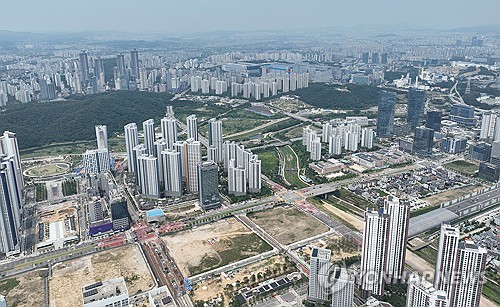
Korea’s government doesn’t officially call it what it is — a subsidy to lock in workers. But starting September 1, Samsung Electronics begins offering its non-homeowner employees mortgages at 1.5 percent annual interest, with loan amounts reaching 500 million won for purchases and 300 million won for jeonse contracts. The result, according to the latest data from Korea Land and Housing Corporation, is immediate and geographic.
Prices in the towns closest to Samsung’s fabs jumped hardest this week. Dongtan in Hwaseong surged 0.54 percent, up from 0.12 percent the prior week. Yeongtong in Suwon accelerated to 0.75 percent from 0.30 percent. Suji and Giheung in Yongin roughly doubled their weekly gains. All of this sits just outside Seoul, within commuting distance of Samsung’s major semiconductor campuses in Piwang and Hwaseong.
A Quiet Industrial Policy, Unfolded
What makes this moment significant is not that a company is offering perks to employees. It is that Samsung’s housing loan program is effectively doing what the state has struggled to do directly: pulling talent toward the places where the fabs are, rather than letting them cluster in Seoul.
For years, the brain drain from Gyeonggi Province to Seoul was relentless. Engineers and managers at Samsung and rival chipmakers chose apartments in Gangnam or Seocho, where school districts, transit, and prestige were unmatched. The consequence was predictable — a mismatch between where chips are manufactured and where the people who make them live. Long commutes from central Seoul to the southern satellite cities ate into retention. Turnover to Taiwan and, increasingly, to China’s growing foundry sector became a constant risk.
The 1.5 percent loan is not a roundabout way to solve a commute problem. It is a targeted wage supplement disguised as housing finance. At market rates, a 500 million won loan would cost a borrower somewhere north of 5 percent annually. The gap is enormous. Samsung is not giving employees a discount coupon. It is giving them a financial anchor to the land where the fabs sit.
Who Moves, Who Stays
The numbers this week confirm the mechanism is working before the program even launches. Weekly price acceleration in the semiconductor belt doubled across the board. That is demand front-running a benefit that starts next month. Buyers who qualify for the loan are shopping with one advantage; those who do not are bidding against them. The gap between qualified and unqualified buyers will widen fast.
Seoul’s market tells the other half of the story. Gangnam fell for a third straight week, dropping 0.11 percent as tax reform increased holding costs on ultra-luxury units. Seocho also decelerated. Meanwhile, middle-tier districts — Nowon, Seongbuk, Buk, Dobong, Nowon, Seodaemun, Gangseo, Guro, Gwanak — all posted their strongest weekly gains of the period, with increases clustering between 0.46 and 0.56 percent. These are not semiconductor towns. They are the price adjustment flowing in the opposite direction from the belt, pulled outward by commuters priced out of the center.
This divergence is the signal. Housing demand is redistributing according to who gets the loan, not according to where the schools or subways are best.
Why Taiwan and China Are Watching
The global dimension matters. Taiwan’s Semiconductor Manufacturing Company has spent years building dormitory-style housing near its fabs in Hsinchu and Tainan, explicitly to reduce turnover. Intel’s new plant in Kumamoto is doing the same in Japan. China’s SMIC and Hua Hong are subsidizing housing for engineers in Shanghai and Wuhan. Samsung’s program puts Korea in that same camp — a policy shift that acknowledges talent retention is now a strategic input, no different from capital expenditure on equipment.
What is distinct about Korea’s approach is its scale and its direct corporate delivery. The government does not fund the loan program. Samsung does. But the policy architecture is unmistakably state-aligned: semiconductor competitiveness is treated as national security, and housing is treated as the lever. The boundary between industrial policy and social policy has never been thinner in this sector.
The Next Few Months
Two outcomes are likely if the program proceeds as announced. First, the semiconductor belt will continue to outperform the rest of Gyeonggi Province through the end of the year, as buyers who qualify for the loan enter the market and bid against those who do not. Dongtan, Yeongtong, Suji, and Giheung are already pricing in the subsidy. Second, Seoul’s middle-tier districts will absorb some of the overflow, but the gap between them and the belt will remain defined by eligibility for the Samsung loan, not by relative quality of life.
There is a third possibility worth noting. If Samsung’s competitors — SK Hynix, for example — launch parallel programs, the subsidy war could accelerate price growth beyond what any single employer’s policy would produce. The market is already watching for that signal.
What English-Language Readers Miss
International coverage of Korea’s property market tends to treat it as a domestic story. The tax reform angle in Gangnam and Seocho gets attention. The weekly Korea Land and Housing Corporation releases get quoted. What rarely appears in English-language analysis is that the housing market is now an explicit tool of semiconductor policy. That framing changes how readers should interpret these numbers. The 0.54 percent jump in Dongtan is not just a local price move. It is the first visible effect of a wage subsidy designed to keep chip engineers from leaving for Taiwan or China.
The semiconductor belt is no longer just a geographic description. It is a policy experiment.