Samsung Reclaims Its Flagship Chip After 5 Years
Samsung is putting its own Exynos 2700 chip into the Galaxy S27 Ultra for the first time since the S22, breaking from a five-year reliance on Qualcomm for its top-tier phones. The move signals mounting confidence in self-developed silicon — and a recalibration of risk in the smartphone supply chain.
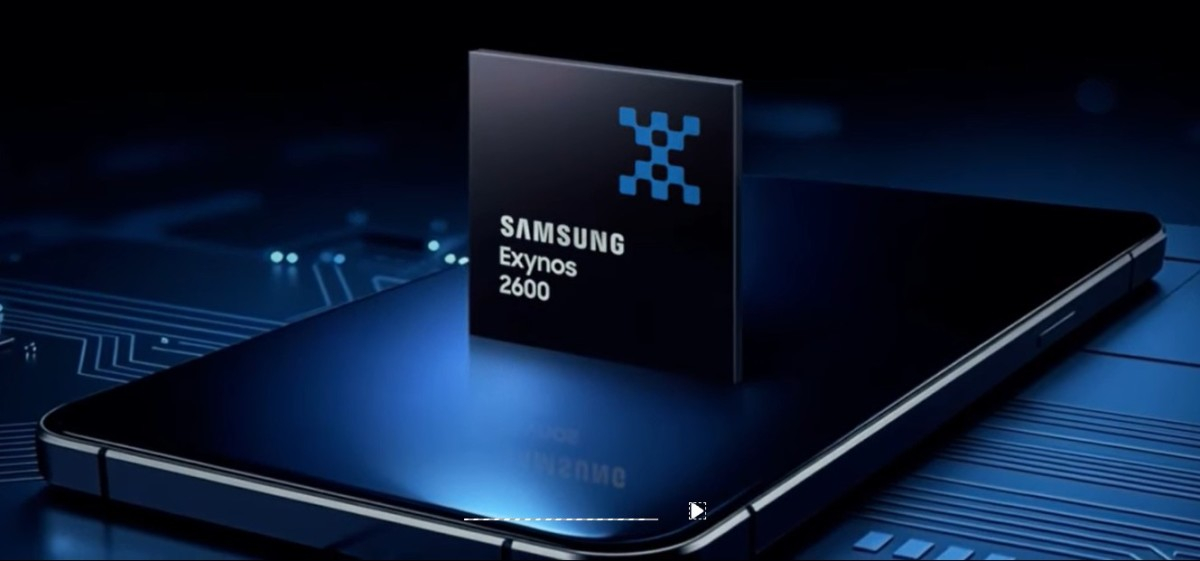
Samsung is betting on itself again.
Five years after the Galaxy S22 was the last flagship to carry an Exynos chip, Samsung is putting its own processor into the Galaxy S27 Ultra. The move, first reported by Maeil Business News Korea, marks a strategic pivot that reopens questions about Qualcomm’s grip on premium smartphones and whether Samsung’s in-house silicon is finally ready for the spotlight.
Samsung has reportedly already placed orders for mainboards featuring the Exynos 2700 for the Ultra model. System LSI and MX (Mobile Experience) business units conducted prior coordination on the Exynos supply, according to industry sources familiar with the arrangement. The company is pursuing a dual-track approach: Snapdragon development for the Ultra continues, but an Exynos variant is now being built alongside it. Internal documents obtained by trade press indicate that both silicon tracks have been running in parallel for at least eight months, with board-level integration testing underway at Samsung’s Hwaseo facility.
This is not a trivial reversal. Sources say it is unusual for Samsung to add an Exynos version at a stage when Snapdragon-related development is nearly complete — a point in the product cycle where most manufacturers have already frozen their primary platform. That timing alone signals where internal confidence sits. It also suggests Samsung’s engineering teams have reached a threshold of certainty that would have been unthinkable during the S22 generation.
The geography of the split matters.
Samsung’s plan differentiates markets deliberately. In South Korea and Europe, the Exynos 2700 will land on the standard, Plus, and Pro models — and now the Ultra as well. In the United States and other regions, including Japan and Canada, the Ultra will retain Qualcomm’s Snapdragon, following the original plan. This mirrors the approach Samsung took with the S21 and S22 generations, but with a critical difference: the Ultra, not just the base model, is now carrying the homegrown silicon in its core markets.
The fragmentation is strategic. It lets Samsung run a domestic and European proof-of-concept with its own silicon while avoiding the reputational risk of a global rollout that could falter in its most important market. The U.S. accounts for a disproportionate share of Samsung’s premium revenue, and carrier relationships there are deeply entangled with Snapdragon availability. Losing that foothold would carry consequences far beyond a single product cycle.
But the move also means the Exynos 2700 will face the highest scrutiny under real-world conditions in markets where Samsung controls both hardware design and carrier relationships. In Korea, where Samsung dominates the market and sets its own narrative, any performance shortfalls will be visible immediately — and any successes will generate marketing leverage that translates directly into sales. In Europe, where Samsung operates with significant autonomy from U.S. carrier constraints, the Exynos Ultra becomes a statement device.
Why this matters beyond Korea.
The smartphone chip market is dominated by Qualcomm, which supplies the vast majority of Android flagships worldwide. Apple uses its own silicon, and that has created a two-chip world at the top — one company controlling its own destiny, the rest negotiating terms with a supplier who also competes with them in the modem and connectivity space. Samsung’s return to Exynos in the Ultra line interrupts that pattern, or at least begins to.
If the Exynos 2700 performs comparably to Snapdragon in the Ultra model, Samsung gains leverage on multiple fronts. It can negotiate better terms with Qualcomm, reduce dependency on a single supplier, and keep margin inside the company that currently flows to San Diego. The financial math is straightforward: every Exynos Ultra shipped is a unit where Samsung captures the full system-level margin rather than ceding a portion to Qualcomm’s pricing power. For a device that ships in the tens of millions globally, that difference compounds quickly.
If it underperforms, the risk is concentrated entirely on Samsung’s own brand — and the company has a history of Exynos-related complaints around thermal management and performance consistency. The S22 era proved both sides of that coin. Early Exynos chips in that generation lagged behind their Snapdragon counterparts in benchmarks and power efficiency, drawing widespread criticism that followed the product through its launch window and into subsequent generations. Samsung corrected course over the S23 and S24 cycles, narrowing the gap significantly, but the shadow of those reviews still lingers among consumers and reviewers. An underwhelming Ultra launch would resurrect those ghosts at the worst possible moment.
Second-order effects ripple outward.
The implications extend beyond Samsung’s balance sheet. TSMC, which currently fabricates the majority of Snapdragon chips, could see marginal demand pressure if Samsung shifts a meaningful share of Ultra volumes to its own foundry operations. Samsung’s foundry business has been struggling to gain traction against TSMC’s dominance, and securing a high-visibility flagship product like the S27 Ultra would serve as a powerful reference design — potentially attracting other customers who have been skeptical about Samsung’s process node competitiveness.
For MediaTek, the dynamics shift in a less obvious way. A successful Exynos Ultra strengthens Samsung’s case for reducing Qualcomm dependency across its entire portfolio, which could create room for MediaTek to capture mid-range volume that might otherwise flow to Snapdragon. But it also raises the bar for what constitutes “good enough” silicon in the premium segment, potentially squeezing MediaTek’s positioning if Samsung’s own chip convinces carriers and consumers that third-party alternatives are inferior.
Chinese chip designers face a different set of constraints. Companies like HiSilicon have demonstrated that in-house silicon is possible for a phone maker, but Samsung’s struggle to replicate that success — and its subsequent retreat to Qualcomm — served as a cautionary tale for the industry. A successful Exynos Ultra would reframe that narrative, suggesting that the gap between Samsung and Apple-style vertical integration is narrower than previously assumed. That perception shift could influence how investors and partners evaluate other companies’ silicon ambitions.
What changes next.
The most immediate impact lands on Samsung’s System LSI division. Higher volumes of Exynos chips flowing into Ultra models translate directly into revenue and, critically, more data from real flagship use — the kind of data that accelerates future iterations in ways that tape-out simulations cannot replicate. For Qualcomm, it means losing at least a portion of Samsung’s Ultra shipment, a segment where per-unit margins are highest and brand association is strongest. The remaining Ultra volume in North America and other regions preserves Qualcomm’s headline position, but the psychological impact of sharing the Ultra nameplate is not negligible.
Carriers in markets where Exynos Ultra models ship will need to validate the devices for their networks. That adds cost and complexity — modem integration, certification testing, and potential firmware adjustments — but Samsung has enough scale and carrier relationships to absorb it, especially in Europe and Korea where the company designs and markets in tandem. The U.S. carriers, insulated from the Exynos question by the continued Snapdragon Ultra, face no additional burden.
For competitors, the signal is unambiguous: Samsung is no longer treating Exynos as a secondary option or a cost-cutting fallback. The question is whether the Exynos 2700 can deliver what previous generations struggled with — sustained performance without thermal throttling during extended workloads, AI acceleration competitive with the latest Snapdragon and Apple Silicon offerings, and modem performance that doesn’t require compromise. Samsung says nothing publicly about performance targets yet. What it has done is commit manufacturing capacity and mainboard orders. That is a stronger statement than any press release.
The close.
The S27 Ultra will ship later this year. The real answer to whether this bet pays off will come when reviewers and users put the Exynos version through the same tests that exposed last-generation shortcomings — sustained gaming sessions, multi-app multitasking, AI feature workloads, battery life under heavy use. If Samsung’s two-track strategy produces a chip that holds its own, the implications extend well beyond one phone line. They touch the structure of the Android ecosystem, the negotiating dynamics between the two largest chip suppliers, and the broader question of whether vertical integration is the only path to premium competitiveness.
Five years ago, Samsung handed its flagship to Qualcomm and accepted the outcome. This time, it is writing its own silicon into the most visible slot in its lineup. The risk is real. The potential reward — for Samsung, for the industry, and for anyone watching whether a second company can break the duopoly at the top — is equally tangible.