South Korea's Chip Giants Say No to KEPCO's 25 Trillion Won Electricity Deal
Samsung Electronics and SK Hynix have rejected KEPCO's proposal to prepay 25 trillion won in electricity bills over five years — a deal designed to ease the utility's crushing debt burden while funding semiconductor cluster power infrastructure. The refusal reveals deep tension between Korea's energy policy and its most critical industries.
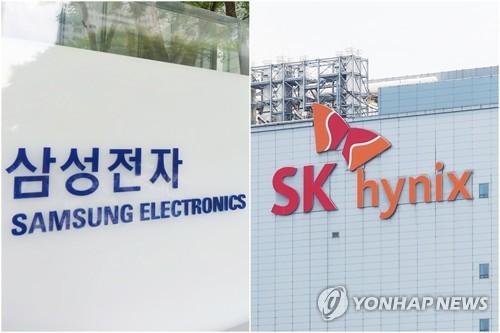
The Deal That Never Happened
Samsung Electronics and SK Hynix turned down a proposal from Korea Electric Power Corporation that, on paper, should have been attractive. KEPCO asked the two memory chipmakers to prepay roughly 25 trillion won — approximately $18 billion — in electricity costs spanning five years. In return, the utility promised to direct those funds toward power grid upgrades serving semiconductor clusters, and offered an interest rate above the two-year government bond yield, applied semi-annually against future electricity bills.
For KEPCO, the math was urgent. As of late June, the utility carried total liabilities of 210.7 trillion won. Its daily interest payments alone reached 11.5 billion won. A deal of this size would have meaningfully reduced new bond issuance pressure and unlocked capital for grid expansion.
The chipmakers said no. Internal reviews concluded the prepayment posed unacceptable medium-term risk, Yonhap News reports. The reason is not simple cost aversion. It is a strategic calculation about where power — literally and figuratively — belongs in the AI arms race.
Why Prepayment Looks Like a Trap
Semiconductor manufacturing is one of the most electricity-intensive industries on Earth. A single advanced fab can consume as much power as a small city. South Korea’s memory chip sector runs on this assumption: that continuous, affordable, reliable electricity is a competitive asset as critical as process technology itself.
Prepaying five years of bills locks in capital at a moment when no one can predict where memory prices will sit. The industry is experiencing what KEPCO itself acknowledged — the strongest upcycle in memory chip history since at least the late 2010s, driven overwhelmingly by AI training and inference demand. HBM, or high-bandwidth memory, is the bottleneck product. Both Samsung and SK Hynix are racing to scale HBM3E and HBM4 production for Nvidia and other AI chip buyers.
But upcycles do not last forever. When memory prices correct — as they did sharply in 2023, when Samsung posted its first annual loss in a decade — a committed prepayment becomes a financial anchor. Capital tied up in a utility account is capital that cannot fund new fab construction, R&D cycles, or working capital during a downturn. That trade-off is precisely why the boardroom calculus tilted against acceptance.
The Infrastructure Question Nobody Is Answering
KEPCO’s pitch included a promise to invest in power infrastructure around semiconductor clusters. That detail matters more than the prepayment amount itself. South Korea’s power grid, built for a different industrial era, is struggling to keep pace with a new reality: chip fabs multiplying in places like Pyeongtaek and Hwaseong, each demanding hundreds of megawatts of stable, high-quality power.
The problem is structural. Building new transmission lines and substation capacity in Korea faces land acquisition hurdles, environmental reviews, and community opposition. It takes years. Fabs can break ground in months. The mismatch creates a bottleneck that neither side wants to publicly concede.
Samsung and SK Hynix likely calculated that even with KEPCO’s infrastructure promise, the timeline for grid reinforcement does not align with their expansion plans. And prepaying electricity bills does not guarantee priority access to that infrastructure — it guarantees KEPCO liquidity, not chipmaker certainty.
Second-Order Effects Already Emerge
The rejection sends ripples beyond the immediate parties. Energy traders watching the standoff note that KEPCO may now face steeper borrowing costs if investors interpret the failed deal as a sign that Korea’s premier industrial assets are unwilling to absorb utility risk. Credit rating agencies have not yet weighed in, but the dynamic introduces a subtle question into KEPCO’s risk profile: if the government’s largest industrial champions can walk away from a state-backed utility proposal, where does leverage truly reside?
For the chipmakers, the decision reinforces a growing posture of financial discipline that contrasts with the spend-now-spend-later mentality that has defined parts of the global semiconductor expansion cycle. TSMC’s aggressive capital commitments in Arizona and elsewhere highlight a different philosophy — one that treats guaranteed energy supply as worth premium terms. Samsung and SK Hynix appear to be drawing a line that says subsidized certainty through prepayment is not the same as secured certainty through infrastructure delivery.
Meanwhile, smaller Korean firms in the electronics and materials supply chains watch closely. If Samsung and SK Hynix set a hard boundary on energy prepayment structures, competitors and partners may feel empowered to negotiate similar terms — or simply refuse unfavorable ones — with KEPCO in future cycles.
Who Wins, Who Loses, What Comes Next
KEPCO loses a potential lifeline. Without the prepayment, the utility must continue financing grid upgrades through debt markets at a time when its balance sheet is already strained. Interest costs will remain a drag on operations. The utility may also face political scrutiny from a government that has historically viewed KEPCO as both a policy instrument and an industrial stabilizer.
Samsung and SK Hynix preserve financial optionality. They retain cash for capex and R&D — the very investments that determine whether they maintain or cede ground to TSMC in advanced logic and to each other in memory market share. Their refusal is a signal that they view energy cost predictability, not energy cost reduction, as the real goal.
The broader Korean semiconductor ecosystem is the implicit loser if this standoff persists without a resolution. Grid bottlenecks slow expansion. Expansion delays widen the gap with competitors. In the AI memory market, where every quarter of delay can mean losing share to HBM suppliers or alt-chip alternatives, that gap compounds.
A middle path is possible. Rather than a five-year lump-sum prepayment, a structured arrangement — smaller periodic contributions tied to actual grid delivery milestones, with performance guarantees and exit clauses — could satisfy both sides. KEPCO gets steady funding. Chipmakers retain flexibility. The infrastructure gets built on a realistic schedule.
Whether such a compromise emerges remains unclear. What is clear is that the tension between Korea’s energy policy and its industrial policy has reached a flashpoint. The 25 trillion won proposal was never just about electricity bills. It was about who controls the terms of the AI economy’s most energy-hungry sectors — and South Korea’s two largest companies just made it plain they will not surrender that control for a discount on next quarter’s power bill.
If the government steps in to mediate, it will face a choice: back the utility’s need for fiscal relief or protect the chipmakers’ autonomy over their capital. The answer will shape not only the next cycle of Korean semiconductor investment but also the model under which energy-intensive industries negotiate with state-backed infrastructure providers in an era of accelerating demand.