Samsung, SK Hynix Pivot to 8-Die HBM4 — What It Means for Nvidia and the AI Chip War
Samsung and SK Hynix are shifting HBM4 supply toward 8-die stacks for Nvidia, driven by thermal constraints and yield challenges. The move reshapes Nvidia's GPU roadmap and signals a recalibration in the global AI hardware race.
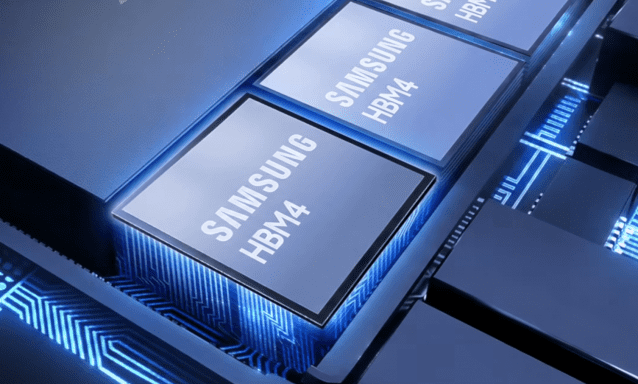
The Memory Pivot That Could Reshape AI Hardware
Samsung Electronics and SK Hynix are quietly rewriting the rules of high-bandwidth memory supply for Nvidia’s next-generation AI accelerators. According to industry sources cited by ZD Net Korea, both Korean memory giants plan to expand their 8-die HBM4 shipment ratios in the second half of 2026, moving away from the 12-die stacks they previously prioritized for Nvidia’s Vera-Rubin series.
The shift is not arbitrary. It reflects a convergence of thermal engineering constraints, yield optimization, and supply-chain survival strategy — all of which carry implications far beyond Korea’s fab floors.
Why 12-Die Stacks Hit a Wall
HBM4 represents a generational leap in memory architecture. The number of input-output pins has doubled to 2,048 per stack, enabling higher bandwidth but also generating significantly more heat. Individual chips can manage thermal loads; server racks cannot.
An industry insider told ZD Net: “We received a request from Nvidia to change the main HBM4 supply product from 12-die to 8-die stacks.” The request was not a preference — it was a response to physical limits.
The yield problem compounds the thermal issue. While individual DRAM dies in HBM4 can achieve reasonable production yields, the vertical stacking process — bonding and packaging 12 dies into a single column — causes yield rates to plummet. Each additional die in the stack multiplies the probability of failure.
“You can pull up core DRAM yields relatively quickly,” one executive explained. “But when you stack 12 dies and go through bonding and packaging, yields drop sharply.”
Nvidia’s Strategic Calculus
Nvidia’s request for more 8-die options is not a retreat from performance goals. It is a diversification strategy.
The AI chipmaker faces an impossible triangle: maximize bandwidth, minimize heat, and ensure supply chain stability. With HBM facing extreme global shortage driven by aggressive AI infrastructure investment from major tech companies, Nvidia cannot afford to bet everything on a single memory configuration.
“Nvidia is securing multiple options for memory capacity across its future AI accelerators,” the report notes. “This is not about downgrading specifications — it is about finding the optimal combination.”
The company’s approach reflects a mature understanding of system-level engineering. Performance is not just about peak bandwidth on paper; it is about sustained throughput under real thermal conditions, delivered at volume.
The Timeline: Vera-Rubin and Beyond
The transition has a specific timeline. Samsung began mass production of HBM4 12-die stacks in the first quarter of 2026; SK Hynix followed in the second quarter. Both companies supplied these 12-die products for Nvidia’s Vera-Rubin series.
Now, the second half of 2026 will see the shift toward 8-die dominance. Market dynamics are already visible: orders for materials and components related to 8-die HBM4 have increased, though exact ratios remain undisclosed.
The implications extend to HBM4E, the next generation slated for Nvidia’s Rubin-Ultra accelerator. Industry sources suggest HBM4E 12-die and 16-die samples are under discussion, but the 8-die configuration is likely to become the primary supply option for products shipping next year.
“Uncertainty remains high across the industry,” one senior semiconductor executive noted. “There is still debate over whether Rubin-Ultra will use HBM4E or stick with HBM4.”
Who Wins, Who Loses
The 8-die pivot creates clear winners and losers.
Winners:
- Nvidia gains supply-chain flexibility and thermal headroom for its AI platforms
- Samsung and SK Hynix improve yield rates and reduce production risk on HBM4 lines
- AI data center operators benefit from more stable memory supply and potentially lower cooling costs
Losers:
- Competitors betting on 12-die supremacy face obsolescence as the industry standard shifts
- Pure-bandwidth chasers who ignored thermal reality lose credibility
- Smaller memory suppliers without stacked-HBM capability face further margin pressure
The Broader Implications for the AI Arms Race
This memory pivot reveals a fundamental tension in AI hardware development: the gap between theoretical performance and practical deployment.
For years, the industry chased raw bandwidth numbers. More layers meant more capacity meant more AI training speed. The physics of heat dissipation and manufacturing yields told a different story.
Nvidia’s decision to embrace 8-die HBM4 as a primary option signals a maturation in the industry. Performance optimization is no longer just about stacking more dies — it is about balancing bandwidth, thermal management, yield, and supply chain resilience.
The shift also has geopolitical dimensions. Korea’s dominance in HBM production gives Samsung and SK Hynix outsized influence over Nvidia’s roadmap. Any disruption to Korean memory supply — whether from geopolitical tension, natural disaster, or capacity constraints — would ripple through the entire AI hardware ecosystem.
What Comes Next
The immediate future is clearer: 8-die HBM4 will dominate Nvidia’s supply chain in late 2026 and beyond. HBM4E follows the same trajectory.
But the deeper question is whether this pivot marks the beginning of a new design philosophy — one that prioritizes system-level optimization over layer-count maximization.
If Nvidia’s competitors — AMD, Intel, and custom AI chip startups — follow the same logic, the industry could see a redefinition of what “high performance” means in AI hardware.
The answer will determine not just who wins the next generation of AI accelerators, but how efficiently the world’s data centers can train the models that will power the next decade of artificial intelligence.
For now, the message from Korea is unambiguous: when physics and manufacturing realities intervene, even Nvidia must adapt.