Why Samsung's Record Profits Wont Save Its Stock — and What It
Samsung posted a record Q3 operating profit of 107 trillion won, yet its stock fell more than 4%. Foreign investors dumped ₩2 trillion in a single session as the KOSPI broke below 6,300. The paradox reveals how much Korean markets have shifted—and what it means for global chip demand.
The Paradox That Shouldnt Exist
Samsung Electronics reported a third-quarter operating profit of 107 trillion won — the highest in company history. Its memory chip division, the engine of Korea’s export machine, pulled off what analysts called an extraordinary turnaround after a brutal downturn. By every historical metric, this was a performance that deserved a celebration.
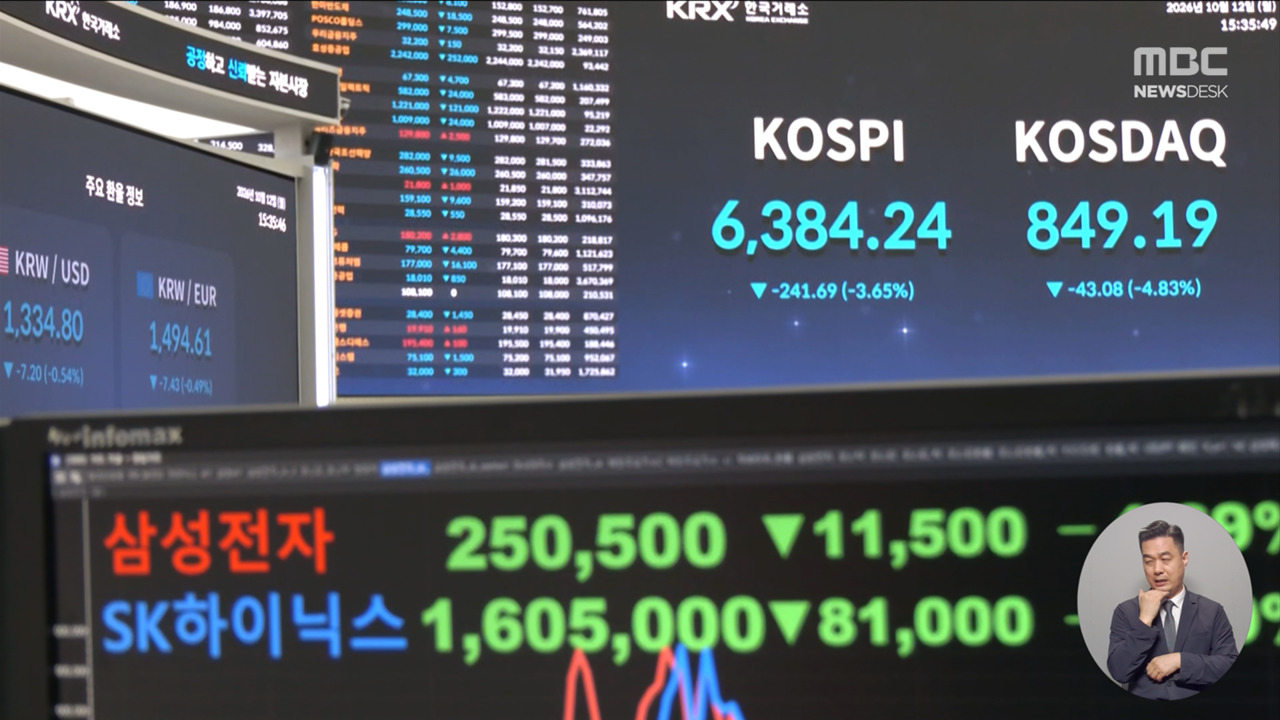
Instead, the stock fell more than 4%. It closed around 250,000 won per share. SK Hynix, Samsung’s only domestic rival in the memory space, dropped just as hard, landing near 1.6 million won. Together, they dragged the KOSPI below 6,300 for the first time in two months.
The numbers are straightforward. Samsung’s earnings were outstanding. The market did not care.
Who Is Selling and Why It Matters
Foreign investors sold more than 2 trillion won worth of Korean equities in a single session on Wednesday, adding to roughly 6.5 trillion won in net selling over the preceding four trading days. They were not picking off a single underperformer — they were pruning a portfolio that had run too hot, too fast.
The ratio of declining stocks to advancing ones exceeded 4 to 1 across the broad market. Semiconductor names led the selling. AI-related stocks followed. That pattern is significant because it points to a specific mechanic: foreign capital is rotating out of Korean semiconductors not because the fundamentals have deteriorated, but because American AI names have become far more attractive on a relative basis.
United States AI stocks have surged relentlessly. When NVIDIA and related names keep climbing, the marginal dollar of foreign capital chasing AI exposure has less incentive to sit in Seoul. Samsung and SK Hynix, after all, are proxy plays on global AI demand — and they have already rallied substantially over the past several months. The opportunity cost of holding them has shifted.
Kim Jae-seung, a researcher at Hyundai Motor Securities, put it bluntly: if American markets are delivering AI returns on their own domestic stocks, there is no additional reason to push Korean equities higher. The calculus is cold, not emotional.
The Memory Chip Cycle Hasnt Changed — Perception Has
The gap between Samsung’s reported profit and its stock price reveals something important about how markets price cyclical industries. When a company posts record earnings in a down cycle recovering toward normal, investors do not immediately reward the outcome. They ask when the next peak arrives — and whether today’s numbers are durable or simply a reflection of favorable inventory positions and pricing inflections.
Yoon In-jun, a researcher at Uijou Investment & Securities, noted exactly this dynamic: short-term earnings quality matters less than the trajectory question in periods like this. The market is pricing in uncertainty about whether the current profit level represents a ceiling or a step along a longer climb.
That uncertainty is not baseless. Memory chip pricing remains elevated but not irreversible. Demand for high-bandwidth memory used in AI training is strong, particularly for SK Hynix, which supplies HBM to major American chipmakers. But the supply side is also expanding — Samsung itself is ramping production, and competitors outside Korea are investing heavily. The cycle can turn faster than anyone expects.
Self-Purchase Programs Have Run Their Course
Another structural factor weighing on the Korean market deserves attention. Samsung and SK Hynix have been buying back their own shares for nearly two months — a practice that provided a visible floor under prices. When those programs wind down, the support disappears. Markets tend to notice the absence of a buyer of last resort precisely when sentiment is fragile.
The sell-off accelerated after the buyback programs ended, suggesting that algorithmic and passive flows, deprived of the institutional cushion, moved more aggressively to the downside than fundamentals alone would justify.
Geopolitical Overhang and the OpenAI Noise
Korean markets also reacted to external volatility that Wall Street absorbed quickly and shrugged off. Reports emerged that OpenAI’s revenue had come in below expectations, then were retracted. American markets bounced back within hours. The KOSPI did not.
Separately, reports of attacks on Riyadh airport in Saudi Arabia fed into broader risk aversion. These events may seem disconnected from semiconductor stocks, but they compound uncertainty in a market already sensitive to global trade flows and energy prices. Korea imports nearly all its energy and exports most of its manufactured goods. Geopolitical shocks matter here more than they do in resource-rich economies.
What Happens Next
Analysts at MBC News cite a timeline: November and December should bring clarity as major events like Anthropic’s expected listing conclude and semiconductor companies issue 2028 earnings guidance. Once those milestones pass, thefog should lift enough for investors to reassess whether Korean memory stocks are fairly valued or punished unfairly.
The question is timing. Two months of heavy foreign selling is not a brief episode. Institutional positions take time to rebuild. Until the earnings trajectory becomes unmistakably durable — and until American AI stocks show signs of exhaustion — the upside may remain capped.
For global chip markets, the Samsung drop is a reminder that Korea’s semiconductor complex remains a bellwether, even when the bell does not ring in Seoul. Foreign investors treating Korean memory names as portfolio exhaust rather than core holdings changes the volatility profile of the entire sector. If the rotation toward American AI names continues, Korean semiconductor stocks may trade in a wider range than the past year’s recovery suggested. That is not necessarily bearish — but it is less forgiving than the recent uptrend implied.
The Bottom Line
Record profits did not save Samsung’s stock. That is the story of the moment, and it is not unique to one company. It is a signal about capital allocation in an era of competing narratives: American AI dominance versus Korean manufacturing recovery, cycle peaks versus cycle middles, earnings that look good in hindsight versus earnings that convince in real time.
The KOSPI under 6,300 is a threshold worth watching. The next move will depend on whether foreign investors view Korean semiconductors as temporary casualties of a larger rotation or as mispriced assets waiting for the right catalyst to return.