Saudi Arabia's 136-Target Strike on Houthis Escalates Red Sea Crisis
Saudi Arabia's large-scale airstrike destroying 136 Houthi military targets marks a dangerous escalation that threatens Red Sea shipping lanes and forces global energy firms to reconsider their Gulf exposure. The conflict now directly impacts major international events and travel.
A Strike That Changes the Board
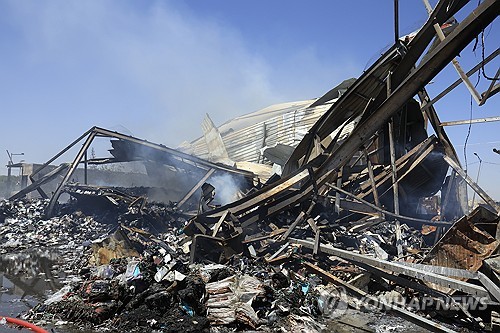
Saudi Arabia’s announcement on June 10 that its forces had destroyed 136 military targets in Houthi-controlled territory was not just a tactical response. It was a strategic recalibration. The number itself—136—signals a campaign scale far beyond the targeted strikes of previous months. Turki Al-Maleki, the Saudi spokesperson, framed it as a direct response to Houthi missile attacks that killed three people at Riyadh’s King Khalid International Airport and Abha International Airport on June 6-7. The airport strikes, which hit terminal areas and nearby roadways, exposed a vulnerability Riyadh had previously treated as secondary to its oil infrastructure. For a kingdom that invested over $120 billion in air defense systems since 2019, the fact that Houthi drones and missiles reached populated urban centers at all represented a intelligence and operational failure that demanded a visible answer.
The timing cannot be accidental. Three days later, on June 13, the World Petroleum Congress energy summit was already underway in Riyadh. Italy’s energy minister had declined to attend in person, opting for a video link citing safety concerns. By June 26, the Future Investment Initiative—the so-called Davos of the Desert—was meant to convene global business and political leaders. Several airlines had already suspended Riyadh routes. The question facing Fortune 500 CEOs was no longer whether to send delegates but whether to send anyone at all. Hotel bookings in central Riyadh dropped an estimated 40 percent within 72 hours of the airport strikes, according to industry sources familiar with booking data.
Who Wins, Who Loses
Saudi Arabia gains something it needed: demonstrable deterrence. The Kingdom had absorbed Houthi strikes on its capital for months without proportional retaliation. The airport attacks, which killed civilians, crossed a line even Riyadh’s cautious leadership could not ignore. Destroying 136 targets sends a message to Tehran—the Houthi’s patron—that proxy warfare has costs. Military analysts noted that the targets included command-and-control facilities, missile launch pads, and drone assembly sites in the Sanaa and Saada provinces, infrastructure that would take months, if not years, to rebuild. This was not a surgical strike; it was a statement of capacity.
But the message cuts both ways. Iran now faces a calculation it has avoided for two decades: does it escalate further through its Yemeni proxy, or pull back? The Houthi warning on June 8—that all Saudi airspace except Mecca and Medina could become military targets—was escalation rhetoric. Whether it translates into action remains unclear. What is clear is that the Red Sea, already disrupted by Houthi attacks on commercial shipping since late 2023, faces renewed disruption risk. Iranian analysts within Iran’s conservative establishment are reportedly debating whether to authorize new offensive capabilities for the Houthis, particularly long-range drones that could reach Saudi oil facilities at Shayba and Junayyah. No decision has been made public, but the options table has clearly shifted.
Global energy markets lose certainty. The WPC and FII events are not just diplomatic theater; they are confidence-building mechanisms for an industry nervous about supply chain fragility. When Italy’s energy minister attends by video and the British government issues travel advisories for Riyadh, the signal to investors is unmistakable: the Gulf is no longer a stable operating environment. Lloyd’s of London has already begun adjusting war risk premiums for vessels transiting the Red Sea, with some insurers refusing coverage altogether for certain ship classes. The downstream effect is being felt in European diesel and petrochemical prices, which have already risen 6 to 8 percent since the first Houthi warnings in early June.
The Real Target: Regional Shipping Lanes
The 136 targets may have been military installations, but the strategic target was always the Red Sea. Houthi attacks on commercial vessels in the Bab el-Mandeb strait have forced major shipping companies to reroute around Africa, adding weeks to transit times and billions to insurance premiums. Maersk, MSC, and Hapag-Lloyd have each diverted significant fleet capacity away from the Suez Canal route, and the cumulative effect has been a 23 percent increase in average transit times between Asia and Northern Europe. The Saudi strikes, while framed as defensive, risk further destabilizing an already fragile maritime corridor.
China, Europe, and the United States all depend on Red Sea shipping for energy and manufactured goods. Any escalation that closes the strait—even temporarily—would send oil prices soaring and disrupt just-in-time supply chains that have barely recovered from pandemic-era shocks. The Houthis have proven they can threaten this route with low-cost drones and missiles. Saudi Arabia’s high-cost airstrikes cannot eliminate that threat; they can only punish its bases. The asymmetry is stark: a $20,000 drone can disable a $200 million container ship, and no amount of perimeter bombing changes that calculus. What the strikes do change is the willingness of Houthi fighters to operate from fixed positions, forcing them to disperse and potentially making them harder to detect rather than easier to eliminate.
America’s Dilemma Ahead of November
The United States faces an uncomfortable triangle. It wants Saudi Arabia to contain Iranian influence without drawing the Kingdom into a wider regional war. It needs Red Sea shipping lanes open for European allies and global trade. And it cannot afford to abandon its Gulf partners after years of building security architectures around them. Washington’s public response has been carefully calibrated—expressing support for Saudi self-defense while urging restraint—a posture that satisfies neither side.
Saudi Arabia’s 136-target strike was a test of American resolve. Will Washington condemn the escalation and risk alienating Riyadh? Will it support the strike and risk drawing Iran into a broader conflict? The answer will shape American strategy in the Gulf for years, particularly with November elections looming in Washington and regional capitals alike. Congressional hawks have already begun calling for expanded arms sales to Saudi Arabia, while progressive Democrats are pushing for conditional restrictions tied to civilian protection standards. The administration’s internal debate is expected to intensify before the summer recess, and whatever position emerges will be read across the Gulf as a signal of American commitment—or disengagement.
The Houthis, backed by Iranian weapons and training, remain the proximate threat. But the real contest is between Saudi Arabia and Iran for regional dominance. Every missile exchanged in Yemen is a move in a chess game whose board extends from the Persian Gulf to the Mediterranean. The 136 targets destroyed were pieces on that board; the game itself continues regardless of who wins the round.
What Happens Next
The immediate future holds two scenarios. The first: Saudi Arabia’s strike deters further Houthi attacks on its territory, and the Red Sea gradually stabilizes as commercial shipping returns to normal routes. The second: Iran directs the Houthis to escalate, targeting Saudi oil infrastructure or UAE positions, triggering a broader conflict that closes the Red Sea entirely.
Between these extremes lies a third, more likely path: a prolonged cycle of limited strikes and retaliatory threats that keeps markets nervous without breaking open. This is the pattern that has defined the conflict since 2015, and the one most consistent with both Riyadh’s desire to project strength and Tehran’s preference for deniable proxy action. The 136-target strike raises the floor of acceptable escalation but does not raise the ceiling.
The second scenario remains unlikely but not impossible. Iran has signaled restraint in the past, particularly when its own nuclear negotiations or economic stability are at stake. But miscalculation is the great multiplier in proxy conflicts, and the current environment—heightened tensions, dispersed command structures, and the absence of direct communication channels between Riyadh and Tehran—makes misreading intent more probable than ever. A single successful strike on Saudi oil infrastructure would shatter the status quo overnight. Aramco’s Rumailah facility, processing over 7 million barrels per day, remains within range of Houthi capabilities if the group repositions and rearms.
The 136 targets destroyed on June 10 were military installations. The real casualty was regional stability. Global energy markets, shipping insurers, and multinational corporations will feel the effects for months. The question is not whether the Red Sea crisis will escalate further but whether Saudi Arabia and Iran have crossed a threshold from which there is no return—and whether the United States, China, and Europe have a coherent strategy for preventing that crossing, or are simply watching the board shift one piece at a time.