Saudi Oil Under Fire as Winter Approaches — Why This Terrifies Markets
Houthi drone strikes on Saudi pipelines and Iran-backed attacks from Iraq are exposing the kingdom's energy infrastructure just as the Northern Hemisphere heads into winter. The implications for global inflation, Asian buyers, and Trump's political positioning are far deeper than most realize.
The pipeline that doesn’t exist anymore
Saudi Arabia’s east-west crude oil pipeline — one of the kingdom’s most critical energy arteries — is no longer flowing. A drone strike, apparently launched by Iran-backed Shia militias operating from Iraq, knocked it offline this month. It arrived not as a surprise but as a predictable escalation in a conflict that has been slowly widening for months.
This matters because the pipeline was the kingdom’s primary route for exporting crude from its eastern fields to the Mediterranean coast, bypassing the Strait of Hormuz entirely. When it runs, Riyadh has a back door. When it is shut, every drop of Saudi oil must pass through Hormuz — a chokepoint that is now contested, threatened, and increasingly dangerous.
The pipeline carried roughly 5 million barrels per day at full capacity before its shutdown. Even a partial restoration would take weeks of specialized labor and material, much of which must now be airlifted or rerouted through ports that are themselves under Houthi surveillance. The kingdom had invested over a decade and billions of dollars in securing this corridor. A single drone, cheap to build and impossible to trace with certainty, rendered that investment moot.
The three-dimensional war
What analysts are calling a three-dimensional conflict is unfolding across battlefields, markets, and narratives simultaneously. In February, the United States and Israel launched strikes on Iranian targets, confident in overwhelming military superiority. Iran survived the initial blows. Then it responded by closing the Strait of Hormuz, attacking Gulf states, and propping up proxy forces — including the Houthi movement in Yemen.
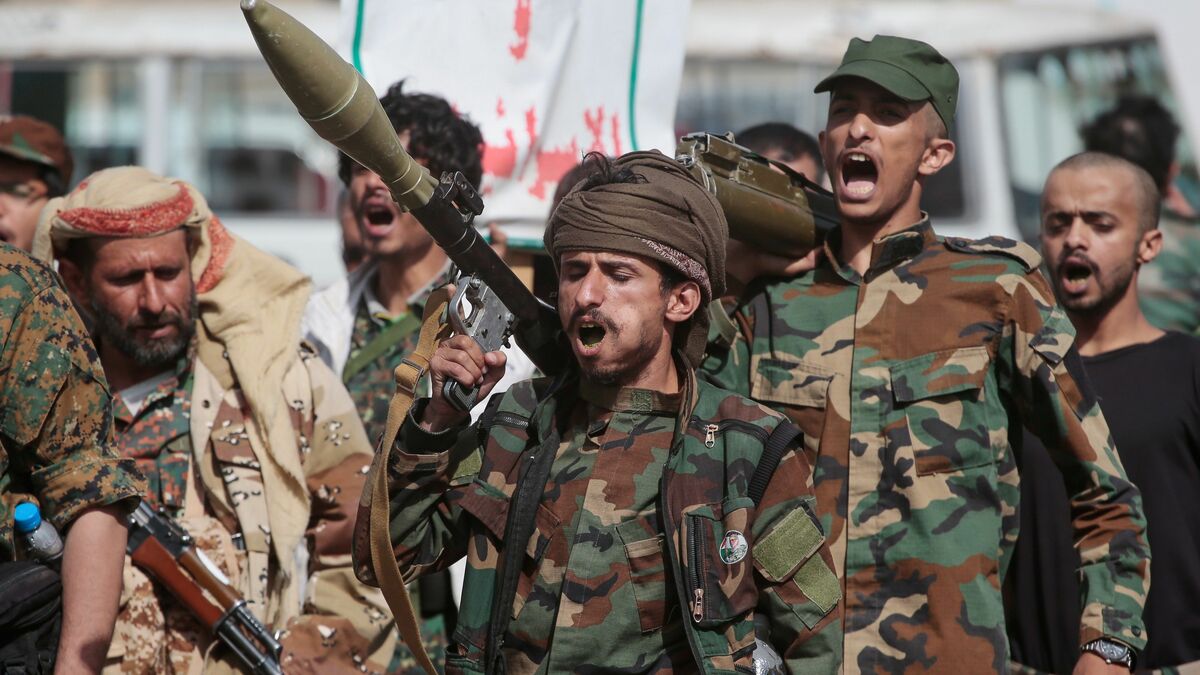
The Houthis have since seized most of Yemen’s Red Sea coastline. From there, they are striking Saudi energy infrastructure with drones and missiles, extending the fight onto Saudi soil for the first time in years. The economic dimension is clear: Iran cannot win a conventional war, so it is waging one that targets the revenue streams of America’s key allies instead.
But this is also a war of expectations. Iran’s strategy depends on making every barrel of Gulf oil more expensive to insure, transport, and deliver. The resulting risk premium is already baked into futures contracts. Shipping companies are demanding higher premiums for passage near Saudi waters. Reinsurance markets in London and Geneva are pricing in losses that exceed the total value of the region’s oil export infrastructure in a single catastrophic scenario. These are the kind of calculations that move markets faster than any headline.
The narrative dimension is where things grow politically toxic for Washington. The Trump administration has spent months framing its Middle East strategy as a series of incremental gains against Iran. A functioning Hormuz Strait reopening process was the centrepiece of that story. When those talks were postponed this week, the story flipped.
Winter is not a metaphor
The timing is the problem. The Northern Hemisphere is moving toward winter. Natural gas and heating oil demand will rise sharply across Europe and North America within weeks. Any fresh disruption to Gulf oil exports will hit already-tight markets before storage buffers are fully loaded.
For the United States, the pain will be felt at the pump and in inflation data heading into what should be a critical political window. For Japan, South Korea, and India — the world’s largest importers of Middle Eastern crude — the exposure is far more acute. These economies do not have spare refining capacity or alternative supply routes. They buy what the Gulf sends, and they buy it on terms set by whoever controls the chokepoints.
The second-order effects are already visible. European gas traders are quietly increasing positions in liquefied natural gas cargoes from the United States and Africa, betting that Gulf supplies will remain unreliable through the heating season. These purchases are driving up spot prices for cargoes that Asia typically relies on, creating a subtle but real competition between hemispheres for the same tankers and the same volumes. Shipping rates for VLCCs — very large crude carriers — have climbed roughly 40 percent since October. That cost eventually flows into the price of everything that moves by sea, including goods not related to energy at all.
Who wins, who loses
Saudi Arabia loses the most tangible asset: the credibility that its energy infrastructure is secure. Crown Prince Mohammed bin Salman’s Vision 2030 depends on attracting foreign investment to a stable kingdom. If the war moves closer to Saudi cities and oil facilities, that stability evaporates. MBS built his entire brand on control and certainty. This conflict is the opposite of both.
The kingdom has responded by accelerating air defence deployments around its remaining production facilities and asking the United States for additional Patriot batteries. But these are defensive measures against an offensive problem. No amount of interceptors can guarantee the safety of every valve and joint in a pipeline that stretches over a thousand kilometres through territory where hostile forces are constantly probing.
Iran loses on its own terms. The strategy of asymmetrical pressure was always designed to make the cost of war unbearable for Gulf states and their American patron. But every successful strike on Saudi oil also raises the probability of a broader regional escalation that could drag in the United States directly — something Tehran’s leadership has spent decades avoiding. The calculus is deteriorating. Each target struck brings the two sides closer to a threshold from which there is no graceful return.
The United States faces a political trap. The Trump administration entered this conflict promising decisive action and a swift exit. Instead, it is watching a proxy war escalate into a multi-front crisis that threatens its largest ally’s economy just as domestic inflation remains fragile. Every image of a burning pipeline in Saudi Arabia is an image that plays poorly in American living rooms. The administration’s existing narrative of strength has no obvious script for an enemy that cannot be bombed into silence and refuses to negotiate from weakness.
What happens next
The immediate question is whether the east-west pipeline can be repaired. Saudi Arabia has historically been able to restore damaged infrastructure within weeks, but repeated attacks change the calculus. If the pipeline stays offline through winter, global oil markets face a supply gap that no amount of strategic reserve releases can fully offset. The United States has announced several rounds of reserve releases, but those are measured in hundreds of thousands of barrels per day — a fraction of the 5 million that just disappeared from the market.
The longer-term concern is structural. The conflict has revealed that Gulf energy infrastructure — once considered off-limits and well-protected — is now within range of a dozen different actors. The Houthis, Iranian-backed militias in Iraq, and potentially other regional powers all have the capability and the incentive to strike again. The question is no longer whether Saudi facilities will be targeted but when and how often.
For Asian energy buyers, this means a re-evaluation of supply reliability that goes beyond any single crisis. Diversification away from Gulf crude will accelerate, not because of preference but because the risk premium on those shipments has permanently increased. China, already the largest buyer of Iranian oil, may find itself competing even more aggressively with India and South Korea for alternative volumes — volumes that simply do not exist at current prices.
Saudi Arabia itself may begin exporting less crude and more refined products, processing its oil domestically before sending it to market. That would change the geometry of global trade, reducing the volume of Middle Eastern crude available to other buyers and pushing Asian refiners to accept longer supply contracts with higher penalty clauses for non-delivery.
For the Trump administration, the lesson is already writing itself into political history. A conflict framed as a path to American strength is now producing energy shocks at home and strategic losses for allies abroad. The narrative of a creeping American edge over Iran looks increasingly like a mirror image of the opposite.
Winter is coming. And the lights depend on pipelines that may not be flowing.