Saudi Pipeline Strike Exposes the Fragility Behind $6 Diesel
A drone strike on a single Saudi artery just pushed U.S. diesel to an all-time $6.23 a gallon. The attack reveals how thin refined-oil supply chains have become after months of disruptions across the Black Sea and the Middle East.
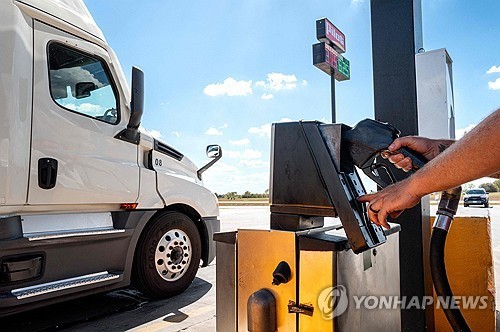
A Single Cut, A Record Price
One drone strike. One shutdown. And U.S. diesel hit $6.23 a gallon — a number that would have been unthinkable through most of the 2020s.
The target was Saudi Arabia’s east-west pipeline, a critical artery that does double duty: it carries crude for export and feeds the refinery complex on the western coast near the Red Sea. When it went offline after an attack attributed to a drone launched from Iraq, the market didn’t just blink. It priced in the worst case immediately.
The previous record had been set just days earlier, on November 11, when diesel first breached the psychological $6 threshold at $6.06 a gallon. That break itself was a reaction to the same pipeline’s initial damage. One trading day after confirmation of the full shutdown, prices re-accelerated to $6.23. Since the U.S. and Israel struck Iran on February 28, diesel has climbed 68 percent. That kind of velocity over eight months does not reflect normal market dynamics. It reflects a system under sustained stress.
The Refined-Oil Squeeze
The deeper story here is not about crude oil. It is about refined products — and why they are far more vulnerable than raw barrels.
“The market is responding much more sensitively to disruptions in refinery crude supply,” Richard Brones, co-founder of Energy Aspects, told CNN. The logic is straightforward. Refined-product markets are smaller than crude markets by design. There is less spare capacity, fewer alternative routes, and less buffer stock to draw down when a disruption hits. A single pipeline closure in Saudi Arabia does not just reduce throughput; it threatens the feedstock for refineries that may have no nearby alternative source.
Compounding the problem, the global refining map has been reshuffled over the past two years. Ukraine’s sustained attacks on Russian refining infrastructure have taken significant diesel and jet-fuel capacity offline. That forced flows to reroute — European diesel increasingly sourced from Asia, Asian supplies pulled from other regions. The system was already running thinner. The Saudi incident did not create the fragility. It exposed it.
Andy Lipof of RAPI forecast in a report released the same day as the second price surge that a prolonged shutdown could push U.S. diesel past $6.50 a gallon. Whether that happens depends on how quickly Saudi Arabia can repair the line and whether alternative supply can be mobilized fast enough to prevent inventory draws. But the direction is clear: the next move is up, not down.
The Political Calculus
None of this unfolds in a vacuum. The United States is seven weeks from midterm elections. Fuel prices are, historically, one of the most reliable indicators of voter sentiment — especially among independent and suburban voters who feel the pump every morning on the way to work.
The White House is watching closely. Kevin Hassett, chair of the National Economic Council, told Fox Business on November 11 that “diesel prices are the top concern right now.” That is an unusual phrase for a senior official to volunteer. It signals anxiety, not reassurance.
President Trump attempted to manage the narrative on social media the following day, posting that the global diesel surge was “mostly caused by the Russia-Ukraine war, not the Iran war.” Energy analysts pushed back — correctly, given the data — noting that the Iran conflict has been the larger driver of price escalation since February. Trump’s framing appears less about accuracy and more about damage control: linking the pain to a conflict the U.S. is not directly fighting deflects blame from a war the administration initiated.
The political calculus is stark. Diesel is not just a consumer fuel. It powers the trucking networks that move groceries, the equipment that plants and harvests crops, and the fleet that keeps supply chains intact. A sustained $6-plus environment compresses margins for farmers, logistics companies, and small businesses. Those pressures translate directly into higher food prices and a rougher economic picture heading into November.
What Comes Next
The immediate question is how long the Saudi pipeline stays dark. Repair timelines for crude lines of this diameter are typically measured in weeks, not days, and the attack originated from across a border — raising the possibility of follow-on strikes that could delay restoration further.
Even if the line reopens quickly, the psychological impact on refining margins and trader positioning lingers. Markets price in risk premiums for fragile nodes. The Strait of Hormuz, the Red Sea, and now the Saudi east-west corridor are all arteries that carry disproportionate weight for a system that has already lost its buffers.
For American consumers, the near-term outlook is unfavorable. Lipof’s $6.50 scenario is plausible if the shutdown extends into December. For policymakers, the challenge is that there is little leeway. Releasing strategic reserves helps gasoline more than diesel, and there is limited appetite for another round of diplomatic pressure on OPEC+ production quotas when the market is already pricing in scarcity.
The larger lesson, though, is structural. The world learned over the past two years that refined-oil supply chains are far less resilient than the crude market. Multiple disruptions hitting different regions simultaneously — Russia, the Middle East, and now a critical Saudi artery — mean there is no room for error. Each shock compounds the last.
A single pipeline in Saudi Arabia did not cause diesel to break $6. But it revealed a system that was already one interruption away from a price spike. The question now is whether the next one is around the corner.