Saudi Refinery Strike Hides a Bigger Threat for Asia
Oil hit its highest level since July after a strike on Saudi Arabia's Jizan refinery and escalating US-Iran fighting in the Strait of Hormuz. For Korea and other Asian importers, the real danger is not the headline price — it is the feedback loop that could push Brent past $120.
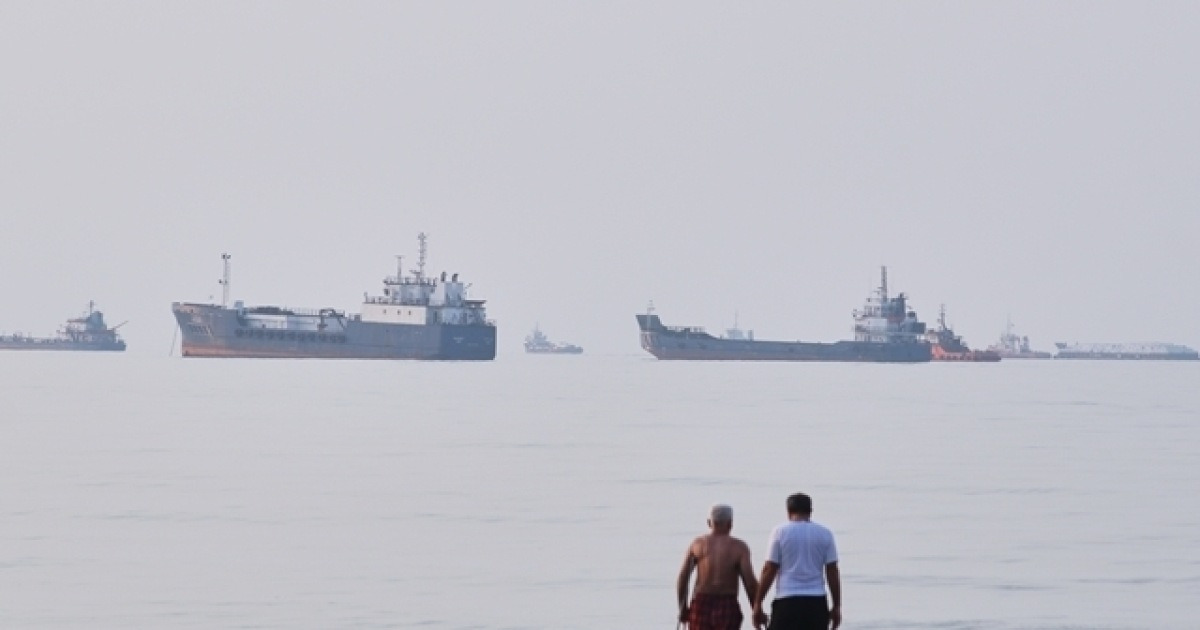
Brent brushed $98 on Tuesday. The quiet risk is $120.
Oil prices climbed to their highest level since late July after two shocks hit simultaneously: a strike on Saudi Arabia’s Jizan refinery and a deepening naval standoff between the United States and Iran around the Strait of Hormuz.
Brent crude settled at $97.31 a barrel, up $1.03, and briefly touched $98.06 intraday. West Texas Intermediate closed at $93.10, also a six-week high. On paper this looks like a routine geopolitical bump. It is not.
The Jizan facility, which processes roughly 400,000 barrels a day, was attacked on Tuesday. No group claimed responsibility yet, but analysts are leaning toward Yemen’s Houthi rebels. Jizan sits on the southwestern edge of Saudi Arabia, directly facing the Red Sea and only days from Houthi territory. The group struck the same site on July 26 with drones and missiles, so Tuesday’s attack fits a clear pattern — not a first strike, but an escalation within an ongoing campaign.
What makes this moment sharper is that the Hormuz crisis and the Jizan strike are feeding each other. Since early September, US Central Command and Iran’s Revolutionary Guard have been trading blows over the strait. On September 5, CENTCOM reported sinking three Iranian tankers near the island of Kharg and the Jask area. Iran countered the same day, saying it had hit three US-linked vessels and three commercial tankers.
The shipping data tells the real story. Kpler, a commodity tracking firm, reports that cargo vessels transiting the Strait of Hormuz dropped to an average of just ten ships per day over the last ten days. Before the fighting escalated, the figure ran comfortably above one hundred. The strait is the chokepoint through which roughly twenty million barrels of oil flow every day — about a fifth of global seaborne crude. When it clogs, prices do not nudge upward. They leap.
The numbers most readers miss
Korea imports nearly all of its oil. About 65 percent comes from the Middle East, and a large share of that transits Hormuz or the broader Gulf. When Brent trades at $97, the damage is felt immediately in refining margins and logistics costs. When it approaches $110, the damage moves into consumer prices and corporate balance sheets. At $120, it becomes structural inflation.
The United States is already feeling pressure. The New York Times reported Tuesday that the average US gallon of gasoline hit $4.15 — a 30 percent increase over the same week last year and the first Labor Day above $4 in records going back to 2012. Diesel reached $5.90 a gallon, up 60 percent year over year. AAA’s Brittany Moye noted that seasonal demand normally falls after summer, but this year the drop never came. High crude prices are swallowing the usual relief.
Asia has no seasonal cushion. Refineries in South Korea, Japan, and China run on thin margins that break when Brent crosses certain thresholds. SK Innovation, S-Oil, and Hanwha Oil — the three major Korean refiners — all import the bulk of their feedstock through the Middle East. A sustained Brent price above $100 for more than a few weeks would compress their refining spreads materially and likely push fuel prices at the pump higher across the region.
China is the wildcard. It holds roughly 700 million barrels of strategic reserves, according to International Energy Agency estimates, and has bought heavily during past price dips. If Beijing decides to release reserves to calm domestic fuel costs, it could cap the upside for a few weeks. But China also consumes nearly fourteen million barrels a day and cannot sustain a policy of subsidizing global prices indefinitely. If Hormuz stays choked, Beijing’s leverage fades fast.
Who wins and who loses
Russia benefits in the short term. Moscow’s Urals crude trades at a discount to Brent, and higher global benchmarks lift the absolute price it receives even if the spread does not tighten. Moscow has been navigating Western sanctions for two years and has built new export routes through Turkey and the Black Sea. A pricier market does not require new strategy — only patience.
Iran benefits politically. The attacks on Jizan and the confrontations in Hormuz are exactly the kind of pressure campaign that strengthens the hardline position in Tehran. Domestic audiences see the country as striking back against American naval presence, and the global oil shock gives the government leverage in any future negotiation. The cost is enormous: Iranian refineries are small, and Iran itself imports significant refined products. Higher global prices hurt Iran’s consumers too.
The Houthi movement gains operational credibility. A refinery strike that dents global prices proves the group can punch above its weight and reach deep into Saudi energy infrastructure. That changes the calculus for Saudi defensive spending and may draw Washington deeper into Red Sea operations it has been trying to avoid.
Korea and Japan lose directly. Both countries hold oil-import insurance policies and maintain strategic stockpiles, but neither can shield its economy from a month-long Hormuz shutdown or repeated refinery damage in the Gulf. The Bank of Korea has already flagged energy prices as a risk to its inflation outlook. If Brent breaches $110 and stays there through October, the central bank faces a brutal trade-off: raise rates into a slowing economy or tolerate inflation that erodes household purchasing power.
What happens next
Three scenarios are plausible over the next thirty days.
The first is de-escalation. The US and Iran strike a tacit understanding to limit attacks on commercial shipping, and the Houthis scale back operations. Hormuz traffic recovers to normal levels within two weeks. Brent drops back below $95. This is the most optimistic path and the least likely given the current hostility.
The second is managed instability. Attacks continue but do not close the strait completely. Hormuz traffic stays depressed at thirty to fifty ships a day rather than the historical hundred-plus. Brent oscillates between $100 and $110. Refining margins in Asia compress but do not collapse. Prices remain volatile but do not trigger a full inflation scare. This is the base case if no major naval incident occurs.
The third is a true supply shock. A single well-placed strike on a major Saudi or UAE terminal, or a successful Iranian blockade of Hormuz, pushes global crude supply down by five to eight million barrels a day. Brent spikes above $120 within days. Asian refiners shut down units. Consumer fuel prices jump 15 to 25 percent in a single month. Central banks are forced to respond aggressively despite weakening growth data. This outcome depends on a miscalculation, not a plan.
The Jizan refinery was targeted because it is vulnerable and symbolic. It is close to the Yemeni border, exposed to drone and missile fire, and important enough to matter globally. The fact that it was hit again so soon after July tells you that the attackers learned nothing and the defenders improved even less.
The real question for Asia is not whether Brent reaches $100 again — it already touched $98. The question is whether the market prices in a sustained Hormuz disruption long enough to break the usual seasonal patterns. The answer will determine whether next winter brings warm homes and reasonable fuel bills across East Asia, or a repeat of the inflation shock that followed the 2022 Ukraine war — only this time with nowhere near as much spare oil capacity to absorb the pain.
Saudi Arabia has enough idle capacity to offset a single refinery loss. What it cannot offset is a months-long disruption to the tanker traffic that feeds its own ports and the ports of its customers.
That is the gap between the headline and the risk.