Seoul's DMZ Mine Case: Forensic Limbo Before a Decision That Could Reset a Decade of Quiet
South Korea's military is withholding a formal attribution of a DMZ mine explosion to Pyongyang, citing plastic casing that complicates the evidence. The delay is not incompetence; it is the procedural gap through which every escalatory decision now passes, and the 'corresponding measures' threshold that follows could redraw the inter-Korean security order.
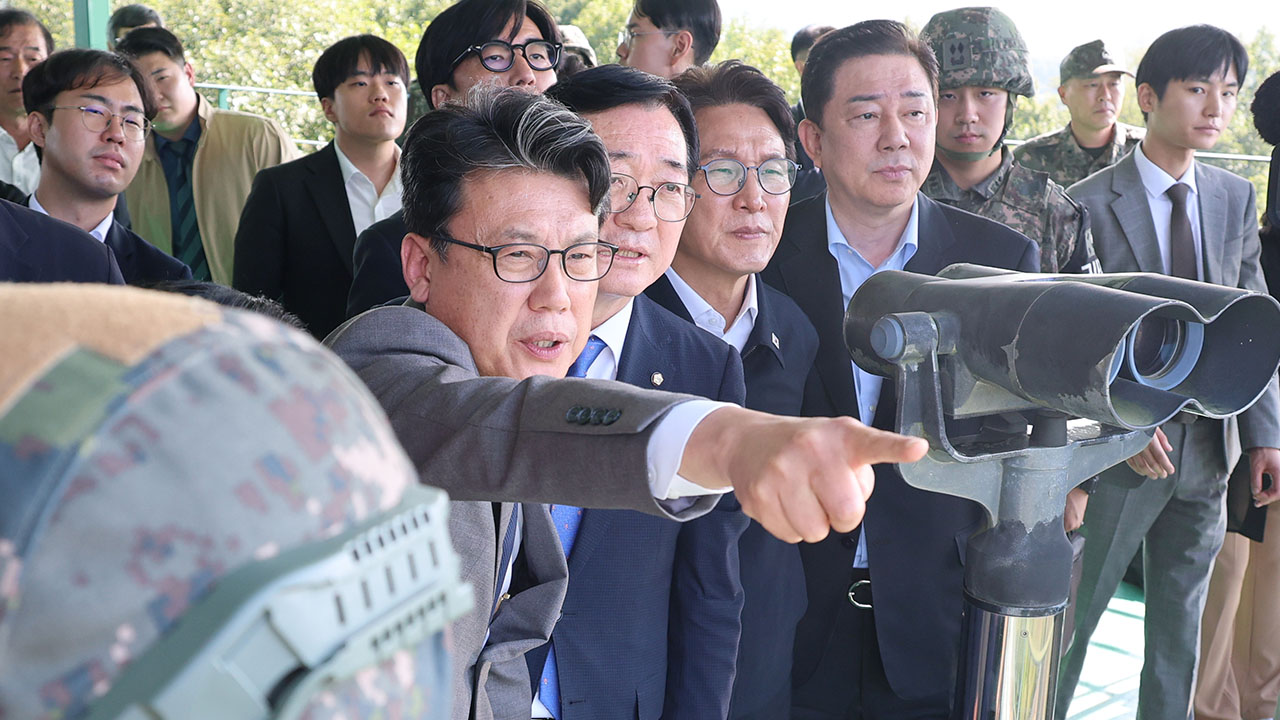
The delay is the story
The South Korean military told its National Assembly Defense Committee this week that it “estimates” the device that blew up two soldiers in the western-front DMZ on the 21st is a North Korean mine. That single word — estimate — is doing more work than the headline suggests. Seoul is not confirming. It is not denying. It is holding the ball in a forensic limbo, and for readers tracking the inter-Korean security environment, that limbo is where the actual decision-making is happening.
Kang Dong-gu, head of the Joint Chiefs of Staff Strategic Planning Bureau, walked committee members through the logic: the shape of the fragment looked like the classic wooden-cylinder mine Pyongyang has used before, but the recovered material appeared to be plastic. “It is difficult to definitively call it a log mine,” Kang told Rep. Cheon Ha-ram of the Innovation Party, who had pressed the question bluntly: our own wounded soldiers said it was a North Korean log mine, so why is confirmation taking this long? Kang’s answer pointed to the National Forensic Science Institute. The date of emplacement, the exact composition, the trajectory of the fragment — none of it is nailed down until the lab report lands.
That is not incompetence. It is procedure. And the procedure is the first reason this incident should matter to anyone outside Seoul.
What actually happened, timeline by timeline
The explosion struck the western front of the demilitarized zone on the 21st. Two soldiers were hurt; at least one suffered a serious injury consistent with a close-range blast. The military collected blood-soaked gauze and tissue samples from the wounded and sent them to the NFIS on the 22nd — the earliest possible forensic step. The following day the defense minister inspected the site. An operations-bureau chief ran a safety assessment. By the 26th the incident command had been restructured, with the JCS deputy director taking the TF lead, and the field team completed its assessment.
Through the entire sequence, the United Nations Command was briefed. Kang confirmed the UNCM has proposed a joint investigation at a later stage. That detail is easy to scroll past and should not be. The UN Command is the US-run mechanism that oversees the 1953 Armistice. Its presence in the evidence chain means Washington is already inside the forensic record, not merely watching the political fallout arrive by cable.
Why attribution is harder than it looks
English-language coverage of the DMZ tends to default to a binary: North Korean act or accident. The real picture is messier. Pyongyang’s mines along the western front have shifted in design over the years. The 2010 Yeonpyeong shelling launched a cascade of artillery fire, cyber intrusion, and the collapse of the sunshine-policy framework. Since then, the border has been quiet in a way that made many in Seoul assume the old tripwire had been cut. A plastic-cased device is not the same signature as the wooden cylinders of 2010. It could be a newer iteration. It could be a South Korean training round that malfunctioned. It could be third-party debris, unlikely but not physically impossible in a 4-kilometer-wide no-man’s-land where both sides maintain aging infrastructure.
The military’s refusal to lock in “North Korean” before the NFIS report closes that gap is, in a strict evidentiary sense, correct. But it creates a window — perhaps days, perhaps weeks — in which both governments can spin the event. Pyongyang can call it a fabrication if the lab never produces a definitive match. Seoul can escalate diplomatically while still technically operating from a state of “we estimate.” That ambiguity is a policy tool as much as a scientific one.
The phrase that matters: corresponding measures
Rep. Kim Byeong-ju of the Democratic Party, speaking on the committee floor, used the standard Korean security idiom: if the investigation confirms a North Korean mine, Seoul will carry out “corresponding measures.” The phrase, 상응하는 대응, has a specific history. It is the verbal trigger that Seoul reaches for when it wants to signal escalation without pre-committing to a particular act of force. In 2010 it preceded artillery response, the suspension of the 4.25 joint declaration, and a full recalibration of South Korean deterrence posture. In quieter periods it has meant resumption of loudspeaker broadcasts, increased patrols, or a diplomatic note to the UN panel.
What makes this iteration different is the audience. The committee hearing was public. The UN Command was in the room, digitally if not physically. The opposition party had already started calling the government “crossed-arms” slow — a political attack that, ironically, pressures Seoul to shorten its forensic timeline and reach a conclusion faster than the evidence supports. The military pushed back, correctly noting that the core explosive-trace examination is already with NFIS and that field verification of bullet marks and secondary fragments cannot be rushed without contaminating the chain of custody.
Who wins, who loses, what to watch
If the lab report confirms a North Korean device, Pyongyang loses the most: it re-enters the escalation cycle that it has spent years trying to stay just below. Every confirmed act of sabotage raises the cost of the next one, and it hands Seoul a clean mandate to invoke the Full Spectrum Deterrence doctrine that has been on paper since the Park administration but has rarely been activated at the operational level.
Seoul, meanwhile, faces a genuine dilemma. A fast, loud response risks drawing in the US and Japan into a border dispute that neither side wants to manage militarily. A slow, quiet response risks the perception of weakness that the domestic opposition is already weaponizing. The UN Command’s proposed joint investigation gives Seoul a way to share the evidentiary burden with Washington and keep the initial response multilateral rather than unilateral, which blunts the escalatory spike.
The next 72 hours after the NFIS report is the real checkpoint. Watch for three things: whether the JCS issues a standalone press release confirming the plastic-casing identification, whether the UN Command moves from “proposed” to “active” joint status, and whether the South Korean foreign ministry opens a parallel diplomatic track through the UN Panel of the 1953 Agreement. If all three fire in sequence within a week, the inter-Korean border shifts from a frozen file back to an active one, and the decade of relative quiet officially ends.