Seoul's Quiet Choice: Why Korea Hid the POW Return From Its Own Public
South Korea's president called the opposition's push to parade North Korean prisoners-of-war home 'cruel and irresponsible.' The real story is what the government's silence reveals about a country caught between three capital.
The Silence Speaks Louder Than the Announcement
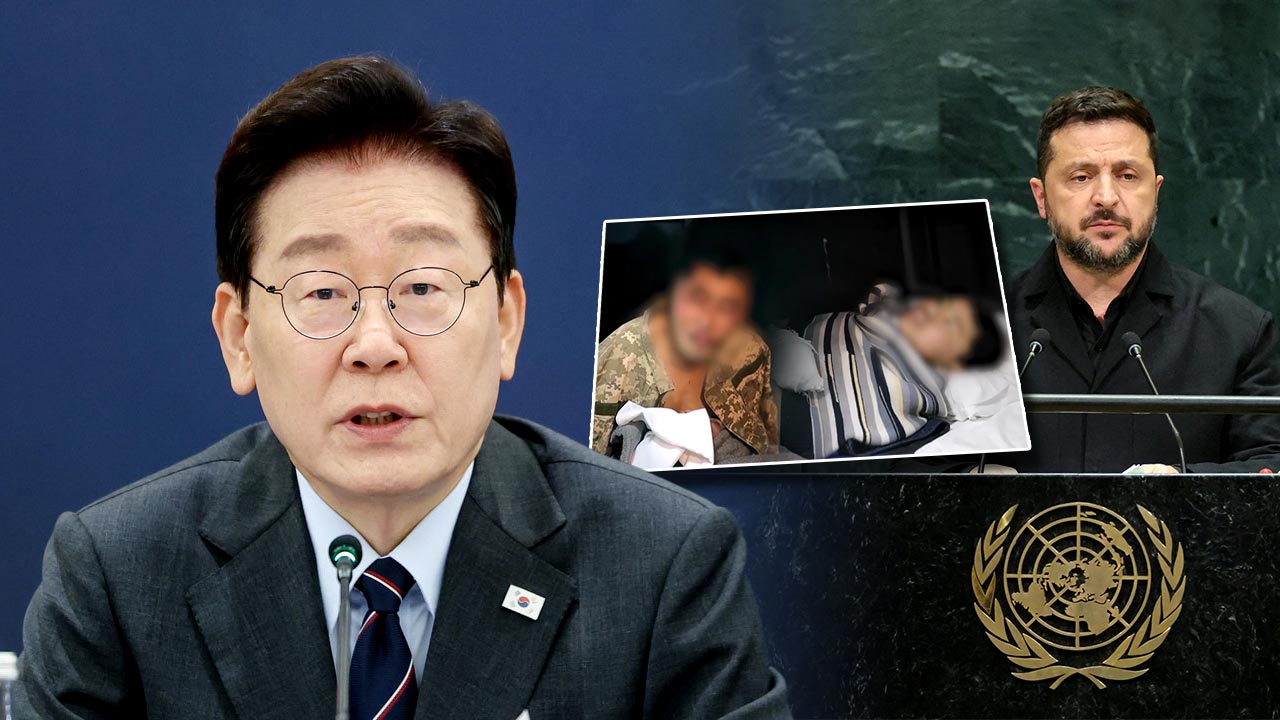
When Ukrainian President Volodymyr Zelenskyy stood at the UN General Assembly and revealed that two North Korean soldiers, captured on Russian soil, had been returned to South Korea, he likely saw a moment of moral clarity. Instead, he triggered a diplomatic embarrassment for Seoul — and exposed the fragile architecture underneath South Korea’s foreign policy.
President Yoon Jae-myung did not mince words. In a statement posted on X late on September 24, 2026, while visiting Mexico on a state trip, he called the opposition’s demand to publicly celebrate the POW homecoming “cruel and irresponsible.” He also said, pointedly, that he was “very disappointed” that Ukraine had broken a confidentiality agreement by disclosing the repatriation at the UN.
The subtext was unmistakable: Seoul had managed a delicate operation quietly. Kyiv had turned it into a stage production.
The Opposition’s Temptation
South Korea’s main opposition party, the People Power Party, had been pressing the government to explain why the return of the two North Korean POWs — soldiers who had been deployed to Russia as part of Moscow’s manpower deal with Pyongyang — was not announced immediately. Their argument was straightforward: these are South Korean nationals by blood, returned from a war they never chose to fight. The public deserved to know.
Yoon’s rebuttal cut the other way. He acknowledged that there were internal voices urging disclosure, arguing it would boost government approval ratings. But he said the decision was made to prioritize national interest over political gain. The risks of a premature announcement, he implied, could jeopardize the safety of the soldiers, compromise future intelligence cooperation, or inflame tensions with North Korea at a moment when Seoul wanted to keep channels open.
What the president’s statement did not say explicitly — but what everyone in the room understood — was that the opposition wanted to dance with the prisoners at the airport, while the government wanted them home alive and the geopolitical costs contained.
Why This Matters Beyond the Headlines
Western coverage of the Ukraine war has largely treated South Korea as a secondary actor — a reliable donor of ammunition and medical supplies, a follower of American strategy, a nation that buys what Washington tells it to buy. The POW story upends that framing.
South Korea is simultaneously a treaty ally of the United States, a critical economic partner of China, a neighbor of North Korea with millions of troops ranged across the Demilitarized Zone, and a country that has, over the past two years, quietly deepened its economic and technical relationship with Russia in sectors ranging from energy to infrastructure. It is one of the few middle powers navigating all of these relationships without fully committing to any single bloc.
The decision to keep the POW return secret was not merely tactical. It was structural. Publicizing the repatriation would have sent a signal to Moscow that South Korea was treating the prisoners as political trophies — evidence that Seoul was leveraging the tragedy for domestic advantage. That is exactly the kind of signal that could have complicated sensitive backchannel conversations between Seoul and Moscow about de-escalation, trade, or even future prisoner exchanges that might involve South Koreans detained in Russia.
At the same time, an overly visible return could have provoked Pyongyang. The two soldiers were, technically, citizens of North Korea operating under orders from the Kim regime. Public celebration of their escape from Russian service could be interpreted in Pyongyang as South Korean interference — or worse, as proof that the regime’s troops are defection risks. For a government that has worked cautiously to avoid provoking North Korea while maintaining deterrence, that is a dangerous message to send.
The Zelenskyy Complication
Yoon’s most pointed language was reserved not for the opposition but for Ukraine. He did not accuse Kyiv of malice. He said he did not know what circumstances led to the breach of the confidentiality agreement. He called it regrettable.
But the choice of words was significant. A “confidentiality agreement” implies that Seoul and Kyiv had, at some point, discussed the terms under which the soldiers would be returned. That this existed at all suggests a level of behind-the-scenes coordination between two governments that Western analysts have not always credited. It also means that when Zelenskyy spoke at the UN, he was not simply sharing information — he was overriding a diplomatic commitment made to a partner.
Ukraine has every reason to want the world to see that North Korean troops fought alongside Russians on Ukrainian soil. The image is politically potent. It validates Kyiv’s narrative that this is a global conflict, not a regional one, and that the costs of aggression extend far beyond the battlefield. But potency is not the same as wisdom, especially when your partner’s security calculus depends on ambiguity.
Who Wins, Who Loses
The immediate winner is the South Korean government’s argument that discretion, not spectacle, serves national interest. The opposition now looks reactive — demanding transparency without acknowledging the risks that opacity protects. Yoon gets to frame the debate on his terms: patriotism as restraint rather than performance.
Zelenskyy loses something intangible but real. He gains a photograph for the history books. He loses a measure of trust with a government that will now question whether Kyiv will keep its word in future sensitive arrangements. That trust deficit may not matter today. It will matter when the next crisis arrives.
Moscow watches carefully. A South Korea that publicly parades North Korean prisoners as evidence of Russian brutality is a South Korea that has chosen a side in a way that closes off its other options. A South Korea that handles the matter quietly retains more maneuvering room — including the ability to talk to Russia when talking to Russia becomes necessary.
What Comes Next
The two soldiers are now in South Korea. They will receive medical care, psychological support, and, presumably, a careful debriefing. How much of what they know gets shared with allies, and how much stays within Seoul’s own intelligence apparatus, will itself be a telling signal about where South Korea draws the line between transparency and self-protection.
The government has made clear it will not be drawn into a public fight with Ukraine over the UN announcement. But the disappointment was stated onerously enough — and the phrasing about broken agreements was precise enough — that Kyiv should understand this is not a matter that has been forgotten.
For South Korea, the broader lesson is one it has been practicing quietly for months: being a responsible ally does not require performing loyalty at every turn. Sometimes the most strategic choice is the one nobody sees.
The question for Western observers is whether they can accept that — or whether they will keep pushing Seoul to turn every diplomatic maneuver into a public statement, as if visibility is the only proof of commitment.