Seoul Rewrites the Denuclearization Playbook at the UN
President Lee Jae-myung's UN speech sidestepped the word 'denuclearization' while outlining a phased freeze-reduce-eliminate roadmap for North Korean weapons. The linguistic choice reveals a strategic pivot that could reshape deterrence calculations across East Asia.
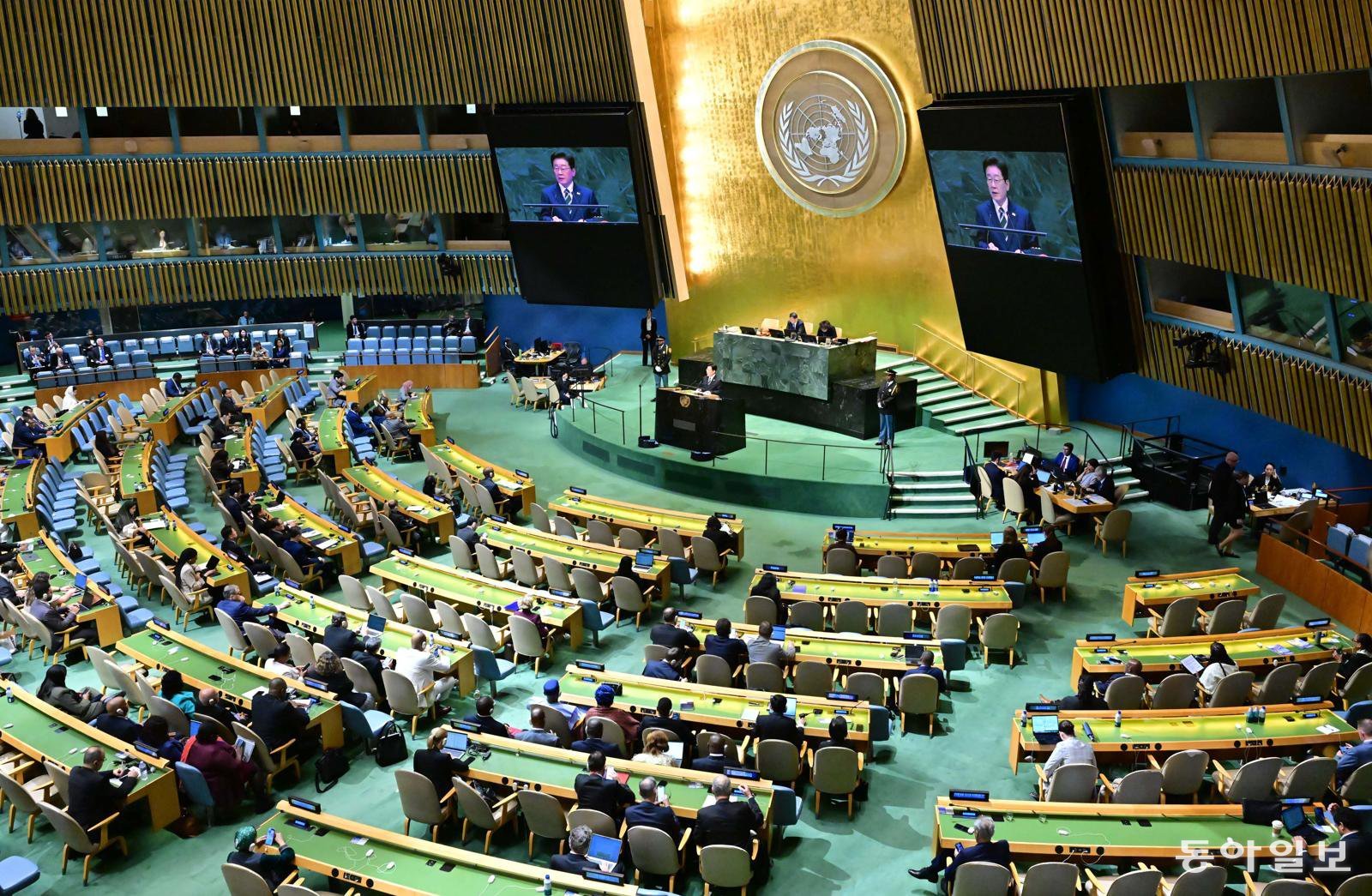
A Speech That Said Everything by What It Didn’t Say
President Lee Jae-myung stood at the UN podium on September 22, 2026, and delivered one of the most carefully calibrated North Korea addresses in recent memory. The speech was notable less for its content — the three-part framework of inclusive, stable, and responsible peaceful coexistence — than for its deliberate omission. Lee never used the word 비핵화, denuclearization. Instead, he described a phased pathway: halt, reduce, eliminate.
This is not semantics. It is a strategic recalibration that changes how regional actors will calculate their next moves.
The Phased Roadmap, Explained
Lee’s framework is precise. North Korea would first stop escalating its nuclear and missile capabilities — what he called the 고도화 stage. Over the medium term, those capabilities would shrink. In the long term, the peninsula would become核없다. The logic mirrors the 3단계 nonproliferation model Seoul formalized last year, but the framing here is notably softer than previous administrations’ language.
Where predecessors demanded denuclearization as a precondition for engagement, Lee positioned it as a destination reached through stages. The distinction matters because it signals that Seoul is no longer treating complete disarmament as a bargaining chip to be withheld until Pyongyang concedes everything. It is treating it as an endpoint that requires incremental trust-building along the way.
The Trump Connection, Explicitly Drawn
Perhaps the most politically significant line in the entire address came when Lee referenced Donald Trump directly. He said that thankfully, recent decisions by the US president have made change possible — or as the Korean phrasing suggested, 어려움에 만들어지고 있다, difficulty is being undone.
Lee was not merely acknowledging US policy shifts. He was positioning South Korea as an active participant in a diplomatic opening that has already begun. By tying Seoul’s peace framework to Trump’s recent moves, Lee elevated himself from mediator to co-author of whatever comes next. That is a risky calculation. If Trump’s overtures falter, Lee has staked credibility on a trajectory he cannot control. But if they succeed, Seoul gains outsized influence over the deal’s architecture.
The implication for Pyongyang is equally clear. North Korea now knows that Seoul is willing to decouple denuclearization from preconditions and fold it into a broader engagement strategy. That may make Kim Jong Un more willing to talk — or more willing to test whether the window is closing.
What China and Japan Will Hear
Chinese analysts tracking this speech will note the emphasis on a peace regime that requires US, China, and both Koreas as stakeholders. The language frames the Korean question as inseparable from great-power dynamics, not a bilateral dispute. That positions China as a necessary participant rather than a sidelined observer — a subtle invitation that Beijing may find harder to refuse than outright pressure.
Tokyo’s reading will be more anxious. A phased reduction model that does not demand immediate denuclearization could enable North Korea to retain meaningful capabilities throughout a lengthy transition period. Japan has consistently called for complete, verifiable, irreversible denuclearization. Seoul’s softer framing may strain the trilateral security coordination that Washington has worked to build.
The Hormuz Strait remarks in the same speech are telling. Lee connected North Korean provocation to broader maritime security threats in the Middle East, arguing that the weaponization of critical sea lanes demonstrated how global stability depends on Korean peace. It was a strategic bridge — positioning North Korea’s nuclear program as a global rather than regional concern, thereby justifying greater international investment in a diplomatic solution.
The Constructive Contribution Alliance
Beyond the Korean peninsula, Lee proposed something more structural: a Constructive Contribution Countries Alliance. The idea is that nations with capacity and will should cooperate flexibly on global public goods rather than wait for universal consensus. He explicitly rejected exclusive blocs or new exclusivist institutions. The language was carefully chosen to distinguish his vision from both American alliance politics and Chinese state-capitalist cooperation frameworks.
This is Lee positioning South Korea as a middle-power bridge builder — neither aligned with Washington’s hardline camp nor Beijing’s revisionist one. Whether the alliance takes shape is secondary. The positioning itself signals that Seoul intends to claim diplomatic space that has been increasingly crowded by great powers.
The Clothing as Message
Lee arrived wearing a dark blue suit with a green-and-white striped tie, accompanied by his wife Kim Hye-kyung. The Blue House described the tie as symbolic of hope and positivity, representing balance among nations. It sounds like costume politics. But in a region where every gesture is decoded, even the fabric choices carry weight. The green stripe is a visual departure from the red-and-blue dominance of previous administrations’ UN wardrobes — a small but intentional signal that this approach is different.
Who Wins, Who Loses, What Happens Next
The winner in Lee’s framing is the Korean people, freed from the perpetual threat of war. The loser is the hardline posture that equates concessions with weakness. But the real test will come in the months ahead. If Pyongyang interprets the softened language as an invitation to negotiate from strength, it may accelerate testing rather than freeze. If Trump’s engagement falters, Seoul’s early linkage to his diplomacy could leave Lee politically exposed.
The phased reduction model creates a diplomatic runway — but runways can be shot at. The question is not whether Seoul’s recalibration is smart. It is whether the actors on the other side of those three stages — halt, reduce, eliminate — believe they have reason to walk them.
That answer will determine whether this speech becomes a turning point or a footnote.