Seoul Subway Strike Threatens First Citywide Shutdown in Decades
Seoul's transit union faces its final negotiation round with the city. If talks collapse by morning, five million commuters could face the first total subway strike in South Korea — and the ripples would reach far beyond the tracks.
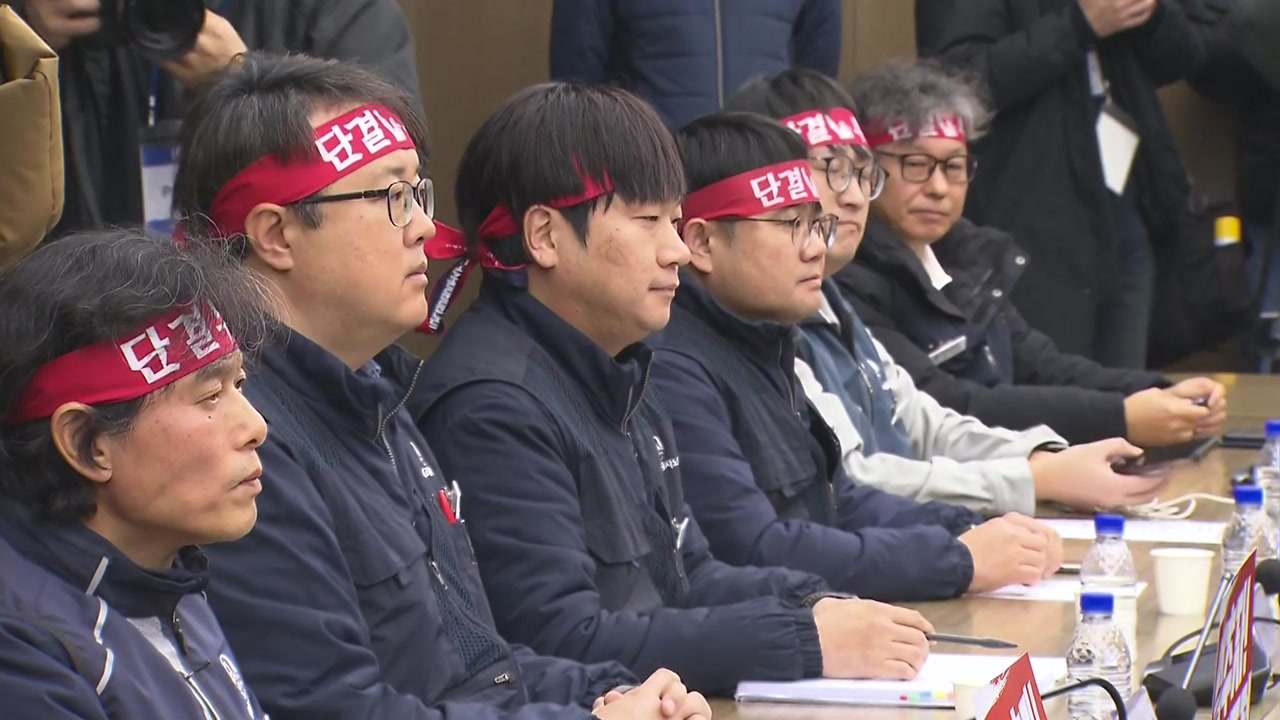
A Late-Night Marathon That Could Paralyze a Megacity
Negotiations between Seoul Metropolitan Transportation Corporation and its three unions began at 10 a.m. on November 24, and they are unlikely to end before dawn.
This is the final round before a total strike takes effect at first train on November 25. Lines 1 through 8 operate under the corporation, moving roughly five million riders each weekday. A shutdown would be the first city-wide transit walkout in South Korea in decades — possibly ever.
The sessions run sequentially: the Minju Noriwon (Democratic Labor Union, under the Korean Confederation of Trade Unions) starts at 10, the Honhap Nohojo (Integrated Union, under the Korean Federation of Trade Unions) follows at 11, and the Baropneun Nohojo wraps up around 1:30 p.m. Each union votes independently on any agreement reached.
That structure alone makes a clean resolution harder. Three separate membership bases, three different institutional cultures, and one shared deadline. Even if two unions accept a deal, the third can hold out and force a renegotiation — or walk away and trigger a partial strike that still disrupts service across overlapping corridors.
Observers inside the labor movement acknowledge this friction publicly but do not concede it privately. The sequencing itself is tactical: starting with KCTU-affiliated members, who tend toward more confrontational stances, gives the later-acting unions political cover to demand more later without appearing unreasonable.
The Real Fight Is Over Headcount, Not Just Wages
The publicly stated dispute centers on two numbers that define each other.
Unions want the corporation to withdraw a plan cutting approximately 2,200 positions and to hire 1,300 additional safety staff by year-end. The city and the corporation insist the reductions are necessary given fiscal pressure and the need for management efficiency.
But the deeper structural question is who controls headcount. Seoul Transportation Corporation does not unilaterally set staffing levels or approve new hires — that authority rests with Seoul city government. Mayor Oh Se-hoon’s administration holds the purse strings, and the budget conversation is already framed around spending restraint.
So the ultimate variable in these talks is not the corporation’s willingness but the city’s appetite to spend. And Seoul is sitting on a constrained municipal budget while facing rising maintenance costs across an aging underground network.
Lines opened between 1974 and 2000. Maintenance backlogs accumulate. Safety incidents draw scrutiny. Adding 1,300 workers is not a small line item.
What complicates the arithmetic further is that many of the 2,200 positions slated for elimination are not roles the corporation wants to disappear — they are roles the union treats as non-negotiable regardless of operational logic. Station attendants, platform supervisors, track inspection crews. These are jobs that exist because regulations require them, and every one carries implicit weight in a bargaining equation where membership retention matters as much as wage gains.
Mayor Oh’s office has signaled willingness to discuss safety staffing within existing budget constraints, but has drawn a bright line against expanding headcount. That distinction may sound semantic in a press briefing. In practice, it means the corporation can reallocate and the city can fund targeted safety hires — but the 2,200 reduction stands unless the unions extract concessions elsewhere.
Why This Moment Feels Different
Previous attempts at resolution have already failed. Since June, three rounds of principal negotiations and labor committee mediation have broken down without agreement. Two unions have already moved into what YTN describes as “lawful struggle” actions — a step short of a full strike but signaling momentum toward one.
There is a historical precedent worth noting. In 2024, a similar impasse resolved hours before the first train, when both sides found a narrow compromise at the eleventh hour. Last-minute deals like that are common in Korean labor disputes. They do not mean the underlying grievances are solved; they mean the political cost of an actual shutdown forced a temporary exit ramp.
This time, however, the labor movement appears more willing to pay that cost. The shift from defensive posture to offensive action is visible in the sequencing: unions did not wait for the current round to fail before escalating. They are already occupying middle ground between conciliation and confrontation.
Several factors explain the changed calculus. South Korea’s unemployment rate has remained historically low, reducing the personal risk workers associate with striking. The ideological composition of the union leadership has shifted toward a newer generation that views transit action as legitimate rather than exceptional. And the political environment — with national elections cycles approaching — makes authorities more sensitive to disruption than in prior years.
Perhaps most significantly, the corporations and municipalities involved recognize that a successful strike sets a template. Every previous transit settlement in Korea carried forward-looking language about future disputes. This round strips that cushion away. The unions are negotiating today’s terms without deferring tomorrow’s compromise to an unnamed mediators table.
The Supply Chain Question Nobody Is Talking About
A subway strike paralyzes commuters. It also disrupts something less visible: the people-moving infrastructure that underpins just-in-time logistics.
Seoul’s port-adjacent industrial zones — Incheon, Pyeongtaek, Ulsan — depend on shift workers, warehouse staff, and supervisory teams who ride the same lines. A five-million-person halt does not just inconvenience office workers. It creates cascading delays at distribution centers, loading docks, and factory gates where attendance is non-negotiable and penalties for missed windows are immediate.
Korea’s export-dependent economy runs on tight scheduling. Semiconductor fabs, auto plants, and electronics assembly lines do not pause because subway cars stop running. But their workers do. When shift changes miss their trains, the result is partial downtime, not total shutdown — yet the revenue impact accumulates fast.
Logistics analysts estimate that even a single day of reduced transit availability costs Seoul’s metropolitan economy between KRW 80 billion and KRW 150 billion when direct and indirect losses are combined. That figure excludes reputational damage to Korea’s supply chain credibility, which international buyers monitor closely during procurement decisions.
The deeper risk is precedent. If a transit strike succeeds in extracting concessions it otherwise would not get, the template spreads. Other municipalities face similar labor pressures. Logistics unions watching from the sidelines take notes. A single day of paralysis sends a signal that organized labor in Korea still commands leverage over critical infrastructure — a signal that changes how contracts are structured across sectors for years afterward.
Hospital systems present another overlooked vulnerability. Emergency staff, lab technicians, and housekeeping personnel rely on the subway network as much as anyone. A strike does not close hospitals, but it tests whether surge capacity can absorb displaced workers quickly enough to maintain patient care standards.
Who Wins, Who Loses
If an agreement lands before the first train, both sides claim victory and the city absorbs a higher wage bill it may regret in the next budget cycle.
If the strike proceeds, commuters bear the immediate cost — lost wages, missed appointments, frustrated families — while the city faces political fallout it did not plan for. The corporation loses credibility as a reliable employer; the unions lose leverage once riders turn against them. Neither side escapes unscathed.
If the city holds the line and refuses to expand headcount, unions gain moral capital inside the movement even if they lose the battle. That dynamic has shaped Korean labor strategy for years: endure short-term pain to build long-term bargaining power.
Mayor Oh faces a distinct calculation. Conceding on headcount looks weak to fiscal conservatives who elected him. Refusing entirely risks triggering the very disruption he campaigned on preventing. His office has so far avoided specifying red lines, which preserves flexibility but also leaves allies guessing whether partial agreements will satisfy either side.
Corporation leadership occupies an uncomfortable middle position. They manage operations daily and feel the strain of understaffed stations, yet they answer to a city government that controls the budget. Any agreement they sign will be judged internally by whether it restored operational stability and externally by whether it exceeded the city’s spending tolerance.
Union rank-and-file members are split along predictable lines. Older workers prioritize job security and view the 2,200 cuts as existential. Younger workers, some of whom were never employed under the old headcount regime, focus more on wage increases and working conditions. Bridging those perspectives inside a single vote adds another layer of complexity to what should be a straightforward negotiation.
What Happens Next
The most likely outcome remains a late-night deal — the kind brokered in the early morning hours after both sides realize the alternative hurts them more than the compromise. Historically, that is where these episodes land.
But the margin between agreement and breakdown is thin, and the structural pressures pushing toward strike action are real. Five million daily riders, three independent unions, a mayor protecting a tight budget, and a labor movement testing whether the old playbook still works. All of that converges on one question: will anyone blink first?
Outside the negotiation rooms, contingency planning is already underway. Seoul Metropolitan Government has drafted rider advisory notices and identified alternate bus routes that could absorb limited fallback traffic. Ride-sharing companies are bracing for demand spikes. Employer associations in heavy industry have begun circulating internal memos about shift adjustments and remote work options for non-essential staff.
The communications dimension deserves attention. Both sides understand that narrative control often decides settlements before substantive terms do. Union spokespeople have emphasized commuter hardship and safety concerns. City officials have stressed fiscal responsibility and service continuity. Whoever frames the story more persuasively — especially among undecided riders who rarely follow labor disputes — gains leverage at the table.
If talks collapse, the strike begins at first train on November 25. If they produce a framework agreement, detailed implementation talks typically begin immediately and stretch for days or weeks. Partial settlements are possible — one union accepts while others continue — but historical patterns suggest the remaining holdouts usually fold once the primary actors have secured gains.
Whatever emerges from these rooms, the broader lesson will shape Korean labor relations regardless of the specific numbers on the table. This is not merely a dispute over positions and headcount. It is a test of whether organized transit labor can compel structural concession in an era of fiscal constraint and political caution.
The answer arrives tomorrow morning.