Six Hours Before Impact: What the Latest Asteroid Hit Really Means
An 80cm asteroid was spotted just six hours before it struck Earth — only the 13th time humanity has detected an incoming space rock. The real story isn't the asteroid itself, but what it proves about our growing early-warning network.
The 13th Time Around
Only thirteen times has humanity spotted an asteroid before it hit us. The number feels embarrassingly low until you do the math: thousands of space rocks strike Earth’s atmosphere every year. Most are dust-sized. The ones that make news burn up harmlessly over oceans. But the ones we detect before impact? That list stays short because detection is hard — impossibly hard, if you’re chasing something that small against a background of stars that never move.
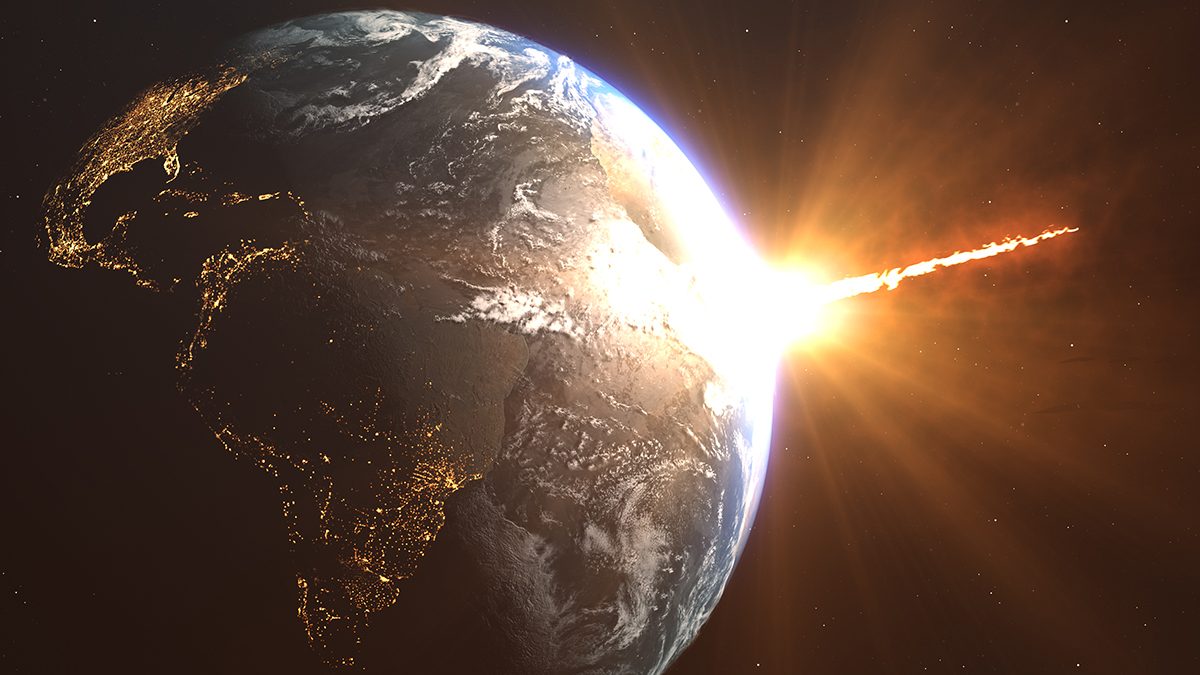
On Sunday, September 6, 2026, that list grew by one. Automated telescopes at the Mount Lemmon Observatory in Arizona picked up a faint object moving through the sky. Six hours later, it burned up over the Indian Ocean off northwestern Australia at 16:07 UTC. The asteroid — provisionally designated CERNQ52, now officially 2026 RW1 — measured roughly 80 centimeters across. It caused no damage. It left no crater. And planetary defense scientists are treating its detection as a milestone.
Not because of the rock. Because of the system.
What Changed
For decades, the approach to finding near-Earth objects was fundamentally human-scale work. Clyde Tombaugh discovered Pluto in 1930 using a blink comparator — a device that flips between two photographic plates taken hours apart, revealing anything that moved. Astronomers spent years doing this by hand, plate by plate, star by star.
The Catalina Sky Survey, which spotted 2026 RW1, still uses that same basic principle: compare images of the same patch of sky taken at different times and flag the things that moved. But the labor has been outsourced to machines. Automated telescopes scan vast swaths of night sky. Software identifies candidates. Artificial intelligence and machine-learning pipelines sort signal from noise, ranking objects by speed, brightness, and trajectory.
Once the detection happened, the European Space Agency’s Meerkat system — another automated early-warning network — took over, calculating the object’s path and predicting its impact window with enough precision to confirm the six-hour lead time.
This is the shift. What used to require dedicated human attention across months of observation now happens in real time, across networks of telescopes that never sleep.
Why Six Hours Matters
Six hours sounds like nothing when you’re talking about an incoming object traveling at tens of thousands of kilometers per hour. But in planetary defense terms, it is enormous. Before 2026 RW1, most pre-impact detections gave scientists minutes — sometimes seconds — of warning. The earlier you spot something, the more you know about it: its size, composition, trajectory, impact angle. Knowledge is the only leverage humanity has against asteroid strikes, and leverage scales non-linearly with lead time.
An 80-centimeter rock is not an extinction-level threat. It’s a firework — bright, loud, occasionally surprising. The largest meteorite ever recovered from an impact event, the Hoba meteorite in Namibia, weighs about 60 tons and measures roughly 2.7 meters across. Even a rock that size would be unlikely to cause widespread damage. The real danger starts at roughly 40 meters and above — the size of the Chelyabinsk object that exploded over Russia in 2013, injuring over 1,500 people and shattering windows across three cities.
Chelyabinsk was not detected before impact. It was a surprise. 2026 RW1 was not.
The Aten Question
Some experts, including astronomer Adrian Coffinet, have suggested that 2026 RW1 may be an Aten asteroid — a class of near-Earth objects whose orbits bring them inside Earth’s path around the Sun. Aten asteroids are named after the asteroid 2062 Aten, discovered in 1976. They cross Earth’s orbit and can approach surprisingly close, making them the type most likely to warrant monitoring.
If confirmed, this classification would be noteworthy. Aten asteroids are rarer than Apollo asteroids (which cross Earth’s orbit from the outside) and harder to detect because they spend more of their time on the sunward side of Earth, where telescopes struggle to observe them against glare. Finding one hours before impact suggests the Catalina Sky Survey’s coverage is reaching into orbital regimes that previously went poorly watched.
The Real Story Isn’t the Rock
Here’s what English-language observers outside the planetary defense community usually miss about events like this: the asteroid itself is almost irrelevant. The public fixates on the size, the trajectory, the dramatic countdown. But the actual story is infrastructural.
We now have a network of automated telescopes — Catalina, Pan-STARRS in Hawaii, the Vera Rubin Observatory coming online, various private installations operated by entities like the Private Space Observatory Network — that collectively scan the sky continuously. When one telescope spots something, others confirm it. When ESA’s Meerkat system calculates a trajectory, that calculation feeds back into the network, refining predictions in near real time.
This is not a single observatory’s achievement. It is a distributed system, and distributed systems are harder to break than centralized ones. If Mount Lemmon is cloudy, Pan-STARRS might have a clear sky. If one network goes offline for maintenance, another picks up the slack. That redundancy didn’t exist a decade ago in anything like this form.
Who Wins, Who Loses
Who wins from this? The taxpayers funding these observatories win, though few of them know it. The planetary defense community wins — finally having proof of concept that early detection of small near-Earth objects is operational, not theoretical. The next generation of space situational awareness startups wins, because every successful detection strengthens the case for private investment in asteroid-tracking infrastructure.
Who loses? Ambiguity loses. For years, skeptics of planetary defense funding could point to the Chelyabinsk event and argue that we were unprepared, that detection was unreliable, that the threat was overhyped. This detection closes that argument. An 80-centimeter object, found six hours out, tracked to impact — that is not a near miss. That is a working system.
There is also a quiet loser in this story: the public’s appetite for asteroid anxiety. We’ve spent decades being told about killer asteroids the size of cities, objects that could end civilization. Those remain genuine concerns, and the DETECT mission and other large-scale survey efforts are essential for finding them. But the real daily work of planetary defense — the kind that protects us from the far more frequent small-object impacts — happens quietly, invisibly, through systems like this one.
What Happens Next
The immediate next step is straightforward: 2026 RW1’s trajectory data will refine models of how Aten-class objects behave in the inner solar system. Long-term, the question is whether this detection rate can scale. Thirteen pre-impact detections in the entire recorded history of astronomy is a small number. But it is growing, and the growth is accelerating alongside telescope automation and AI-driven processing.
The Vera Rubin Observatory, which began operations in 2026, will scan the entire visible sky every few nights. Its sensitivity should push the pre-impact detection threshold well below 80 centimeters, potentially into the range of Chelyabinsk-sized objects — the size class that actually injures people and damages property. That would be the true proving ground: not catching fireworks, but catching the things that bite.
Until then, the Catalina Sky Survey and its peers keep watching. The sky is full of rocks. We are finally learning how to count them.