SK Hynix Builds HBM in Indiana as Trump Tariffs Loom
SK Hynix is breaking ground on America's first HBM fabrication plant in Indiana, a $3.87 billion bet timed against Trump administration plans for sweeping semiconductor tariffs. The move is already shaping how Korean chipmakers navigate weaponized trade.
The Bet Behind the Shovel
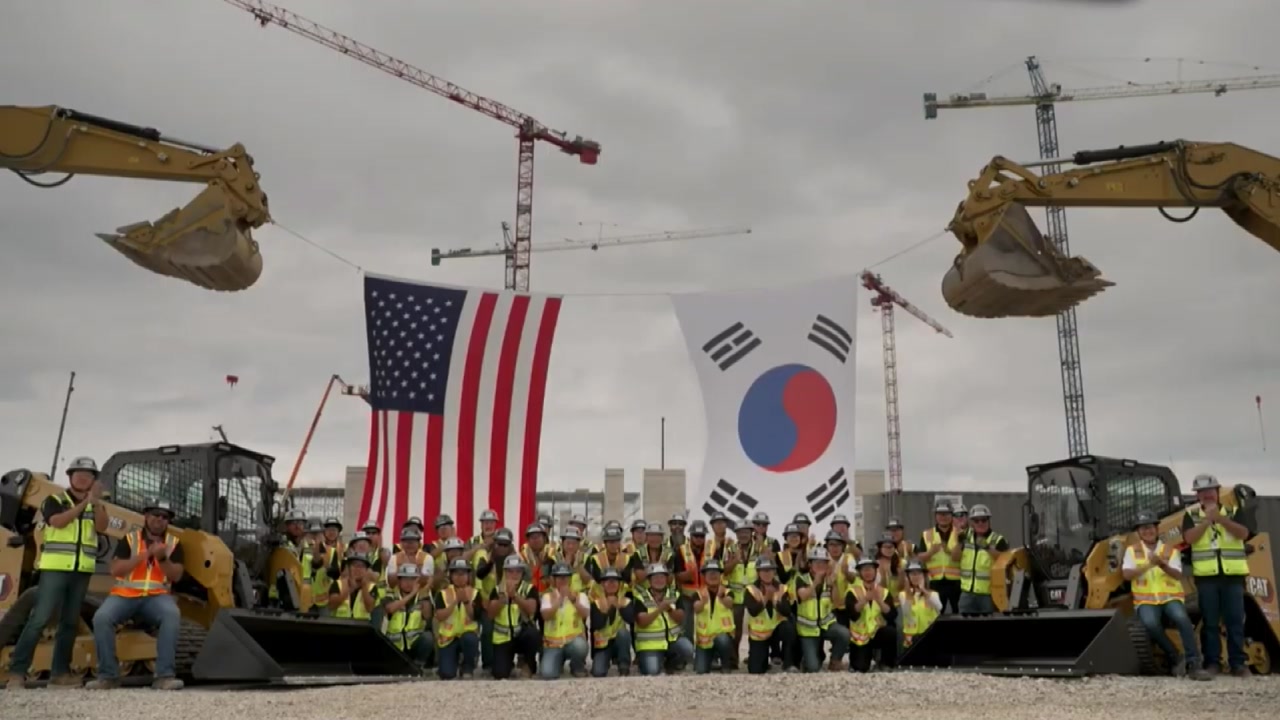
SK Hynix drove its first pile into Indiana soil in August 2026, marking the beginning of what would be America’s first high-bandwidth memory — HBM — production facility. The company is committing $3.87 billion, roughly 5.36 trillion won, to a site that will begin volume production in the second half of 2029. Output is expected at hundreds of thousands of wafers annually.
The timing is the story. Washington is actively discussing whether to impose steep tariffs on semiconductors and the finished products that contain them — laptops, data center servers, and more. The Trump administration reportedly favors linking tariff relief to domestic investment, using the threat of trade barriers as leverage to pull manufacturing onto American soil. SK Hynix appears to have read the writing on the wall and moved first.
Why HBM Matters
HBM is not your average memory chip. It is the stacked, high-speed DRAM that sits alongside AI accelerators like Nvidia’s H100 and B100, feeding data to the GPUs that train and run large language models. Demand has exploded alongside the generative AI boom, and SK Hynix currently holds a dominant share of the global market. That position is both its greatest asset and its greatest vulnerability under a trade regime that could treat its Korean origin as a liability.
Building the first HBM fab outside South Korea is a structural shift. Until now, the most advanced memory production has stayed firmly in Korea, with only packaging and testing moving abroad. Moving the core manufacturing process to Indiana signals that the calculus has changed: proximity to the end market and alignment with US policy now outweigh the efficiency of home-base production.
The Tariff Shadow
According to Politico, the Trump administration is considering a tariff framework that would not stop at chips. It would extend to finished goods containing semiconductors. That broadens the pressure from memory makers to every company in the electronics supply chain. For Korea, whose economy is anchored by three mega-chipmakers — SK Hynix, Samsung Electronics, and LG Semiconductor — the implication is stark: either invest heavily in the US or face margin-eroding duties on products sold there.
The administration is also reportedly exploring a phased rollout to soften market shock. That detail matters. A sudden, blanket tariff would have sent supply chains into chaotic reconfiguration. A gradual one gives companies like SK Hynix a window to act — and a clear signal that inaction carries compounding cost.
Canada’s friction with Washington over steel and aluminum has already demonstrated the administration’s willingness to restart tariff disputes. Semiconductor tariffs would simply be the next frontier in that playbook.
What SK Hynix Is Hedging
SK Hynix CEO Kwak Noh-jung framed the Indiana project as a contribution to US semiconductor supply chains and national economic security. The language is carefully calibrated — it speaks the dialect of Washington. But the subtext is equally clear: this is a defensive investment. By establishing a US-based production foothold, SK Hynix reduces its exposure to whatever tariff structure eventually emerges. It also positions the company as an indispensible partner in the very supply chain the US is trying to fortify, making future tariff action against it politically harder to justify.
Korean Ambassador to the US Kang Kyung-wha went further, describing the investment as a bet on shared technology, talent, and industrial foundations rather than a short-term economic calculation. That framing is designed to resonate with policymakers on both sides of the Pacific. It reframes a corporate risk mitigation move as a geopolitical contribution.
The Samsung Question
Samsung Electronics has not matched SK Hynix’s Indiana announcement with equivalent HBM-specific investment. Samsung is already building a major fabrication complex in Taylor, Texas, but that facility is oriented toward logic chips, not memory. The absence of a parallel HBM commitment from Samsung is noteworthy. It suggests SK Hynix may be mapping a path that its rival will eventually have to follow — or risk being the only major Korean memory producer subject to US tariffs without a domestic offset.
If Washington ties tariff exemptions to verifiable US production, Samsung could find itself in a tighter spot. The Texas fab helps, but HBM is a different product line with different customers and different supply chain dynamics. The competitive gap between the two Korean giants may widen if SK Hynix secures first-mover advantages in the US memory ecosystem.
What Happens Next
Several outcomes are plausible, and they are not mutually exclusive.
First, the phased tariff approach could give SK Hynix a two-to-three-year window before duties bite. That matches its 2029 production timeline closely. The company will likely use that period to ramp Indiana output while preserving its Korean fabs for the bulk of current demand.
Second, the US government may seek to tighten the investment-tariff linkage, rewarding companies that commit early and penalizing those that delay. If so, other Korean firms — not just in semiconductors but in batteries, displays, and automotive parts — could face similar pressure to localize production.
Third, the Indiana project itself carries execution risk. Building a cutting-edge memory fab in a new location, with a new workforce and unfamiliar regulatory environment, is far from guaranteed. Yields, talent pipelines, and supply chain logistics will all be tested. But even a partial success would establish a template.
The Blueprint
The deeper significance of SK Hynix’s Indiana move is that it may become the operating model for Korean industry in a Trump-era trade environment. The formula is simple: invest ahead of the tariff, frame the investment as strategic partnership, and lock in access to the US market before the rules harden.
That model has costs. Capital that could have gone to Korean factories goes to Indiana. Jobs that would have been high-skill positions in South Korea are now spread across two countries. And the dependency relationship shifts — Korean companies become less independent suppliers and more integrated partners in a US-controlled supply chain.
But the alternative — facing tariffs without a domestic presence — is worse. As the Trump administration makes clear, the lever it prefers to pull is not just trade policy but investment coercion. Companies that voluntarily comply before the pressure mounts preserve options. Those that resist may find their options removed entirely.
SK Hynix has chosen compliance with ambition. Whether Samsung follows, and whether other Korean industries do the same, will determine how much industrial autonomy Seoul retains as the trade landscape hardens around it.