Toyota's Aribe Platform Could Reshape How Cars Evolve After They
Toyota is betting its next decade on Aribe, a software platform that could slash development time and turn cars into continuously upgraded devices. With 50 models targeted by the early 2030s, the move redefines who controls a vehicle's life cycle.
The quiet pivot no one is discussing
Toyota has spent decades mastering the art of the incremental update. Every model refresh, every minor retooling — all designed to keep production lines running smoothly and costs predictable. The company’s legendary lean manufacturing system was built on the assumption that a car’s capabilities are largely fixed once it rolls off the line.
That assumption is about to become irrelevant.
In a move that signals a fundamental shift in how Toyota envisions its future, the company announced plans to equip 50 vehicle models with its Aribe software platform by the early 2030s, covering over 10 million vehicles. By 2035, Aribe will extend beyond Toyota-branded cars to partner manufacturers as well.
This is not a minor IT upgrade. This is Toyota repositioning itself from a company that builds cars to a company that builds platforms — where the real value shifts from hardware assembly to software deployment after the sale.
What Aribe actually does
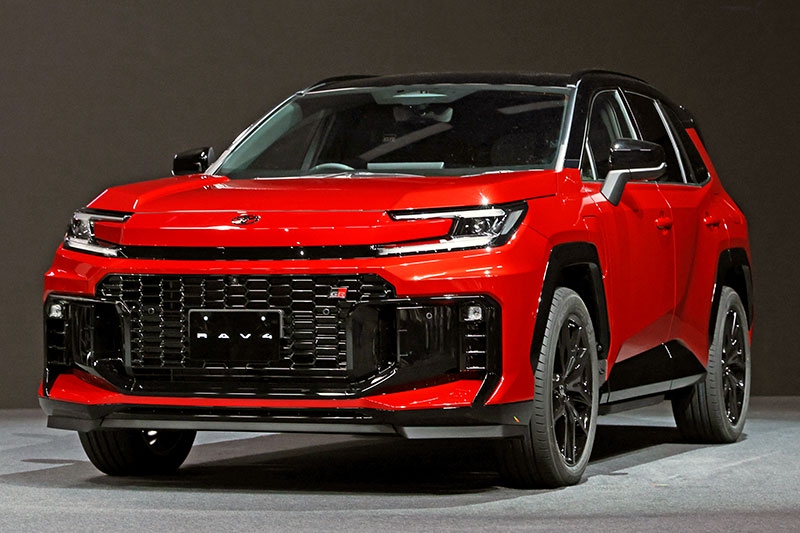
Aribe functions as a centralized software foundation for vehicles. It integrates the operating system, data collection infrastructure, and development and evaluation tools into a single architecture. The practical impact is already visible: in the RAV4, where Aribe is currently deployed, the evaluation period for advanced driver assistance systems was shortened by 70 percent.
Seventy percent. That is not a marginal efficiency gain. That represents a structural change in how fast Toyota can iterate on safety and autonomous driving features. Where the old model required months of testing and validation, the new approach compresses that timeline dramatically.
The rollout sequence is revealing. After the RAV4, Aribe is being integrated into the Lexus ES sedan, Toyota’s flagship luxury model. From there, it will expand across the entire Toyota lineup. This is not random — the ES serves as a proving ground for features that will eventually reach the mass market.
Beyond the car: the integrated AI platform
Perhaps more significant than the automotive application is Toyota’s broader vision for Aribe. The company explicitly plans to use the platform as a data backbone for AI robots and residential systems, creating what it calls an integrated AI platform that crosses industry boundaries.
This is the part that should concern every traditional automaker and every tech company with ambitions in mobility. Toyota is not thinking about Aribe as just a car operating system. It is thinking about Aribe as infrastructure — a shared layer that connects vehicles, robots, and homes into a single data ecosystem.
If successful, this positioning gives Toyota an advantage that no pure software company can easily replicate. Tesla has software. Traditional competitors have hardware. Toyota is attempting to own both and the data connecting them.
The battery question
Software is only half the story. Toyota’s announcement also addressed its all-solid-state battery development, which the company says is on track for commercialization in the 2027–2028 timeframe.
Solid-state batteries replace liquid electrolytes with solid ones, offering higher energy density, faster charging, and longer range. Toyota claims its unique material development and structural design have successfully managed the expansion and contraction that occurs during charging cycles — one of the most persistent engineering challenges in solid-state battery research.
The applications Toyota envisions are ambitious: high-output electric vehicles, electric vertical takeoff and landing aircraft, and large commercial trucks. Each represents a different market with different requirements, but all would benefit from the energy density gains that solid-state technology promises.
Meanwhile, Toyota is also refining conventional liquid lithium-ion batteries. The company has developed a higher-performance prismatic cell that is thinner, extends driving range, and reduces costs. By reducing cell height by 20 percent and improving packaging efficiency by the same margin, Toyota says it can challenge the conventional wisdom that electric vehicles must sit higher off the ground.
This dual approach — pushing solid-state forward while extracting more performance from existing technology — is a hedge that acknowledges uncertainty about which battery architecture will dominate.
Who wins and who loses
For Toyota’s suppliers, the Aribe platform represents both opportunity and risk. Companies that traditionally profit from proprietary hardware components may find their margins compressed if software updates can deliver features that previously required physical upgrades. But companies that can integrate with Aribe’s open architecture may gain access to a much larger addressable market.
Partner manufacturers that adopt Aribe by 2035 face a similar dynamic. The companies that integrate first gain access to Toyota’s development infrastructure and testing shortcuts. Those that resist risk falling behind on both development speed and the data advantages that accumulate over time.
Tesla and Chinese EV makers are the obvious competitive benchmarks. Both have demonstrated that software-defined architectures can accelerate feature deployment and create new revenue streams through over-the-air updates. Toyota is now attempting to catch up on a scale that neither competitor has matched.
The strategic implication
The deeper significance of Toyota’s Aribe announcement is what it reveals about the auto industry’s evolving power structure. For most of the twentieth century, hardware defined the competitive landscape. Engineering excellence, manufacturing efficiency, and dealer networks determined who won.
That hierarchy is inverting. Software now determines how quickly a vehicle can adapt, what features it can offer after purchase, and how much value it retains over time. Companies that control the software stack control the customer relationship beyond the point of sale.
Toyota’s bet on Aribe is a bet that it can maintain relevance in this new order. The 70 percent reduction in ADAS evaluation time is a strong signal that the company understands the stakes. Whether it can execute at the pace the market now demands remains the question.
The early 2030s are not distant. For a company that has always moved deliberately, the clock has suddenly started ticking faster.