SK Hynix Is Building a Chip Ecosystem Inside Its Own Walls
SK Hynix is letting materials and equipment suppliers test products inside its new Yongin fab before they ship elsewhere — a supply-chain move that could reshape how chips get made.
A Cleaner Room With Strangers
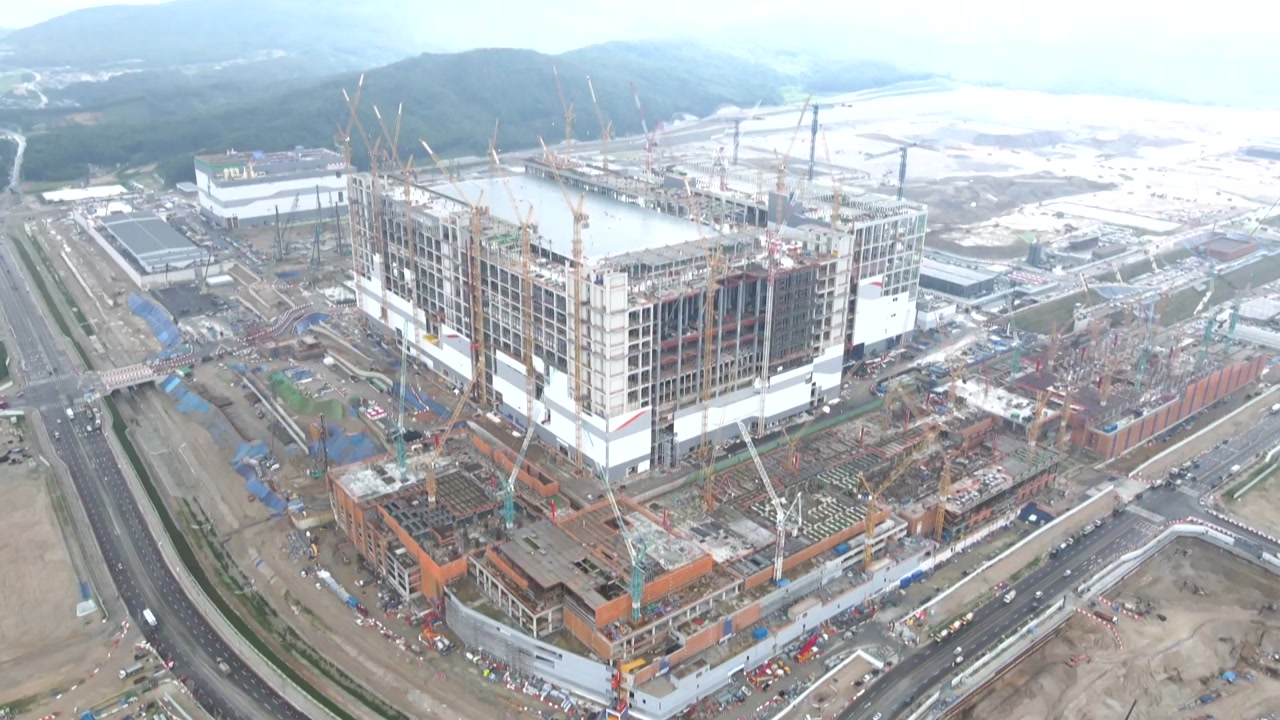
The dust hasn’t settled at SK Hynix’s construction site outside Yongin. Workers pour concrete, crane operators swing steel beams, and on any given day roughly 20,000 people are on this sprawling plot of land — working around the clock.
What makes this particular project worth watching isn’t the sheer scale. It’s what happens after the walls go up.
Inside the Phase 1 fab, SK Hynix has reserved space not just for its own production lines, but for outside companies too. Materials, components, and equipment manufacturers — collectively known in Korea as 소부장 (so-bu-jang) — will be able to set up shop within SK Hynix’s cleanrooms and run tests on their own products before committing to full-scale manufacturing runs.
This isn’t charity. It’s one of the most explicit moves yet by a Korean chipmaker to vertically integrate its entire supply chain into a single campus.
The Numbers Behind the Strategy
Phase 1 of the Yongin complex is the first of four planned fabs, scheduled to begin operating in the fourth quarter of 2027. Each unit will eventually need its own high-purity cleanroom capable of handling HBM — high-bandwidth memory, the specialized chip stack that powers today’s AI accelerators. By 2033, all four phases are expected to consume more than 14 gigawatts of electricity and nearly 1.5 million tons of ultra-pure water every single day.
That utility footprint alone makes SK Hynix’s Yongin campus one of the largest power and water draw projects on the Korean peninsula.
But the strategic differentiator lives inside those cleanrooms. According to Lee Gi-jung, chairman and founder of Trinity Fab Foundation — the entity managing the so-bu-jang tenant program — the plan is to enable “mass-production-level validation at both the individual process step and the module level” alongside domestic suppliers in real time.
In plain terms: instead of shipping a newly developed etching chemical or deposition tool to a third-party testing lab and waiting months for results, a supplier can install it inside SK Hynix’s factory floor, plug it into an active line, and see exactly how it performs under real manufacturing conditions.
Why That Matters to a Small Supplier
Lee Jae-ho, vice chairman of TES, a domestic equipment maker, put it bluntly when speaking to YTN. Metrology instruments — the machines that measure thin-film thickness, defect density, and layer alignment inside a fab — typically cost between 100 million and 5 billion won apiece. For a small or mid-tier supplier, buying even one of these tools to qualify your product for a major buyer’s fab is a brutal capital commitment with uncertain returns.
By giving suppliers access to SK Hynix’s existing instrumentation, the company effectively removes a gatekeeping hurdle that has historically favored large Japanese and American equipment makers. A Korean substrate supplier or a domestic packaging firm now has a credible path to validate its product without going into debt to do it.
That’s a structural advantage. And it’s one TSMC doesn’t easily replicate, since the foundry giant’s supplier ecosystem spans multiple countries and relies heavily on overseas firms whose products must pass external qualification processes.
Samsung Is Copying the Playbook
Samsung Electronics is planning six additional fabs in the same Yongin corridor, targeting initial operation around 2029. If it follows a similar co-location model — and all signs point to yes — the Yongin area itself will become a concentrated cluster where two of the world’s largest memory makers share a supplier neighborhood.
That creates a feedback loop. A supplier that qualifies a material at SK Hynix’s site gains process data that makes it easier to pitch Samsung. Samsung benefits because its rival’s supplier pool doubles as its own talent and certification pipeline. Both companies win from proximity, but the dynamic reinforces Korea’s position as a self-contained memory-chip ecosystem — something no other region has matched at this scale.
The Infrastructure Wall
None of this plays out without solveing some massive engineering and political problems. The government says power and water infrastructure will be delivered in sync with each fab’s startup timeline. But transmission line expansions and bulk-water pipeline construction have repeatedly faced local opposition in the area, and the upfront capital cost of upgrading the regional grid is enormous.
Local residents near the site have raised concerns about construction disruption and environmental impact. Utilities companies have warned that the sheer load from four fabs could strain the southern Gyeonggi province grid well before SK Hynix’s first wafer rolls off the line in late 2027.
If infrastructure delivery slips, the entire co-location strategy stalls. Suppliers can’t validate products in empty cleanrooms, and the timing advantage over competitors evaporates.
What This Signals
For Western readers who track semiconductor policy through the lens of CHIPS Act subsidies and Taiwan dependency, SK Hynix’s Yongin move looks like a domestic housekeeping matter. It isn’t.
It’s an attempt to lock in supply-chain resilience at the factory-gate level. By pulling so-bu-jang suppliers inside the fab perimeter, SK Hynix reduces lead times, lowers qualification risk, and builds a competitive moat that doesn’t depend on shipping parts across oceans. It’s less about making chips faster and more about making uncertainty cheaper.
TSMC built its dominance on the economics of specialization. SK Hynix is now betting that proximity beats specialization in the HBM race — that the company closest to its suppliers’ engineering teams will ship better memory first, and keep shipping it first.
Whether that bet pays off depends on concrete things: whether Yongin’s power grid holds, whether 20,000 workers finish four fabs by 2033 on schedule, and whether domestic suppliers can convert subsidized cleanroom access into genuine process innovation. The architecture is there. The rest remains to be proven.