SK's Land Grab vs Samsung's Speed Run in Korea's Semiconductor Gamble
SK Hynix and Samsung are pursuing diverging strategies in South Korea's Honam semiconductor cluster — one betting on massive land consolidation, the other on accelerating timelines. The split reveals a company-level reckoning over what comes next for Korean chips.
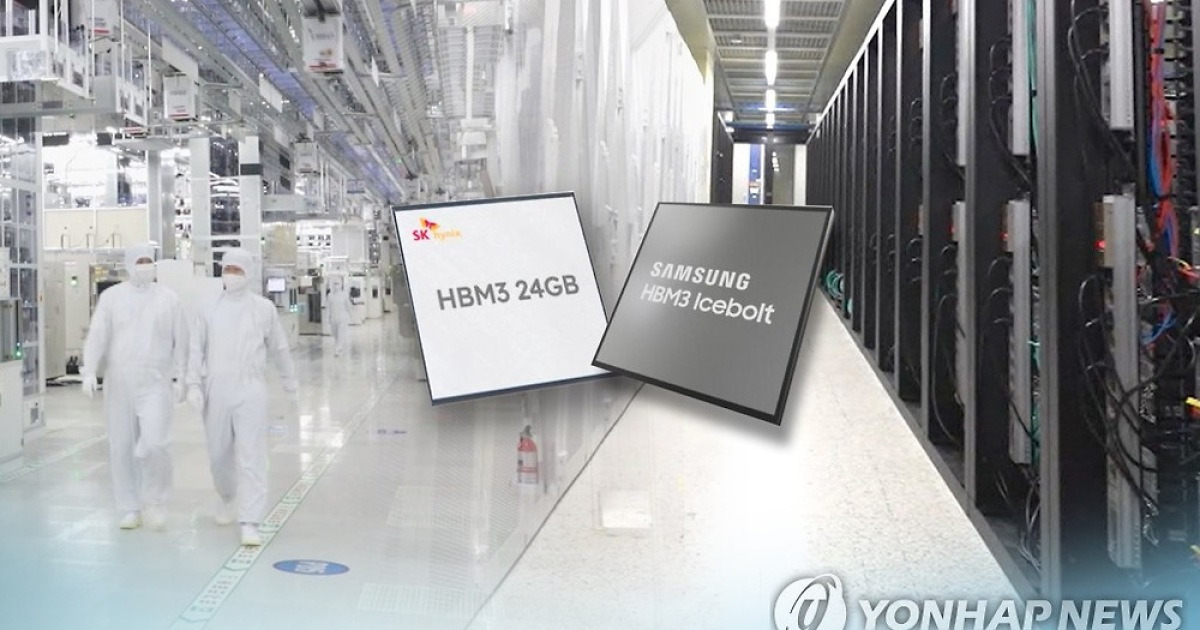
Two Companies, Two Strategies, One Cluster
SK Hynix wants land. Samsung wants speed. And both are trying to outlast each other in the Honam semiconductor cluster — a government-sponsored industrial zone in southwestern Korea that could reshape the company-level architecture of the global chip industry.
What the local press calls a unified national project is, in practice, two companies running very different races toward the same finish line. The divergence matters because it reveals something English-language coverage of Korean semiconductors often misses: SK Hynix and Samsung are no longer playing the same game.
The Land Play
SK Hynix has been circling the former military airport site in Gwangju since the integrated special city was announced. Over nine management and working-level meetings between July and September alone, SK executives — including the president and seven vice presidents — toured the site repeatedly. In early September, Gwangju Mayor Min Hyung-bae traveled to SK’s Icheon campus to discuss exactly how much land SK needs and how the two sides would structure a long-term partnership.
The message is blunt: SK wants a sprawling, contiguous footprint. Memory chip fabrication — SK Hynix’s core business — benefits from economies of scale that compound with every additional hectare. A single massive fab complex reduces per-unit infrastructure cost, simplifies supply chain logistics, and leaves room for consecutive generations of memory technology on the same site. That is the math behind the land rush.
The Honam cluster spans 8.26 million square meters — roughly 2.5 million pyeong — but the city is prioritizing about 630,000 pyeong for initial supply, starting with areas cleared of existing ammunition storage facilities. The target timeline: land development begins in 2027, power and water infrastructure comes online by late 2028, and first volume production starts in June 2030. SK Hynix and the city plan to sign a formal relocation agreement in October, moving directly into execution-phase negotiations on strategy, construction, and infrastructure.
The Speed Run
Samsung’s approach cuts in a different direction. At a September 11 event hosted by the Democratic Party’s mega-project task force, Kim Yong-gwan, who oversees business strategy for Samsung’s Device Solutions division, did not mince words about the pace of the Yonsin national industrial complex — Samsung’s parallel project in northern Korea.
“I still think it’s too slow,” Kim said, calling for what he described as an aggressive sprint. The following day, at a power supply agreement ceremony for the Honam cluster, he noted that Yonsin’s target operational date had already been moved up to October 2029 — and that Honam’s timeline would need to advance accordingly.
Samsung has also been touring the Gwangju site. A vice president and senior management team visited in July, and the city responded by sending its own teams to Samsung’s Pohang campus to negotiate power, water, transportation, and logistics conditions for the cluster.
The contrast with SK Hynix is structural, not accidental. Samsung’s Device Solutions division operates both memory and foundry businesses under one roof — and foundry economics reward speed. A foundry customer waiting eighteen extra months for a fab to come online is a customer who may have already qualified a competitor. Samsung’s urgency in Honam is partly about capturing process nodes that are still undefended, before TSMC and Intel close whatever gaps remain.
Why the Divergence Matters
The Honam cluster sits at the intersection of three pressures that are rarely discussed together.
First is the memory-cycle question. SK Hynix has been riding a sharp upcycle in high-bandwidth memory — the kind used in AI accelerators — while Samsung’s memory division has been struggling to catch up in process density. A massive new SK Hynix site in Honam consolidates that advantage. A faster Samsung site in the same region is an attempt to reclaim ground. They are not investing symmetrically because their starting positions are not symmetric.
Second is the infrastructure bottleneck. Semiconductor fabrication is brutally power- and water-intensive. The Honam project’s plan to have power and water ready by late 2028 is ambitious — Korean grid expansion has been a chronic constraint, and no new fab in the country has come online without years of utility negotiation. Whichever company locks in its utility allocation first gains a timing edge that compounds across every subsequent decision.
Third is the geopolitical layer. US export controls have redirected a growing share of advanced chip investment toward allied nations. Korea is racing to cement its position as the primary memory-chip manufacturing base outside China. Every month of delay in Honam is a month where the supply-chain map shifts slightly in someone else’s favor.
Who Wins, Who Loses
If the June 2030 production target holds, SK Hynix benefits most from a land-heavy strategy — its memory dominance scales with footprint. Samsung benefits most from a speed strategy — its foundry business lives or dies on qualification timelines. The risk for both is that the city cannot deliver the infrastructure either one needs at the pace it requires.
The October agreements will be the first real test. SK Hynix is moving toward a formal relocation deal; Samsung is scheduling a Pohang-site visit and executive meeting on October 6. Neither timeline leaves much room for drift.
What English-language readers should watch is not just whether the fabs get built — they will — but which company’s strategy proves more adaptable when the next technology node arrives and the assumptions behind both plans need revision. SK’s land bet assumes memory demand stays structurally elevated. Samsung’s speed bet assumes foundry competition remains winnable through velocity. Both are reasonable. Neither is guaranteed.
The Honam cluster is where Korea is placing its next industrial bet. The fact that two companies are running it differently — not in coordination, but in parallel competition — is the story.