SoftBank's $100B Gulf Fundraise Rewrites AI Geopolitics
SoftBank is pursuing up to $100 billion from Gulf sovereign wealth — the largest tech-capital raise in history. The deal could redirect the center of gravity for AI infrastructure investment from Silicon Valley to Tokyo and the Arabian Peninsula.
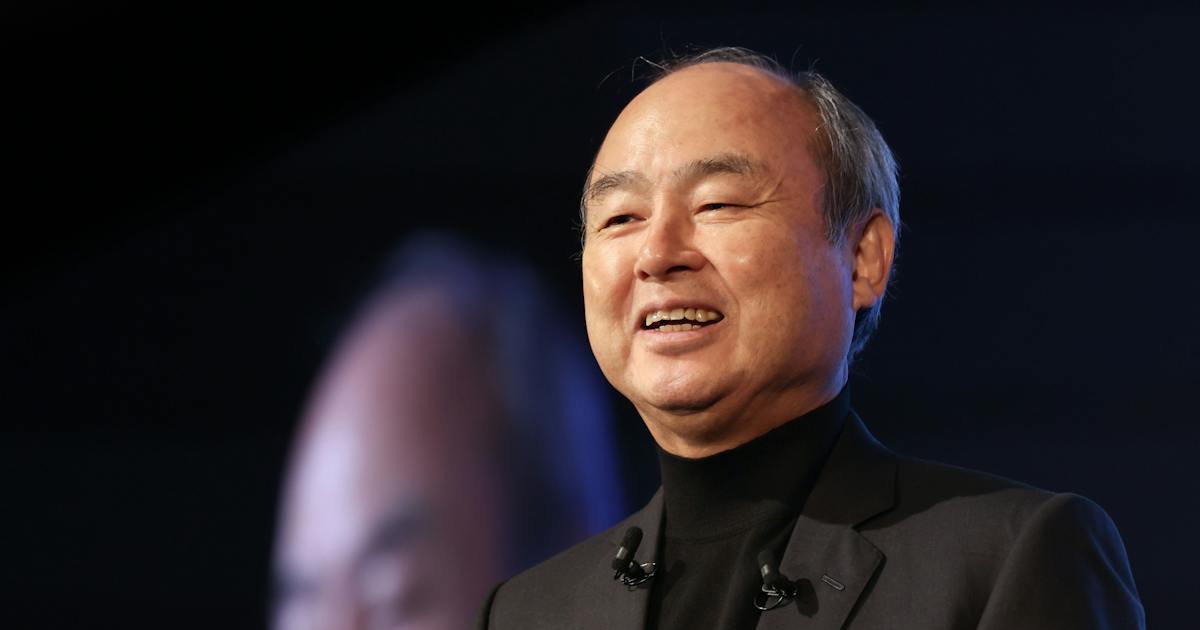
The Largest Tech Capital Raise in History Is a Quiet Gulf Deal
SoftBank Group is exploring a fundraise of up to 16 trillion yen — roughly $100 billion — from investors in the Gulf Cooperation Council, according to the Financial Times. This would dwarf every technology-sector capital raise that has come before it. SoftBank’s Masayoshi Son has been in repeated discussions with senior UAE figures. The talks are ongoing and fluid. SoftBank declined to comment to the Nikkei. What is clear is that Son envisions using this capital to establish new acquisition funds, buy companies, embed their AI technologies inside them, and restructure those businesses from within.
The timing is striking. On October 1, SoftBank confirmed it had completed a $10 billion commitment to OpenAI, pushing its stake to approximately 13 percent and its total cumulative investment in the company to $64.6 billion. Just weeks earlier, in September, SoftBank issued dollar and euro-denominated bonds totaling $11.1 billion at interest rates climbing toward 9.75 percent — a painfully expensive source of capital for a balance sheet already heavy with debt. Now Son appears to be pivoting toward Gulf sovereign wealth, where the economics are fundamentally different.
This is not a simple financing maneuver. It is a structural realignment of where AI infrastructure capital flows, who controls it, and what strategic objectives it serves.
Why the Gulf Is the New Capital Market for AI Dreams
The Gulf Cooperation Council — Saudi Arabia, the United Arab Emirates, Qatar, Kuwait, Bahrain, Oman — has been systematically transforming its sovereign portfolios into vehicles for technological dominance. The UAE, particularly Abu Dhabi through Mubadala and its partners, has built a deep relationship with SoftBank through the SoftBank Vision Fund. That partnership was the original blueprint: Gulf money, Silicon Valley talent, Japanese operational architecture. It produced one of the most aggressive venture-cap portfolios in history, funding companies from Uber to Arm to WeWork.
What is different now is the scale and the sector focus. The Gulf is no longer just seeking financial returns from AI startups. It is pursuing operational control over AI infrastructure itself — data centers, compute clusters, model development pipelines, and the semiconductor supply chains that feed them. The $100 billion raise, if executed, would give SoftBank the liquidity to move beyond portfolio investing into direct infrastructure development at a scale that rival sovereign wealth funds have barely attempted.
This matters because the AI infrastructure buildout is consuming capital faster than traditional markets can supply it. Data center construction, cooling systems, power grid upgrades, GPU procurement — every layer requires enormous upfront funding with long payback periods. Private equity and venture capital structures were never designed for this. Sovereign wealth funds with multi-decade horizons are.
What This Means for Global Chip Demand
The most under-discussed consequence of a SoftBank-Gulf capital deal is its impact on semiconductor demand. SoftBank owns Arm, the dominant architecture for mobile and emerging AI chip designs. Through its Vision Fund and direct investments, it holds stakes across the compute stack — from cloud providers to specialized AI chip designers to data center operators. A $100 billion injection gives Son the ammunition to consolidate positions across all of these layers simultaneously.
Arm’s business model depends on licensing its chip designs to foundries and system manufacturers. More AI infrastructure spending means more Arm-based designs. More Gulf capital flowing through SoftBank means more pressure on TSMC and Samsung to expand advanced-node capacity — capacity that is already operating near maximum utilization. The chip shortage that haunted the industry during the early pandemic years has not structurally resolved; it has been managed through allocation and premium pricing. A new wave of sovereign-backed infrastructure spending could reignite supply constraints at scale.
Japan stands at an interesting intersection here. SoftBank’s Arm headquarters is in London, but the company’s deepest ties to Japanese semiconductor interests — through partnerships with Toshiba and others — position it as a potential conduit between Gulf capital and Japan’s domestic chip ambitions. Japan has been struggling to rebuild its semiconductor industry for two decades. A capital infusion directed through SoftBank’s investment vehicles could accelerate that effort in ways no government subsidy alone has achieved.
The OpenAI Stake: Insurance or Leverage?
SoftBank’s $64.6 billion cumulative investment in OpenAI is now its single largest technology bet. The October 1 announcement of an additional $10 billion commitment came at a moment when OpenAI’s planned IPO timeline has become increasingly uncertain, according to U.S. media reports. This uncertainty is precisely why Son needs alternative capital sources. Bond markets at 9.75 percent are not sustainable for funding future OpenAI commitments, much less the broader acquisition strategy he appears to be building.
The Gulf deal functions as strategic insurance. If OpenAI does not go public on terms that unlock SoftBank’s value, Son needs other engines of return. The acquisition fund model he described to Nikkei — buying companies, embedding AI technology, restructuring operations — is a different profit mechanism than theIPO exit that financed Vision Fund 1’s legendary returns. It is also a model the Gulf governments may find more attractive than pure venture risk. Operational control and infrastructure ownership align better with their national security and economic diversification objectives.
What Happens Next
If the fundraise closes at the upper end of SoftBank’s target, it will be the largest single capital raise in technology history by a wide margin. The second-round effects will be immediate and measurable.
First, chip allocation priorities will shift. Existing customers of Arm-based designs and TSMC advanced nodes will face new competition from SoftBank-affiliated projects backed by Gulf capital. Prices for leading-edge capacity will climb.
Second, Japan’s position in the global AI infrastructure chain will strengthen indirectly. SoftBank’s expanded Gulf relationships give Tokyo a diplomatic and economic lever that neither Seoul nor Beijing currently possesses. The Japan-UAE technology partnership that has existed quietly for years could enter a more prominent phase.
Third, the valuation dynamics for AI infrastructure companies will compress. Sovereign-backed capital with lower cost-of-funds than public markets creates a floor beneath which few private buyers can compete. Startups building AI infrastructure may find SoftBank’s acquisition vehicles to be among the few buyers willing and able to pay the prices their builders have come to expect.
TheFT has described this as a SoftBank-GCC capital partnership focused on AI infrastructure expansion. The Nikkei has reported Son’s personal vision of an acquisition-driven, AI-embedded business restructuring model. Both descriptions point to the same conclusion: the center of gravity for AI infrastructure investment is moving away from Silicon Valley’s traditional funding ecosystems and toward a Tokyo-Gulf axis. Who controls that axis controls the next decade of compute capital allocation.
SoftBank declined to comment. Son is still negotiating. But the direction is already visible.