Sony's PS6 Lite: Why a $699 Handheld Chip Could Reshape the Next-Gen Race
A Korean outlet is reporting that Sony's upcoming budget PS6 Lite would use the same 3nm AMD Canis chip as the handheld PSP 3, running at 9.83 TFLOPS and priced at $699. The move could signal Sony's strategy to split its next console lineup along cost lines while still delivering near-PS5 performance.
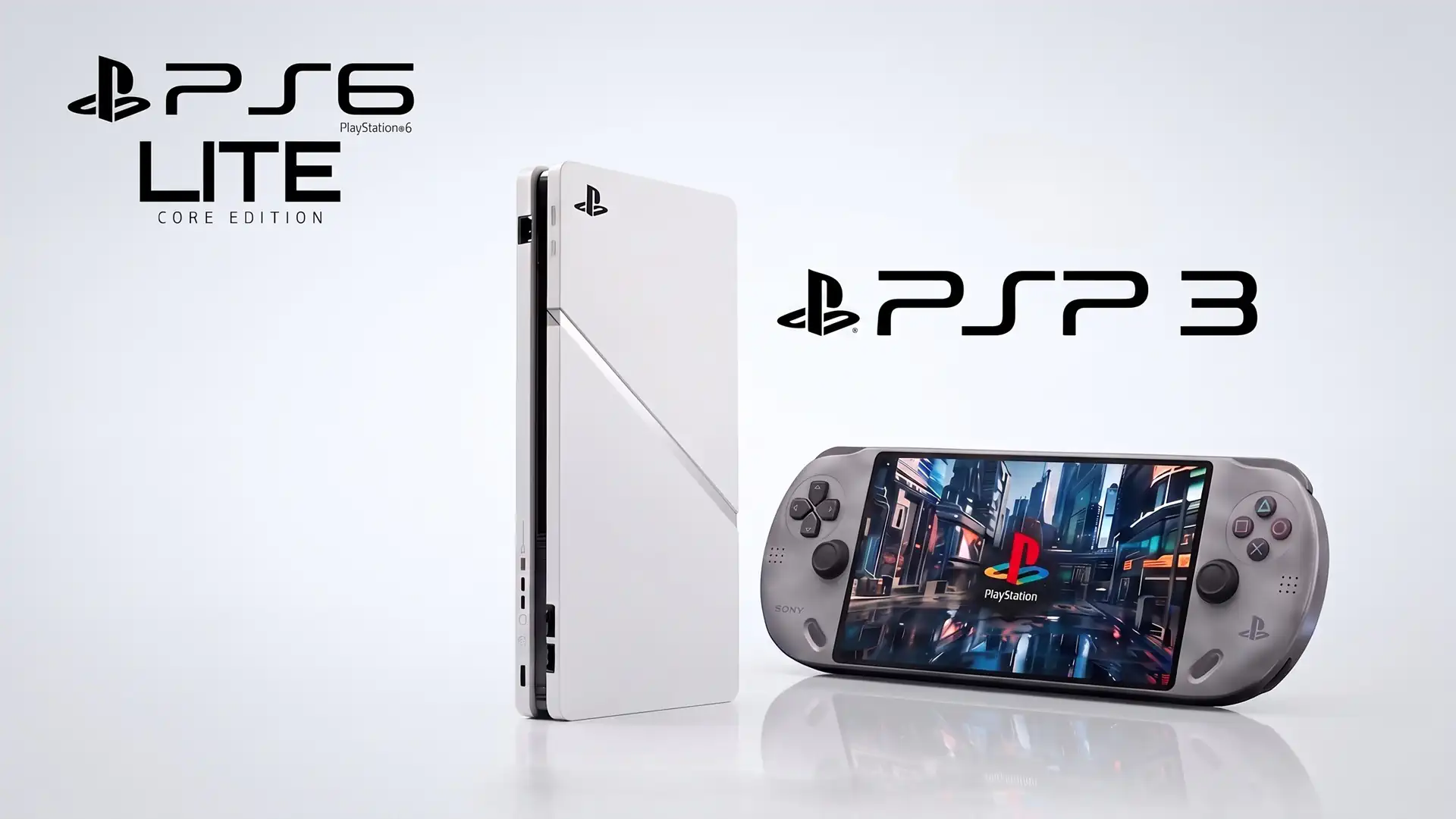
The PS6 Lite Isn’t What You Expect
A Korean gaming outlet called GameGPU has published a report that, if accurate, forces a re-think of how Sony plans its next console cycle. The claim centers on a budget model dubbed the PlayStation 6 Lite, rumored to sell for $699 — roughly $300 less than the base PS6 expected at $1,000. The more surprising detail: the Lite wouldn’t be a downgraded slab with weaker silicon. It would instead share its core chip with Sony’s upcoming handheld, the PSP 3.
That is a design philosophy shift, not just a price cut.
For over a decade, console makers have followed a predictable script. The flagship version of each generation gets the full treatment — the largest heatsink, the most compute units enabled, the most memory. Budget variants then arrive years later with disabled shaders, cut memory, and a smaller case. Each new generation resets that hierarchy. The PS6 Lite would break the pattern entirely by running the same silicon family as a portable device, blurring the line between portable and home gaming in a way that feels less like a compromise and more like a deliberate architectural choice.
The Chip, Laid Out
According to the report, the PS6 Lite would pack a 3nm AMD Canis processor featuring six Zen 6 cores. Memory is 24GB of LPDDR5X over a 192-bit bus, and the graphics subsystem is an RDNA 5 chip with 16 compute units. The same silicon powers the PSP 3 in handheld mode at a 15W limit and a maximum 1.2GHz clock, delivering 4.91 TFLOPS. Placed in a stationary console with unimpeded power and cooling, that clock doubles to 2.4GHz — pushing peak raster performance to 9.83 TFLOPS.
For context, the original PS5 launched at roughly 10.28 TFLOPS. So the PS6 Lite, by this reporting, would land at about 95 percent of the PS5’s raster capability while gaining a generational boost in ray tracing, estimated at 130 to 260 percent better than the current console.
The architecture itself tells the story. Six Zen 6 cores reflect a mid-range CPU configuration — enough for modern game engines but not the eight-core configurations that flagships like the Xbox Series X or even the base PS5 use. The 192-bit memory bus is narrower than the PS5’s 256-bit design, which could become a bottleneck in titles that stream massive textures at 4K. But LPDDR5X at those speeds partially compensates, and the 24GB capacity sits comfortably above the 16GB found in the current generation.
What stands out most is the thermal headroom argument. A handheld chip running at half its console clock rate in portable mode implies that the 3nm Canis die can sustain significantly higher frequencies when given proper airflow and power delivery. That kind of frequency scalability is exactly what makes this rumor plausible rather than speculative fiction.
Why Reuse Mobile Silicon?
The economic logic is obvious. Developing a separate, purpose-built console SoC is expensive. If Sony already qualified a 3nm process node for the PSP 3, extending that silicon into a home console variant saves R&D spend and leverages the same fab yields. The Lite becomes a software and peripheral trim rather than a hardware redesign.
But the strategy goes further than cost savings. Sony has been quietly positioning itself as a two-track hardware company for years — consoles alongside portable machines. The PSP 3’s existence (still unreleased as of this writing) suggests Sony is serious about folding that identity into the PS6 generation. The Lite isn’t a compromised console; it is the home version of a portable architecture.
There is also a supply-chain advantage worth noting. When Sony sources one die for two product lines, it gains negotiating leverage with TSMC and AMD alike. Fab allocation becomes more flexible, and per-unit costs drop through volume. In an era where component shortages still haunt electronics manufacturing, that kind of sourcing simplicity is a real competitive edge.
Developer Implications and Second-Order Effects
The ripple effects extend well beyond pricing. If the PS6 Lite and the PSP 3 share an architectural foundation, game developers will be able to target a single GPU family across both form factors. That simplifies optimization work, reduces certification friction, and could accelerate the pace at which studios deliver polished experiences on both platforms simultaneously.
It also changes how Sony approaches Game Pass competitors and subscription services. A unified hardware base means cross-save and cross-play infrastructures become easier to build. Players who own a PSP 3 and a PS6 Lite would find their libraries and progress fully interoperable in a way that has never been true for PlayStation before. This is the infrastructure play behind the hardware play.
Indie developers, in particular, stand to benefit. Lower computational diversity means a smaller testing surface, fewer edge-case bugs, and more predictable performance profiles. For studios working with tight budgets and lean teams, that predictability translates directly into shipping quality software without burning months on platform-specific optimization.
On the flip side, AAA publishers may push back. The narrower memory bus and reduced core count could limit what those studios attempt natively at 4K. We are likely to see more aggressive reliance on upscaling techniques, similar to what Sony already demonstrated with the PS5’s implementation of FSR and its proprietary solutions. That shifts some of the performance burden from hardware to software, which is both a cost-saving measure and a potential quality risk if implementations are rushed.
Who Wins, Who Loses
Gamers on a budget win first. At $699, the Lite undercuts the flagship PS6 by a wide margin and would still target 4K gaming with neural upscaling to maintain stable frame rates. Sony’s plan, per the report, relies on machine-learning upscaling rather than raw raster horsepower — a familiar approach that let the PS5 stretch beyond its TFLOP count.
Microsoft loses leverage here. Xbox has traditionally competed on performance-per-dollar, especially in the mid-cycle refresh space with models like the Series X|S lineup. If the PS6 Lite arrives late — the report suggests a launch well after the base PS6 — it occupies the value tier with silicon that is nearly as capable as last-gen’s top box. That squeezes any competing budget console into a narrow window.
Nintendo, oddly, might feel less pressure. Its hybrid strategy already normalized the idea that portable and home silicon are the same piece of engineering. Sony would be following a path Nintendo blazed, but at a higher performance tier. Nintendo’s strength has always been softwareIP, not silicon specs, so a Sony architecture parity move doesn’t threaten its core audience directly.
The Timing Question
The report notes the Lite would likely arrive significantly later than the base PS6, which is expected around late 2027. That pacing matches Sony’s recent history: the PS5 launched in November 2020, and the Slim revision didn’t appear until late 2023. A PS6 Lite arriving in 2028 or 2029 would fit that cadence, giving Sony time to establish the flagship line before opening the budget tier.
But timing is where leaks grow most fragile. The PSP 3 itself remains an unconfirmed product outside this reporting. If Sony reshapes its portable ambitions, the chip architecture could change — and with it, the PS6 Lite’s specification sheet. There is also the risk that the Lite becomes a casualty of a broader strategic pivot. Sony has been inconsistent about how seriously it pursues dedicated handheld hardware, and a cancellation or delay of the PSP 3 would remove the entire rationale for the Lite’s existence.
A Clearer Path Forward — Or a Fragmented Mess?
If executed well, the PS6 Lite represents one of the most coherent next-generation strategies any major console maker has attempted. A unified chip family, a clear price-tier structure, and an implicit promise that your games travel with you between home and portable — that is a complete ecosystem pitch, not just a cheaper console.
If executed poorly, it risks fragmenting the install base in ways that hurt first-party exclusives and alienate developers who prefer a single target platform. The memory bus difference alone could create performance parity issues that annoy consumers and force publishers into awkward optimization compromises.
Three signals will separate rumor from reality. First, whether Sony confirms a PSP 3 handheld at all. Second, whether the base PS6 sticks to the $1,000 price point reported here. And third, whether AMD’s Zen 6 and RDNA 5 roadmaps align with the performance claims — a 3nm chip hitting 9.83 TFLOPS at 2.4GHz is plausible but requires careful thermal management inside a console chassis.
If all three hold, the PS6 Lite isn’t a lesser console. It’s a statement that Sony intends to serve two markets with one piece of silicon — and price the entry point low enough to keep the next-gen console war from becoming a luxury good.