South Korea Just Wrote the Rulebook for AI Ethics — Here's Why It Matters
South Korea has formalized its AI ethics principles through law, establishing three core values and seven binding standards. In a race where the US and China are pulling ahead in autonomous driving and generative AI, Seoul is betting that ethical guardrails aren't a brake — they're the foundation for sustainable leadership.
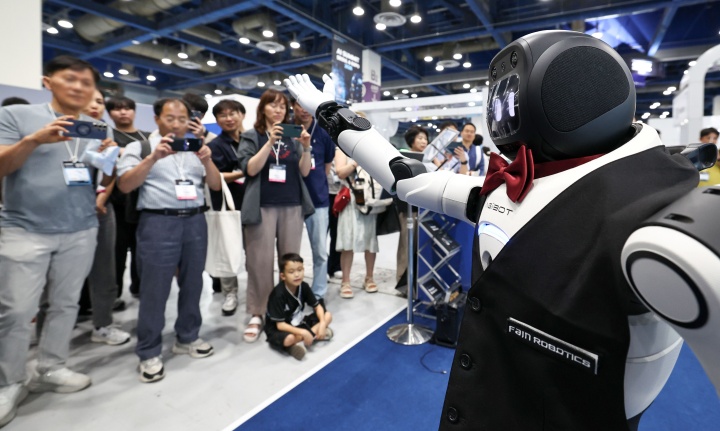
Seoul’s answer to the AI race isn’t more speed — it’s rules
South Korea has just formalized its approach to artificial intelligence governance. The government approved the “Republic of Korea AI Ethics Principles” during a joint meeting of relevant ministries, established under Article 27 of the AI Basic Law that took effect in June 2026. The document lays out three core values — human dignity, social public good, and human sustainability — backed by seven operational principles: human-centeredness, privacy protection, fairness and inclusiveness, accountability, safety, reliability, and transparency.
On the surface, this looks like standard policy-making. But the timing and structure reveal something sharper: South Korea is attempting to convert ethics from a decorative exercise into the actual operating system for its AI industry. That decision carries real consequences for a country that finds itself trailing the United States and China in the two sectors that matter most — autonomous driving and generative AI.
The framework isn’t abstract — it’s structural
The most distinctive feature of Korea’s new principles is how deliberately they assign responsibility across every actor in the AI lifecycle. The 2020 guidelines that these replace focused primarily on developers and providers. This version explicitly names users as co-responsible parties. A company deploying AI for workforce monitoring, a hospital using diagnostic algorithms, a citizen relying on AI-generated content — all of them fall within the framework’s scope.
This matters because the gap between Korea and its competitors isn’t just about raw capability. It’s about deployment patterns. American firms like Waymo and Chinese companies such as Baidu and Pony.ai have been accumulating real-world autonomous driving data at a pace Korea struggles to match. Generative AI development, meanwhile, is concentrated in Silicon Valley and a handful of Chinese labs. Korea’s bet is that if it can establish the clearest governance structure, it will become the default testing ground for AI systems that need to operate in complex, regulated environments — hospitals, factories, city infrastructure.
Countries and companies with more AI resources and capabilities will bear greater responsibility, the principles state. The benefits of AI should not be skewed toward specific nations, regions, or groups. That language is diplomatic, but it’s also a signal: Seoul sees itself as a bridge between the AI haves and have-nots, and it wants the rules to reflect that positioning.
Who gains, who loses
The immediate winners are Korean AI firms that already operate in regulated sectors. Companies like Hyundai Motor Group’s autonomous driving division, LG Electronics’ industrial AI units, and Samsung SDS’s enterprise AI solutions will find a clearer path to market. The principles give them a domestic compliance framework that maps directly onto emerging international standards — the OECD AI Principles, the EU AI Act, UNESCO’s recommendations. Instead of adapting to each regime separately, Korean firms can build to Korea’s standard and treat it as a proxy for global compliance.
The losers are those who benefit from ambiguity. Shadow AI deployments, unregulated data harvesting, and the kind of “move fast and break things” culture that has defined much of the generative AI boom are precisely what this framework targets. Startups that planned to ship AI products without rigorous safety validation will now face a domestic expectation of accountability before deployment. The 153 public comments received during the consultation period included repeated demands for exactly this kind of constraint.
The government itself is also constrained. The principles explicitly require public officials to consider ethics in every AI procurement and deployment decision. That raises the cost of switching to whatever AI tool happens to be cheapest this quarter. It also creates a paper trail — useful for oversight, potentially painful for political actors.
The industrial consequence
Here is what the English-language coverage of this story tends to miss: the Korea AI Basic Law was not just a symbolic gesture. It created a legal obligation for the government to establish these principles, and it established an enforcement architecture that did not exist before. The Ministry of Science and ICT has committed to publishing implementation guides, sector-specific self-check tools, and ethics education materials. Those are not soft recommendations — they are the scaffolding for future regulation.
Consider autonomous driving specifically. The US and China have thousands of miles of real-world test data accumulated across thousands of vehicles. Korea has a fraction of that. The country’s response has been to lean into governance as a differentiator — to argue that the safest, most transparent deployment environment will attract the partnerships and talent that raw mileage cannot. The ethics principles are the first tangible product of that strategy.
The international dimension
The principles were developed over several months by a working group and advisory panel under the National Information Society Agency and KISDI, the Korea Information Society Development Institute. They incorporated public feedback from industry, civil society, academia, and ordinary citizens. The process was deliberately consultative rather than top-down, which is notable for a country with Korea’s governance traditions.
The final document contains language about international cooperation that goes beyond boilerplate. It calls for sharing the principles globally and ensuring AI benefits reach all of humanity — not just the countries and corporations that currently dominate the field. That framing is aimed squarely at the Global South, and it positions Korea as a champion of equitable AI governance rather than a follower of American or Chinese models.
What happens next
The government plans to review and update the principles periodically as technology evolves. The first implementation guides and sector-specific checklists are expected within the coming months. Whether those documents carry enough force to change industry behavior remains the open question. Ethics frameworks have a habit of becoming decorative unless they are tied to procurement rules, liability standards, or enforcement mechanisms.
What is clear is that South Korea has made a strategic choice. It will not try to out-innovate Silicon Valley on generative AI scale, and it cannot yet out-miles China on autonomous driving data. But it can try to be the country where AI is deployed most responsibly — and to sell that as a competitive advantage. The ethics principles are the first chapter of that pitch.
Whether the world buys it is another matter. But Korea has at least made its opening move.