South Korea's Chun Doo-hwan Coup Debate Reignites Democratic Fears
A lawmaker's denial that former dictator Chun Doo-hwan committed a coup has triggered a political firestorm, exposing fractures over historical truth and democratic accountability in South Korea.
The Spark That Lit a Powder Keg
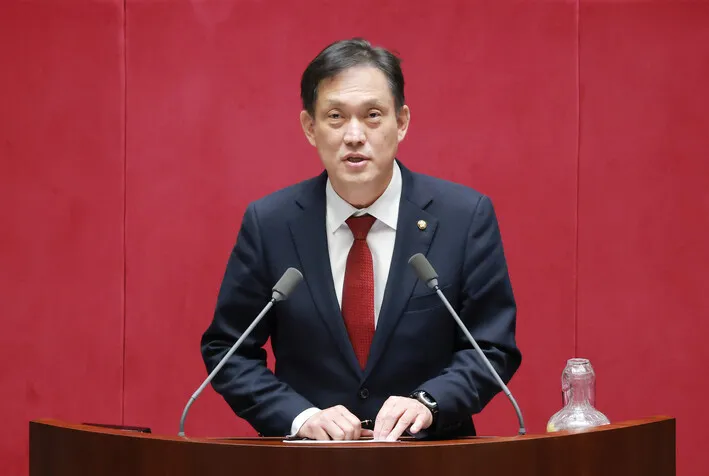
When Kim Tae-gyu, a member of the conservative People Power Party, appeared on a YouTube broadcast last month, he wasn’t planning to ignite a national crisis. Discussing the 2015 film Assassination, which depicts Korean independence activists opposing Japanese colonial rule, the host asked a seemingly academic question: Was former dictator Chun Doo-hwan’s 1979 seizure of power a “rebellion” (내란) or something else? Kim’s answer was blunt: “I don’t think so.” He added that labeling it a definitive coup was premature and that historical evaluation needed further scrutiny.
Within days, the remark had become a political earthquake. The ruling liberal Democratic Party moved quickly to file a disciplinary motion seeking Kim’s expulsion from the National Assembly. On Tuesday, the Assembly’s Operations Committee voted unanimously—16-0—to advance the expulsion resolution. Members of the opposition party, however, walked out before the vote, branding the Democrats a “verbal gag” party. The committee chair, Han Byung-do, didn’t mince words: “Defending those who trampled constitutional order is an act that voluntarily relinquishes one’s qualification as a lawmaker.”
This isn’t just a row over a politician’s words. It’s a raw confrontation over South Korea’s unfinished reckoning with its authoritarian past—and a stark reminder of how fragile historical truth can be when political currents shift.
Who Is Chun Doo-hwan, and Why Does It Matter?
Chun Doo-hwan rose to power through a military coup in December 1979, exploiting the chaos after the assassination of President Park Chung-hee. His regime brutally suppressed dissent, most infamously ordering troops to fire on civilians during the Gwangju Uprising in May 1980. After a faltering transition to civilian rule, Chun was tried, convicted of rebellion and embezzlement, and sentenced to death (later commuted to life imprisonment). He died in 2021, but his legal legacy is settled: the Supreme Court confirmed the rebellion conviction, and the facts are enshrined in textbooks and state ceremony.
Kim Tae-gyu’s comment—to suggest that calling Chun’s actions a “coup” required further historical debate—effectively challenged that legal and moral consensus. For many South Koreans, that’s not just revisionism; it’s an assault on the foundation of the democracy they built at great cost.
The Political Arithmetic of Expulsion
The road to expulsion is steep. Under National Assembly rules, removing a lawmaker requires a two-thirds majority of all members—200 out of 299. The People Power Party holds 109 seats, far short of that threshold. Without defections from the ruling bloc or support from opposition parties, the resolution is dead on arrival. Yet the Operations Committee’s unanimous advance signals a willingness to test the political waters.
The procedure also requires a 20-day “deliberation period,” which Han Byung-do bypassed by bringing the item to a vote early. His rationale: “If we let this pass without censure, we will not be able to condemn those who committed dangerous attempts to trample democracy.” The ruling party accuses him of procedural overreach; the opposition sees it as necessary urgency.
Complicating matters, the Assembly’s Ethics Special Committee—typically the first step in disciplinary proceedings—remains unfunded and inactive. The political machinery is stuck, mirroring a broader institutional paralysis.
The Ideological Battleground
The clash isn’t merely legal; it’s cultural. Opposition lawmakers argue that denying established historical facts is not legitimate free expression. “The facts confirmed by final court rulings and the Constitutional Court cannot be compared to general freedom of speech or cultural expression,” said Park Ki-taek, a Democratic Party representative. He warned that Kim’s remarks were “an attempt to destabilize our society by dragging our agreed-upon norms into the realm of interpretation.”
The ruling party counters that Kim’s comment is protected speech. “Since when has the Democratic Party become a party that ‘gags’ people’s mouths?” asked Kim Sung-hoi, a People Power Party member. “Is it the dignity of a ruling party to immediately call for expulsion over a slip of the tongue during a broadcast response?” Some within his faction even invoked the late mayor Park Won-soon, who once said that in a true democracy, one should be free to cheer for North Korea’s founder Kim Il-sung at Gwanghwamun Square.
That analogy ignited outrage. Opponents saw it as a false equivalence: praising a totalitarian dictator is not the same as questioning a convicted rebel. The comparison also exposed a deeper rift within conservatism—between those who want to move past the past and those who feel compelled to defend it, however uncomfortably.
Global Echoes of Historical Denial
South Korea’s struggle isn’t unique. Across Asia and beyond, nations grapple with how to remember authoritarian crimes. In Poland, debates over wartime collaboration with Nazis still polarize politics. In Japan, official ambiguity about comfort women and wartime aggression fuels diplomatic friction. In Turkey, denial of the Armenian genocide remains state policy. In each case, political leaders have used historical revisionism to mobilize bases, challenge liberal institutions, and reshape national identity.
What sets South Korea apart is the clarity of its legal verdicts. Chun’s conviction wasn’t contested; it was affirmed by the highest courts. The issue isn’t factual uncertainty—it’s political will. When a sitting lawmaker questions settled history, it signals that the consensus is vulnerable to erosion from within the conservative camp itself.
Who Wins, Who Loses
In the short term, the Democratic Party gains moral high ground. It frames the episode as a defense of democracy against historical nihilism. Public opinion polls likely favor the expulsion effort, though many citizens may also view it as political theater.
The People Power Party faces internal tension. Hardliners see Kim’s remark as an honest opinion; moderates fear it tarnishes the party’s credibility. Some members, like Kim Min-jeon, have called for “more thoughtful consideration of how citizens will interpret a politician’s words.” Others, like Yoon Yong-geun, argue that expulsion over a broadcast slip is an abuse of power.
Kim Tae-gyu himself becomes a symbol—of free speech for his allies, of dangerous revisionism for his foes. Whether he survives politically depends on whether the ruling party distances itself from his comment or doubles down.
What Happens Next
The expulsion resolution now heads to the full Assembly, where it will likely fail. The ruling party lacks the votes, and defections seem improbable. Even if it passed, the political cost would be enormous—accusations of partisan persecution, further erosion of trust in institutions.
But the real damage may be symbolic. By bringing a convicted rebel’s status into public debate, the incident normalizes questioning of historical truths that South Korea spent decades cementing. It also reveals how quickly legal consensus can be undermined by rhetorical attacks.
Looking ahead, the case may inspire similar challenges elsewhere. If a lawmaker can deny a Supreme Court–confirmed conviction without consequence, what’s to stop others from questioning war crimes, colonial atrocities, or authoritarian crimes? The precedent matters beyond Korea.
The Vigilance Democracy Demands
South Korea’s democracy was forged in struggle against dictatorship. Its institutions—courts, assemblies, a free press—exist to protect that hard-won freedom. But institutions alone aren’t enough. They require a citizenry willing to defend them, and representatives who respect the truths that bind them.
Kim Tae-gyu’s remark wasn’t made in a vacuum. It came from a party that has steadily moved toward historical revisionism, echoing far-right trends globally. Whether it’s downplaying Japanese colonial brutality or glorifying military dictators, the impulse is the same: to rewrite the past to suit present politics.
The expulsion vote, whatever its outcome, is a stress test. It asks whether South Korea can still draw lines around historical truth—or whether those lines are already fading.
As Han Byung-do warned, “If we let this pass without censure, we will not be able to condemn those who committed dangerous attempts to trample democracy.” The question isn’t just about one lawmaker. It’s about what kind of society Korea chooses to be—and whether it still believes in the facts that hold it together.