South Korea’s KDDX Warship Adopts Multi-Layer Drone Defense as Cheap Drones Threaten Billions in Ships
As cheap drones overwhelm expensive missile defenses worldwide, South Korea’s KDDX destroyer is adapting its combat systems—revealing how navies are recalibrating for an era where a $10,000 drone can threaten billion-dollar ships.
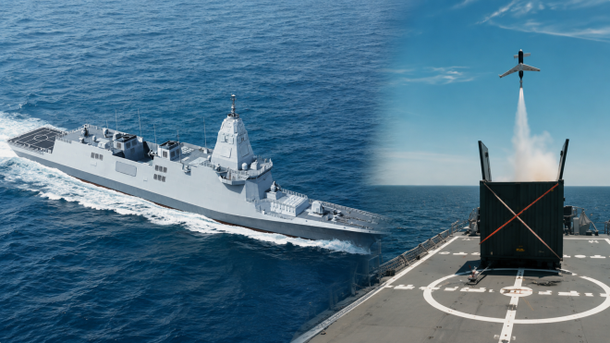
The Asymmetric Threat Changing Naval Warfare
Cheap drones are becoming the new artillery of modern warfare. In Ukraine, a $10,000 homemade drone can take out a million-dollar tank. In the Red Sea, Houthi rebels have shown that swarms of low-cost aerial drones and cruise missiles can force Western navies to fire expensive interceptors worth millions apiece. The math doesn’t work. And naval strategists around the world are scrambling to find a solution.
South Korea’s next-generation KDDX destroyer is now being equipped with a multi-layered anti-drone defense system—a move that reflects a global shift in how militaries are thinking about aerial threats at sea. The Defense Ministry announced in June its ‘Defense Drone & Anti-Drone Development Policy,’ which includes plans to secure low-cost interceptor drones as soon as possible. The Defense Acquisition Program Administration (DAPA) is actively incorporating this multi-layered anti-drone system into the KDDX’s detailed design process.
This isn’t just a Korean problem. The asymmetry of cost and capability is a universal challenge. The Dutch navy, for example, has signed a contract with European defense firm Distinguis to develop and evaluate a ship-based anti-drone system. The core weapon is the Hornet B2, an interceptor drone currently in development.
The Economics of Intercepting Drones
The fundamental problem is simple: you can’t shoot down a $10,000 drone with a $1 million missile. Not repeatedly. Not sustainably. Not without creating a new vulnerability.
In the Red Sea, US and UK warships have been firing high-end ship-to-air missiles at cheap Houthi drones and cruise missiles. When the attacking side sends waves of low-cost drones, the defending side must repeatedly use far more expensive interception weapons. Beyond cost, ammunition quantity is also an issue. Warships have limited missile capacities. If they waste their expensive missiles on cheap drones, they may find themselves defenseless when faced with a real threat—a anti-ship missile or an enemy fighter jet.
The US Navy has already begun addressing this problem by installing the Coyote interceptor system on Arleigh Burke-class destroyers. South Korea is following the same logic with its KDDX program.
The Hornet B2 and the Multi-Layer Concept
The Hornet B2 is not designed to replace existing ship-to-air missiles. Instead, it represents a layered air defense concept. High-threat targets like fighter jets or anti-ship missiles still get met with high-performance missiles. Relatively cheap drones, however, are intercepted by lower-cost countermeasures.
The Hornet B2 works like this: it’s stored in a sealed launch tube, then rocket-boosted into the air when a threat approaches. After deployment, its wings unfold, and it switches to electric propulsion to track and intercept enemy drones. It uses electro-optical and infrared (EO/IR) sensors combined with AI-based processing, though the final engagement decision is made by a human operator.
The earlier version, Hornet B1, is already in mass production. The Spanish navy has also conducted sea trials of the Hornet series interceptor drones from its Santa Maria-class frigates. The B2 being integrated by the Dutch is an evolution optimized for naval operations.
Dutch naval personnel are participating in the development process to ensure the system meets real-world requirements for ship-based deployment.
South Korea’s KDDX and Its Drone Defense Evolution
South Korea’s naval modernization is moving in the same direction. The KDDX, scheduled for introduction in 2032, will feature a multi-layered anti-drone defense system. This reflects a broader trend of warships evolving from platforms that rely solely on missiles and guns to those that integrate attack, reconnaissance, and defense unmanned systems.
South Korea has also been testing its own unmanned systems. On May 25, off the southern coast of Busan, a sea trial was conducted from the large transport ship Marado to test a domestically developed suicide drone by the Agency for Defense Development (ADD). Unfortunately, both attempts ended with the drone crashing shortly after takeoff, failing to reach the attack phase.
It’s important to note the difference between South Korea’s domestic suicide drone and the Dutch Hornet B2. The Korean drone is an offensive system designed for reconnaissance and strike missions. The Hornet B2 is purely defensive, designed to intercept incoming enemy drones.
Both cases, however, demonstrate the same shift: warships are becoming platforms that operate a full spectrum of unmanned systems—offensive, reconnaissance, and defensive.
The New Logic of Naval Air Defense
The lesson from Ukraine and the Red Sea is clear. Cheap drones have changed the calculus of naval warfare. Every threat can no longer be met with expensive missiles. The solution is a layered defense that matches the cost of the interceptor to the cost and threat level of the target.
Missiles for high-value threats like fighters and anti-ship missiles. Interceptor drones for cheaper aerial threats. Guns and directed-energy weapons for close-in defense. This multi-layered approach is becoming the new standard for naval air defense.
South Korea’s KDDX program, the Dutch Hornet B2 integration, and the US Coyote system all point to the same conclusion: the era of relying solely on expensive missiles for every aerial threat is over. Navies worldwide are adapting to a new reality where the cheapest attacker often has the advantage—and where defense systems must be smart, layered, and cost-effective to survive.