South Korea's Master Deal: LNG, Semiconductors, and Security All on One Table With Washington
Seoul is bundling a Texas LNG power plant, semiconductor concessions, and Middle East security adjustments into a single negotiation with Washington — a high-stakes master deal that could redefine Korea's economic diplomacy for years.
A Deal Bigger Than LNG
South Korea’s trade ministry is about to announce its largest-ever investment package in the United States, and the numbers alone tell part of the story. But the real story is what is bundled inside it.
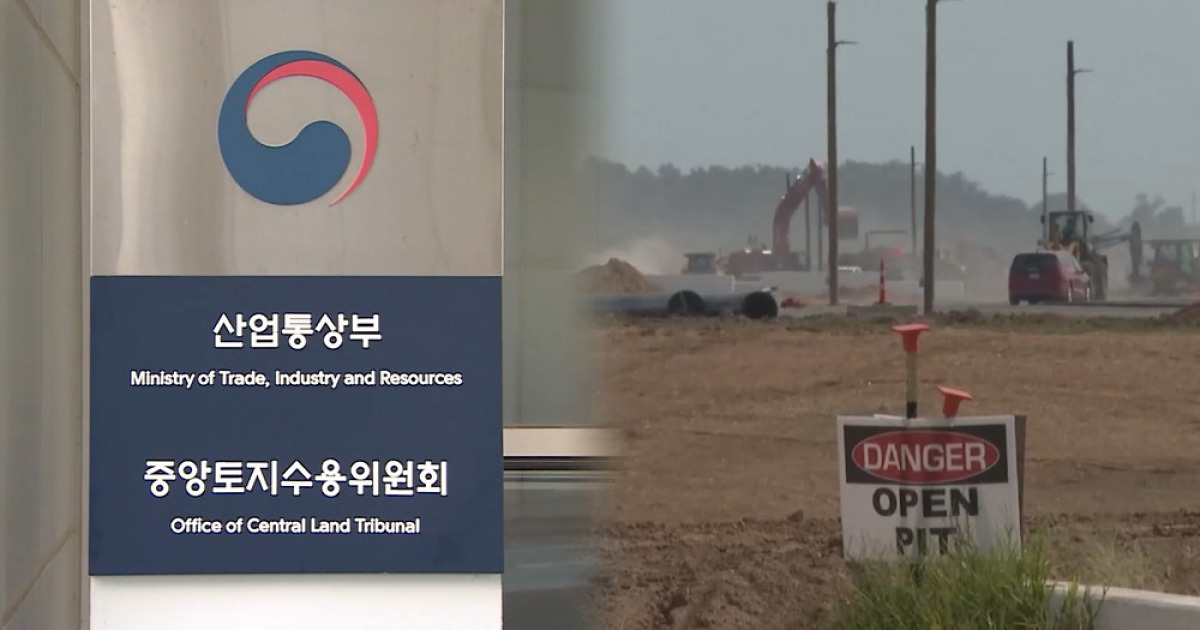
On September 7, the Ministry of Trade, Industry and Energy (MOTIE) held a closed-door meeting with the ruling party to brief lawmakers on the final shape of negotiations that have consumed months of diplomatic energy. Industry Minister Kim Jeong-kwan has been shuttling between Seoul and Washington, making two trips in September alone — the 16th and the 1st — in what insiders describe as an urgent push to close the deal before the window narrows.
The first project on offer is a liquefied natural gas complex and combined-cycle power plant in Texas. It is the kind of industrial-scale infrastructure play that signals strategic intent, not just commercial interest. But it is far from the only piece on the table.
The Real Bargain
What makes this negotiation notable is not any single project but the fact that Seoul has linked three distinct threads into one negotiating package: energy, technology, and security.
On the energy side, Korea — a country that imports nearly all its petroleum and the vast majority of its natural gas — is seeking long-term supply certainty through direct investment in US LNG export capacity. Texas offers proximity to global shipping lanes, established pipeline infrastructure, and a regulatory environment friendly to American energy firms. For Seoul, the value proposition is clear: diversify away from Middle Eastern supply routes that carry geopolitical risk, secure a stable feedstock for its power grid, and lock in pricing advantages that protect domestic consumers from spot-market volatility.
On the technology side, Korea has signaled willingness to adjust the terms of its semiconductor investment strategy in ways that align more closely with Washington’s industrial policy priorities. The United States has been pushing allies to consolidate advanced chip manufacturing on friendly soil — partly to reduce exposure to geopolitical disruption, partly to build a domestic supply chain immune to coercion. Seoul’s compliance, however imperfect, signals that it understands the new logic of economic statecraft.
On the security side, the stakes are less visible but arguably more consequential. Korea’s relationship with the Middle East — particularly Iran — has historically been pragmatic rather than aligned. Iranian oil flows into Korean refineries at discounts that reflect Tehran’s isolation from Western sanctions regimes. Any recalibration of that relationship carries domestic cost. Yet Korea has signaled openness to adjusting its posture in exchange for concessions from Washington that go beyond trade: intelligence sharing, extended missile defense coverage, and, critically, assurances that American security guarantees in the Indo-Pacific remain credible even as Washington’s attention divides.
Why Now
The urgency is not accidental. Three forces converge on this moment.
First, the US election cycle. Korean policymakers understand that a change in administration could reshape the terms of engagement entirely. Closing a deal with the current administration locks in commitments that survive electoral turnover — or at minimum establishes a baseline from which the next government would need to renegotiate, a process that carries its own risks.
Second, China’s economic gravity. Seoul has watched Beijing’s coercive trade practices firsthand — the THAAD retaliation in 2016-2017, the ongoing restrictions on Korean cultural exports, the subtle pressure campaigns that target key industries. Every year of economic dependence on China carries compounding risk. Diversification is not merely an economic strategy; it is a national security imperative.
Third, the global energy transition. Korea’s commitment to carbon neutrality by 2050 requires a bridge fuel that can replace coal without creating supply gaps. LNG fills that role. But bridge fuels become locks if you invest in the wrong ones at the wrong time. The Texas project represents a bet that natural gas will remain structurally important through at least the next decade — a bet that aligns with International Energy Agency projections but carries its own stranded-asset risk if the transition accelerates.
Who Wins
The immediate beneficiaries are American energy companies and the Texas communities where this plant will be built. Job creation, tax revenue, and regional economic stimulus flow directly from the investment. But the gains extend further. US LNG exporters gain a anchor customer in one of the world’s largest importers. American semiconductor firms benefit from a more coordinated alliance supply chain. The broader transatlantic order gains another node of economic interdependence that raises the cost of disruption.
For Korea, the wins are more diffuse but structurally significant. Supply security replaces supply vulnerability. Strategic autonomy increases, paradoxically, through deeper integration with the United States. The country that once balanced between great powers by playing them off each other now chooses its anchor more explicitly.
There are losers too. Middle Eastern suppliers lose market share to American gas. Chinese semiconductor equipment firms face a more closed market. Domestic refineries that relied on Iranian discounts will absorb higher input costs. Political opponents will argue that the concessions extracted from Seoul were insufficient, or that the timing was wrong, or that the security guarantees promised in return remain unproven.
The Unanswered Questions
Every master deal contains unresolved tensions.
The profit-sharing arrangement between Korean investors and their American counterparts remains a point of friction. Sources indicate that disagreement over cost overruns and revenue splits was among the most difficult obstacles, and while progress has been made, the final architecture is not yet public. How returns are divided will determine whether this deal survives corporate governance scrutiny in both countries.
The semiconductor component raises questions about intellectual property and competitive advantage. Korea’s chip industry — dominated by Samsung and SK Hynix — has built its position on a blend of domestic R&D and strategic access to global markets. Any concession that limits expansion in sensitive technologies could constrain growth. The alternative, however, is alienation from the largest single market for Korean exports.
The security dimension is perhaps the most opaque. Korea’s adjustment of its Iran posture is not merely a policy shift but a reorientation of decades of diplomatic practice. The domestic political cost of such a shift is real. The security returns from Washington are equally real but less quantifiable. How Korea’s public will judge the exchange depends on events that have not yet occurred — a test of Iran, a shift in American commitment, a crisis in the Taiwan strait.
The Decade Ahead
If this deal holds, it marks a structural turning point in South Korean foreign economic policy. For decades, Seoul’s strategy was to avoid being pinned down — to maintain working relations with Washington, Beijing, Moscow, and Tehran simultaneously, extracting maximum flexibility from minimum commitment. The strategy worked in a multipolar order where great powers were willing to compete for Korean alignment. It works less well in an order defined by strategic competition and economic weaponization.
The Texas LNG plant is symbolic not because it is large — though it is — but because it represents a choice. Korea is choosing to invest its capital, its supply chains, and its diplomatic capital in the American orbit rather than hedging across competing systems. That choice has consequences beyond the balance sheet.
The minister’s remark that negotiations are “advancing one difficult step at a time” understates the magnitude of what is being decided. This is not merely a trade deal. It is a realignment.
Whether it proves durable depends on events far beyond the reach of any negotiation team: the resilience of the American political system, the trajectory of the global energy transition, the stability of the Middle East, the behavior of China. But the direction of travel is now visible. Korea is moving toward a more explicit alignment with Washington, and the LNG plant in Texas is the first physical proof of that movement.
The question is no longer whether Korea will choose sides. The question is whether the deal delivers enough to make the choice worthwhile — and whether the next government, in whatever configuration, will honor the commitments made today.