South Korea's Nuclear Restart Stumbles Again at Saeul Unit 3
Saeul Unit 3 shut down a second time in days during commissioning, raising fresh doubts about South Korea's ambitious nuclear revival. The incidents expose gaps in safety culture just as Seoul pivots hard back toward nuclear power.
A Second Trip in Two Weeks
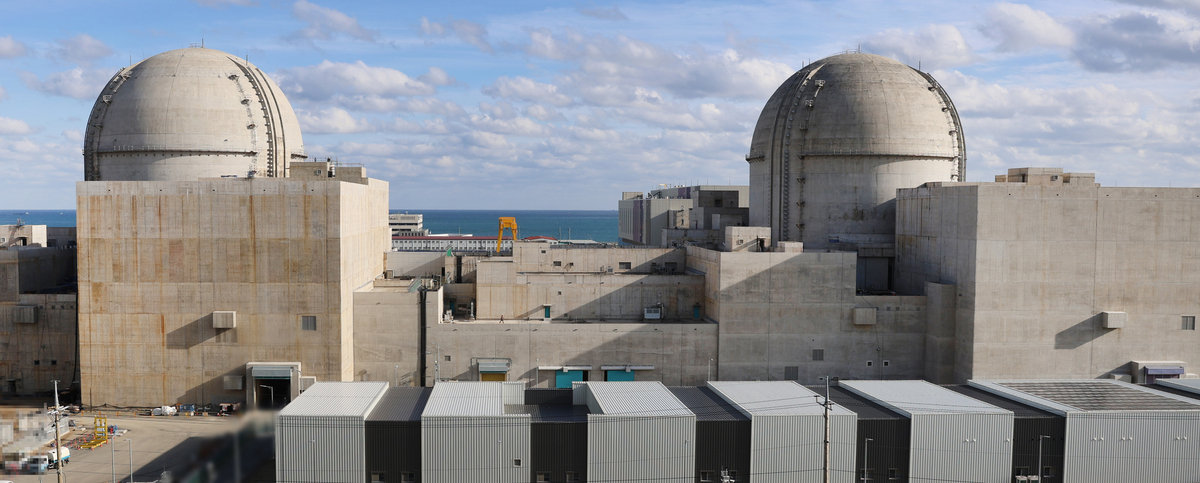
The Saeul Nuclear Power Plant in Ulsan is supposed to be South Korea’s flagship project for a nuclear renaissance. Instead, it has become a cautionary tale played out in real time.
On June 6, operators manually shut down Unit 3 at about 3:01 p.m. local time after detecting a leak in a pipe carrying condensed water from the turbine. The Korea Hydro & Nuclear Power Co. (KHNP) said the plant is stable and there was no radiation impact. It is analyzing the cause.
That comes barely two days after the Nuclear Safety and Security Commission (NSSC) gave the green light to resume commissioning tests — green light it had granted on June 4 following a separate incident on May 11, when Unit 3 auto-shutdown during a routine power-ramp test.
Two trips in ten days. The pattern is troubling even if neither incident caused harm.
How the First Shutdown Happened
The NSSC’s investigation into the May 11 event found a straightforward human error, the kind that should not happen at a facility this advanced. After a commissioning test that deliberately cut power transmission at 80 percent reactor output, operators attempted to restore power. One of them entered an incorrect setting value into the turbine control valve position limiter — a parameter that governs how aggressively the turbine responds to steam flow changes.
The wrong number triggered the automatic shutdown. It was not a design flaw. It was not a systems failure. It was a keystroke.
The NSSC cleared the plant for testing to resume on June 4. On June 6, a different problem appeared: a leak in the condensate drainage line feeding the turbine. Operators chose to shut down manually rather than attempt to stabilize the system. Both events point to the same uncomfortable conclusion — commissioning at Saeul is less a smooth ramp-up than a series of unplanned hiccups.
Why This Matters Beyond Korea
South Korea built one of the world’s most ambitious nuclear fleets between 2000 and 2015, ordering reactors from both Westinghouse and Areva before pulling back after the Fukushima disaster in 2011 and the subsequent political fallout. Moon Jae-in’s administration cancelled the new Saeul Units 3 and 4 — which were already under construction — and shelved plans for four more reactors. The industry contracted a severe skills fade. Construction managers, welders, and nuclear-trained operators retired or left.
The current administration has reversed course hard. Saeul Units 3 and 4 are among the first new builds to restart under the renewed pro-nuclear policy. If they work, they prove that South Korea can relearn how to build and operate modern reactors — a message with enormous export value. South Korea has been courting buyers in Eastern Europe, the Middle East, and Southeast Asia. A reliable track record at Saeul would be marketing gold.
If they stumble repeatedly, the opposite happens.
The United Arab Emirates, which has been evaluating South Korea’s AP1400 design for future builds, is watching closely. Saudi Arabia and several Southeast Asian governments have expressed interest. Every commissioning setback feeds skepticism from competitors — France’s EDF, Japan’s Mitsubishi Heavy Industries, Russia’s Rosatom — all of whom see South Korea’s post-Fukushima halting as an opening.
The Japan Comparison Is Inevitable
Japan’s response to Fukushima defined its nuclear posture for over a decade. Every reactor restart required individual safety reviews by a reconstituted regulator. Public consent became a prerequisite. Some prefectures bannedRestarted reactors on principle. The result was energy policy paralyzed by procedure — and a heavy reliance on imported fossil fuels that widened Japan’s trade deficit and increased emissions.
South Korea’s current administration wants to avoid that fate entirely. It is treating nuclear restart and new build as a matter of energy security and economic competitiveness, not public referendum. The Saeul units are being pushed through with streamlined oversight. That approach carries its own risks: rush it too hard and you repeat Japan’s pre-Fukushima complacency; slow it down too much and you lose the strategic momentum the government is betting on.
The Saeul incidents suggest the commissioning phase — the period most prone to hidden errors — needs more discipline, not less, regardless of how eager officials are to declare victory.
What Happens Next
KHNP has not given a revised timeline for commercial operation at Saeul Unit 3. The NSSC will likely require another investigative report before allowing further power increases. Each additional delay compounds costs — every day a new reactor sits idle is revenue left on the table and investor patience worn thin.
Unit 4, which is further along in commissioning, has not been mentioned in connection with either incident. If it proceeds without disruption, it could partially offset the reputational damage from Unit 3’s troubles. But the two units share the same site, the same workforce, and the same regulatory attention — problems at one cast doubt on the other.
The anti-nuclear movement in South Korea, dormant since the political shift, may find fresh ammunition. Citizen groups that opposed Saeul’s construction will frame these incidents as evidence that the revival is being forced ahead of safety. Their arguments will gain weight if commissioning continues to encounter unexpected problems.
Conversely, pro-nuclear advocates will point to the lack of any radiation release and argue that commissioning hiccups are normal — even expected — for first-time builds. Both sides will be selective with facts. The reality sits somewhere between: human error and equipment leaks during commissioning are not extraordinary, but two incidents in ten days at a single unit is not nothing either.
The Bigger Picture
South Korea’s nuclear revival is not just a domestic policy debate. It is a bet on whether a country that once led the world in reactor exports can relearn its craft quickly enough to compete again. The Saeul Unit 3 shutdowns are a small episode in a much larger story. But small episodes accumulate. And in the nuclear business, perception of competence is half the product.
If Saeul eventually reaches commercial operation with a clean safety record, the incidents will be remembered as teething problems. If they multiply, they will be remembered as symptoms. The next few months of commissioning testing will decide which narrative takes hold — and with it, South Korea’s credibility in a market where trust is everything.