How South Korea Is Redrawing the Energy Map With a $350 Billion Bet
Trump announced South Korea will invest up to $200 billion in Alaska LNG and build eight new US nuclear reactors, but Seoul had confirmed only a single Texas power project. The gap reveals who controls the narrative — and what Korea may be getting in return.
A Deal Announced Before It Was Negotiated
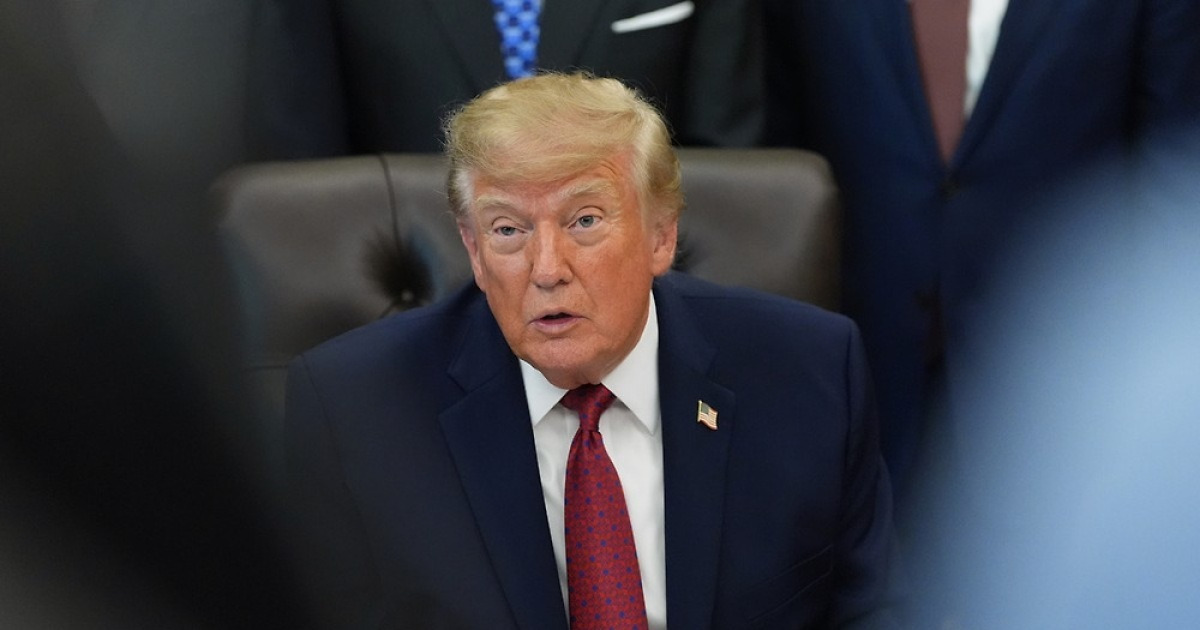
Donald Trump walked into the White House on October 30 flanked by his energy team and Senator Dan Sullivan of Alaska. What he announced was not a modest memorandum of understanding. It was a $350 billion commitment from South Korea — $200 billion of it directed toward Alaska LNG and eight new large nuclear reactors to be built across Ohio, Tennessee, South Carolina, and Kentucky. Commerce Secretary Howard Lutnick put the nuclear portion at $120 billion. The Alaska project, he said, would absorb more than $50 billion.
The problem: South Korea had not agreed to any of this.
Seoul’s Actual List Was Much Shorter
As of the day before the announcement, the Korean government had confirmed exactly one project under its $350 billion US investment pledge — a $22.3 billion gas-fired combined-cycle power plant in Encinal, Texas. That was Project Number One. Everything else, including Alaska and nuclear, remained on the “future negotiation” side of the table. The detail was not subtle. Seoul was now being told its investment portfolio had grown overnight by a factor of five, in two sectors it had never publicly committed to.
The gap between what Trump described and what Seoul had confirmed is not a matter of translation or marketing. It is a matter of leverage. The tariff deal that produced this framework was straightforward: South Korea accepted a reduction in US tariffs from 25 percent to 15 percent on its exports in exchange for a $350 billion investment pledge. The question now is whether that pledge was set in stone when the two sides shook hands at the October 2025 summit in Gyeongju between President Lee Jae-myung and Trump, or whether it was always a ceiling that Washington could redraw at will.
Eight Reactors, One Question Nobody Is Asking
Eight large nuclear reactors is not a small number. It would be the single largest new nuclear build in US history by any one foreign investor. If the $120 billion figure holds, that comes to roughly $15 billion per reactor, in line with current estimates for AP1000 and EPR designs. The states named by Lutnick — Ohio, Tennessee, South Carolina, Kentucky — are all grid nodes where baseload capacity is under pressure and where nuclear has seen renewed political favor. None of them is the kind of state that typically hosts Korean industrial investment.
This is the part that should make energy analysts sit up: South Korea is not a country with excess nuclear reactor expertise to lend the world. It imports reactor technology. Its domestic fleet was built with American and French designs. Its engineers operate and maintain those plants. They do not design them. Yet Trump is describing an investment that implicitly treats Korea as a nuclear-capable exporter to the United States — a former student building power stations in the teacher’s backyard.
What Korea Might Actually Be Trading
The most useful way to read this announcement is not as a Korean commitment but as a Korean concession that Washington has chosen to characterize as a Korean project. The tariff reduction from 25 to 15 percent was already a significant win for Seoul’s export sector. In return, Trump secured a public demonstration that America is once again the destination for massive foreign capital in energy infrastructure. The specific allocation of that capital — whether Alaska or Texas or Ohio — may matter less to the White House than the headline itself.
For Seoul, the calculus is harder. A $22.3 billion Texas gas plant is a project a Korean firm can finance, operate, and bill home. Eight US nuclear reactors is a project that would require technology licensing, regulatory approval through the Nuclear Regulatory Commission, and a construction timeline measured in decades. If Korea is signing up for that, it is either gaining access to US reactor designs and a foothold in a market it has never participated in — which would be historic — or it is agreeing to a financial arrangement that has not been fully explained to the public.
Alaska LNG Changes Nothing Overnight
The Alaska LNG pipeline has been discussed for more than a decade. The challenge has never been a lack of will in Washington. It has been engineering, environmental permitting, and economics. A $50 billion Korean investment would not solve those problems in a year. It would not even solve them in five. What it would do is add a second major financier to a project that has historically struggled to attract one. That shifts the political balance in Alaska, where Senator Sullivan has made LNG his signature issue. Whether it shifts the financial balance depends on the terms — and those terms remain undisclosed.
The Real Story Is the Announcement Itself
What distinguishes this moment from ordinary trade negotiations is the asymmetry of the frame. Trump spoke as though the deal were complete. Seoul has not confirmed it. The $350 billion ceiling was agreed in principle; the project list was not. When the White House publishes a detailed breakdown — eight reactors, three states, a pipeline, a Commerce Secretary citing specific dollar amounts — while the partner government is still working through its own project pipeline, the power dynamic is visible.
South Korea’s tariff relief is real. Its exports to the US will face a lower wall. That is not in doubt. What is in doubt is whether the investment side of the ledger has been settled or merely described by the other party. The next step will not be another joint announcement. It will be a quiet process of clarification — Seoul issuing statements about what was and was not agreed, negotiators reopening lines that Trump declared closed, and analysts trying to understand why eight nuclear reactors appeared in a US press conference before a single memorandum of understanding was signed in Seoul.
The answer is almost certainly that nobody needs to sign anything yet. The tariff reduction is already in effect. The political credit has been claimed. The rest — Alaska, Texas, Ohio, Tennessee, the reactors, the pipeline — can be negotiated over years. And in those years, the default position will be whatever Washington announces first.