South Korea recalls ambassador to Ukraine over POW row
Seoul's recall of its ambassador to Kyiv over Zelenskyy's disclosure of North Korean POWs reveals a fragile triangle where both partners need each other but don't fully trust each other. The move signals how far the Ukraine war has pulled Korea into great-power dynamics.
The recall that says everything
South Korea’s decision to pull its ambassador from Kyiv is not a minor diplomatic hiccup. It is a calibrated escalation — the kind of step a government takes when it wants to signal fury without crossing into outright rupture. President Lee Jae Myung has already threatened unspecified punitive measures if Ukraine does not apologize for Zelenskyy’s September 23 revelation at the United Nations that two North Korean prisoners of war had been transferred to South Korea. The ambassador, Park Hee-chang, has not been given a return date.
The row sounds narrow — one disclosure, two soldiers — but it cuts through something much larger: how South Korea sits inside a triangle where Kyiv and Moscow each hold pieces of Seoul’s security future, and where trust is the scarcest resource.
What Zelenskyy exposed
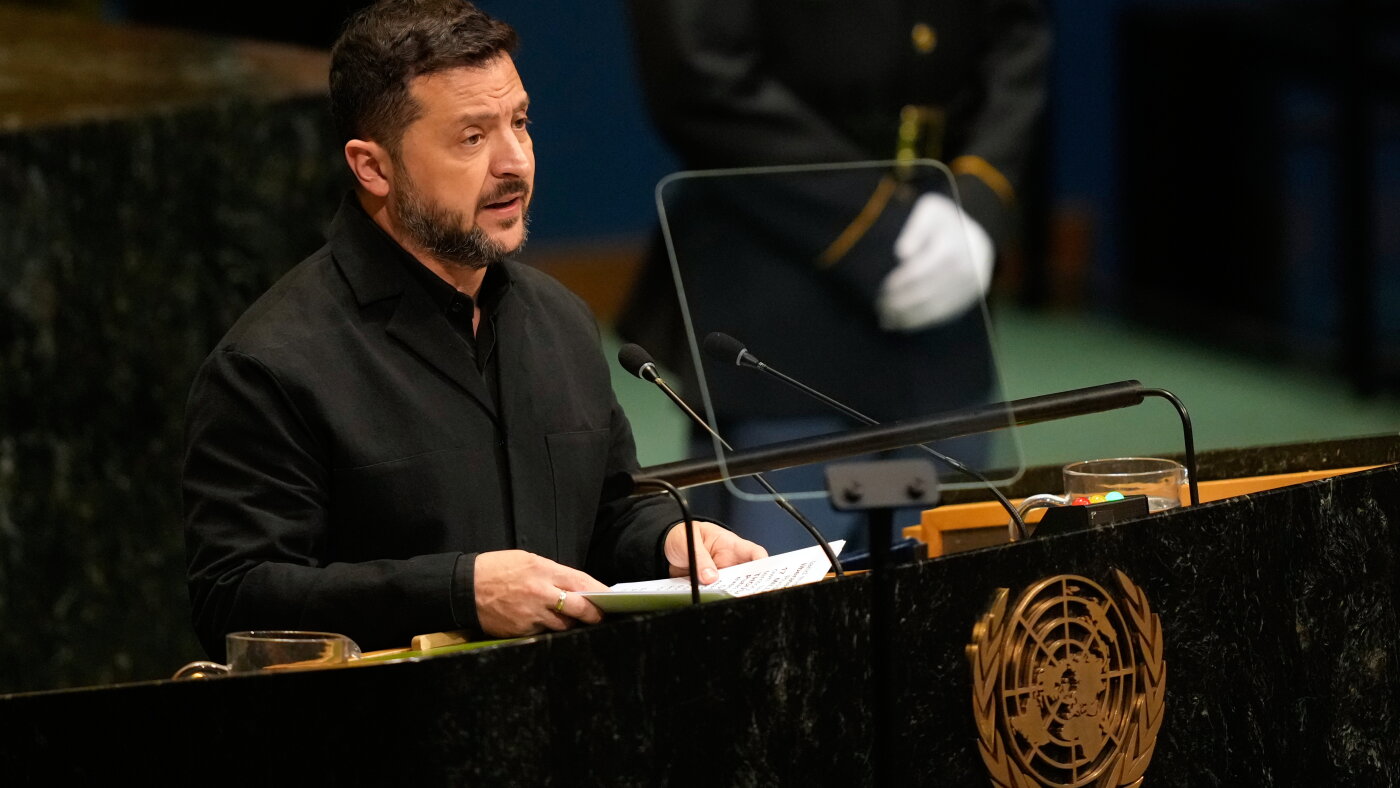
Zelenskyy’s speech was not careless. It was calculated. By putting the North Korean POW transfers on public record, he achieved two things at once. He forced the world to acknowledge what Russia had quietly been using — North Korean troops fighting on its side in Ukraine — and he framed it as evidence that the war’s reach extended far beyond the original belligerents. That narrative is useful to Kyiv’s broader campaign for continued Western aid, especially as war weariness flickers in some capitals.
But the disclosure came at a cost to Seoul. South Korea had accepted the two soldiers, consistent with its longstanding policy of receiving North Korean defectors — a policy rooted in its constitutional claim over the peninsula. The non-disclosure arrangement, Seoul says, was meant to protect the soldiers and their relatives still in the North from retaliation. Kyiv denies any such agreement existed. Either way, the leak — whether intentional or not — put those relatives at risk and embarrassed a government that has already sent $445 million in humanitarian aid to Ukraine since 2022.
The timing added insult to injury. The UN General Assembly address is one of the few stages where Kyiv can shape global perception of the war in real time. Zelenskyy chose that moment to broadcast information that Seoul had deliberately kept quiet — suggesting, at the very least, a disregard for an ally’s sensitivities, if not a deliberate choice to sacrifice Seoul’s strategic interests for Kyiv’s own messaging advantage.
The calculus behind the recall
Recalling an ambassador is a signal that runs in two directions. To Ukraine, it says: your actions have consequences, and we are watching closely. To North Korea — which has been shunning dialogue with Seoul and Washington since 2019 while accelerating its nuclear program — it says: we are still a player in this drama, even if you prefer we were not.
That second audience matters more than it might appear. South Korea’s liberal government has worried, publicly and privately, that open knowledge of North Korean troops in Ukraine could undermine any future engagement with Pyongyang. The row is not only about dignity. It is about strategy. If Seoul appears unable to control information shared by a partner, what leverage does it have in any future negotiation with the North?
The deeper question, though, is whether South Korea has other choices. Ukraine is one of the few countries in the region offering Seoul live intelligence on North Korean military capabilities, tactics, and — critically — how Moscow is integrating its weapons and training programs. That intelligence flow is not something Seoul can easily sacrifice. But the current dynamic is unsustainable: Kyiv will keep using the North Korean angle to mobilize Western support, and Seoul will keep absorbing the blow.
There is also a domestic dimension. Lee Jae Myung’s administration faces a opposition that is already eager to paint any softness toward North Korea as weakness. A recall is cheap politics for critics who want Seoul to do more against Pyongyang; it is also expensive for Lee, who now has to demonstrate follow-through without escalating into a full rupture with Kyiv.
Second-order effects
The fallout from this dispute will extend well beyond the ambassador’s temporary absence. For one, it will complicate South Korea’s efforts to coordinate with Japan on the North Korean threat. Tokyo has been moving steadily closer to Seoul on defense cooperation, including intelligence-sharing frameworks that were stalled for years. Any perception that Seoul is distracted by Ukrainian complications — or that Kyiv cannot be trusted with sensitive information — will give Japanese hawks ammunition to slow that partnership.
It will also test the broader Western alliance structure. The United States has encouraged South Korea to deepen ties with Ukraine, partly as a way to stretch Russian resources and partly as a signal of solidarity with Kyiv. Washington now faces an awkward choice: press Seoul to reconcile with Kyiv, or tacitly side with its Korean partner against what looks like Ukrainian indiscretion. Either path carries risk.
On the North Korean side, the dispute may accelerate Pyonyang’s already deepening military integration with Russia. If Seoul signals that cooperation with Kyiv carries unpredictable costs, Pyongyang has less incentive to restrain its own partnership with Moscow. The two authoritarian governments may interpret Seoul’s humiliation as a sign that the West’s democratic coalition is fracturing under the weight of competing priorities.
Who wins, who loses
Zelenskyy wins politically. The disclosure keeps North Korea’s involvement in the war visible, reinforcing the case for continued arms and aid from South Korea’s allies. Russia loses nothing — it was never going to deny sending its troops back to the front. North Korea remains silent, which is itself a signal: it has little to gain from engaging this dispute and plenty to gain from pretending it does not exist while its nuclear arsenal grows.
South Korea loses credibility with a partner it cannot afford to alienate. The recall is a protest, but protests without follow-through are just noise. If Lee follows through on concrete punitive steps, he risks cutting off the intelligence channel and weakening his own position with Western allies who see Ukraine as a frontline cause. If he does not, he looks weak.
That is the trap. And it is exactly the kind of trap that geopolitical shifts are built on.
What comes next
South Korea’s Foreign Ministry says consultations will continue and that it hopes the dispute will be resolved smoothly. That is diplomatic language for: we are not breaking relations, but we are not backing down either. The ambassador’s return will depend on whether Kyiv offers something Seoul can frame as an apology without appearing to admit guilt for what was, after all, a wartime revelation about an enemy’s military activities.
Kyiv could offer a face-saving clarification — noting that the disclosure was made for transparency reasons related to the broader war effort, not as a breach of bilateral trust. Seoul could accept that as sufficient, allowing the ambassador to return without either side appearing to capitulate. But that requires both governments to prioritize the relationship over the message, and neither has shown much appetite for that trade-off lately.
For now, the triangle holds — but it is fracturing at the edges. South Korea’s recall of its ambassador is not the end of the story. It is the moment when the costs of standing with Ukraine started to add up, and when the limits of that alliance became visible to everyone watching. The war in Ukraine may be thousands of miles away from the Korean Peninsula, but its ripple effects now reach directly into Seoul’s most delicate security calculations. How Lee Jae Myung navigates the next weeks will say a great deal about whether South Korea can afford to be a good partner to Kyiv and a smart one to Pyongyang at the same time — or whether it must finally choose.