South Korea's Special Prosecution Delivers 58 Indictments But Dodges Its Biggest Cases
The 180-day probe indicted former president Yoon Suk-yeol and 57 others, yet sidestepped its most politically explosive cases. The outcome raises questions about whether South Korea's democracy can withstand managed reckonings.
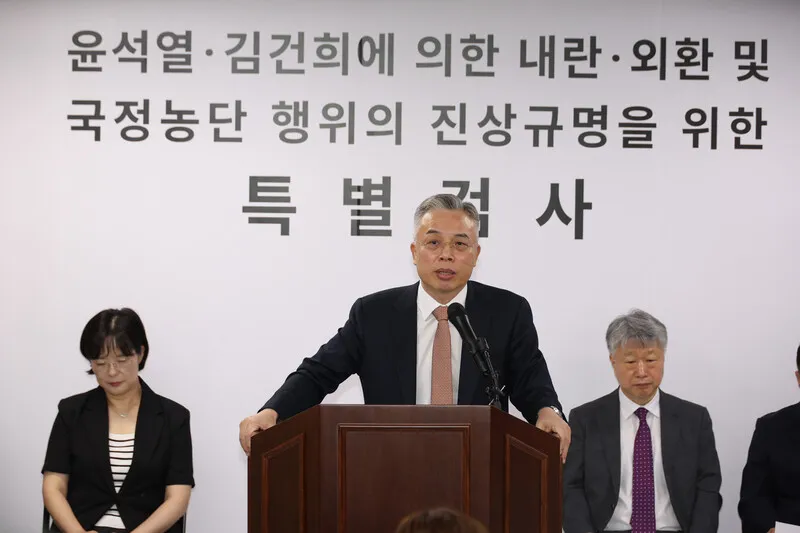
A Long Investigation, A Short Ending
South Korea’s third special prosecution team wrapped up its 180-day mandate on October 24, charging 58 people including former President Yoon Suk-yeol and his wife, Kim Keon-hee. The numbers sound weighty — 152 cases opened, 126 resolved, nine arrested, 51 released on bail. But strip away the ledger and the real story is what fell through the cracks: the cases that mattered most were quietly passed to the regular police apparatus, where they will likely dissolve into bureaucratic inertia.
The result has earned a familiar Korean phrase: 용두사미 — dragon’s head, snake’s tail. Impressive entrance, negligible finish.
The Wins That Prove the Rule
To be fair to the team, led by special prosecutor Kwon Chang-young, there were substantive findings. The investigation confirmed that Kim Keon-hee appears to have initiated a renovation contract for her official residence through a company called 21 Gram, and that People Power Party lawmaker Yoon Han-hong inspected the construction site — both charges now heading to court. In the Deutsche Motors case, the probe found that prosecutors from the Seoul Central District had shared written Q&A materials with Kim’s defense team before review, a finding that led to indictments against five current and former prosecutors.
These are real revelations. They carry real consequences. But they also represent the kind of cases that are politically manageable — scandals involving the first family’s personal dealings, not the structural abuses of power that defined Yoon’s final months in office.
The Cases That Vanished
The Ssangbongwol remittance investigation started with a bang. Early in the probe, the team characterized it as potentially the largest state capture scandal in South Korean history, involving allegations that funds were funneled to North Korea through the Ssangbongwol conglomerate with Presidential Office complicity. By the end, it was swept into the hands of the National Intelligence Service’s Major Crimes Investigation Unit after the Suwon district prosecutor’s office failed to secure two arrest warrants and apparently failed to transmit key records.
Similarly, the inquiry into whether former Transportation Minister Won Hee-yong altered the route of the Seoul-Yangpyeong Expressway for personal gain concluded after two summonses and no determinable outcome. The notebook of former intelligence agency commander No Sang-won, which contained notes that could implicate high-level plotting related to the December martial law declaration, also landed with the regular police — despite investigators personally visiting the locations noted in the notebook and identifying suspicious points.
In each instance, the pattern is the same: the special prosecution builds a case, hits an institutional wall, and defers.
Three Probes, One Mess
Perhaps the most damaging feature of this investigation is how it undermines the one before it. The 2024 treason special prosecution and this comprehensive probe reached opposite conclusions on two key figures: former intelligence deputy chief Hong Jang-won and former capital defense commander Jo Sung-hyun.
The treason team viewed Hong as a whistleblower who refused Yoon’s order to arrest lawmakers and helped end the martial law crisis. The comprehensive probe indicts him for establishing communication channels between intelligence officers and military counterintelligence. On Jo, the treason team declined to charge him because he relayed the order to deploy troops to the National Assembly but then blocked their advance at西江大桥. The comprehensive probe indicts him for the opposite reasoning — that he ordered troops to enter the assembly and extract people.
The consequence is not abstract. Both men will appear as witnesses for the prosecution in the comprehensive probe’s cases, but as defendants in the treason case. Defense attorneys for Yoon and other accused military and intelligence officials can now argue that these witnesses are unreliable, that their roles are contested even within the prosecutorial apparatus, and that the entire evidentiary framework is fractured.
The Arithmetic of Deferral
Fifty-eight indictments sounds decisive. But 46 cases involving 150 people were handed off to the major crimes unit. The special prosecution deployed 251 personnel and spent 9.8 billion won — roughly $6.7 million — and produced fewer resolved cases than a mid-tier district prosecutor’s office might clear in a year.
The team says it will restructure to minimum staffing necessary for prosecuting the cases it has brought and hire additional special investigative officers with legal expertise. In other words: the investigation is over, but the legal aftermath has barely begun, and the government has already scaled back its commitment to seeing it through.
What This Means for Korean Democracy
South Korea has a long tradition of special prosecutions as a political pressure valve — high-profile investigations launched during moments of democratic crisis, designed to deliver partial accountability while containing broader institutional damage. This one follows that template with precision. The first family is charged. The military chain of command is implicated. The treason case proceeds. But the cases that would implicate the Presidential Office’s structural role in the martial law declaration, the intelligence community’s operational planning, and the financial networks that may have enabled them — those are deferred.
Regional observers watching democratic backsliding in Asia will find this sequence recognizable. The mechanism is always the same: enough accountability to placate public anger, just enough deferral to protect the architecture of power. The question is whether Korean citizens, who have shown remarkable willingness to take to the streets in defense of democratic norms, will accept a result that is legally thorough but politically engineered.
The next twelve months will determine whether the 58 indictments are the beginning of accountability or merely its curtain call.