South Korea Is Subsidizing Semiconductors Through Electricity Pricing
Seoul is introducing regionally differentiated industrial electricity rates that will funnel the deepest discounts to Honam — where its newest semiconductor megasite is being built. It is industrial policy disguised as grid management.
The price of a chip is more than silicon
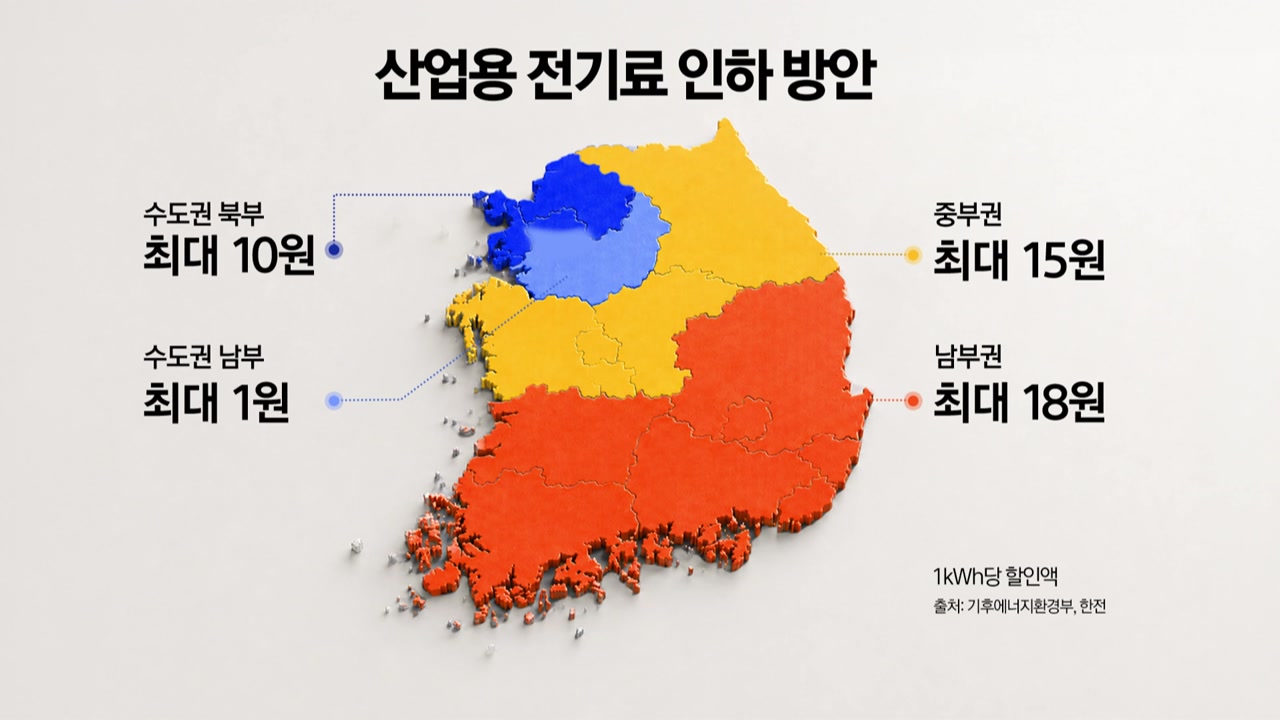
South Korea’s government recently unveiled a plan to differentiate industrial electricity rates by region — a move that sounds like bureaucratic grid management but functions as blunt industrial policy. The regions most distant from Seoul get the steepest discounts. The southern region, which includes Honam, tops the list at up to 18 won per kilowatt-hour. The northern Seoul area gets just 10 won. The southern Seoul area? A measly 1 won.
This is not an accident. The Honam semiconductor industrial complex, announced in June as one of President Lee Jae-myung’s three mega-projects, is the clear intended beneficiary. Kim Sung-hwan, the Ministry of Climate and Energy’s minister, said it plainly: good companies need to be distributed across regions, and electricity pricing should be cheaper the farther you are from the capital.
What the government calls regional balance, competitors will call subsidy.
Why electricity matters for chips
A modern semiconductor fab is one of the most electricity-intensive industrial facilities on Earth. A single advanced node fabrication plant can consume as much power as a small city. For companies like Samsung Electronics and SK Hynix, which are already building massive new complexes in Pyeongtaek and Ichon, electricity is not a line item — it is a strategic cost variable.
Huh Yun-ji, an economics professor at Dankook University, noted that Honam’s semiconductor complex alone is expected to so dramatically shift national electricity demand that the government will likely need to revise its 12th electricity demand forecast. That is not a minor adjustment. It signals a demand shock of unprecedented scale for a single industrial project.
When you can lower the cost of that demand through pricing policy, you are effectively lowering the break-even point for fab investment. No tender, no direct subsidy, no WTO dispute. Just a rate sheet.
How the math works
The country is divided into four regions. Industrial electricity discounts would apply as follows:
- Northern Seoul: up to 10 won/kWh reduction
- Southern Seoul: up to 1 won/kWh reduction
- Central region: up to 15 won/kWh reduction
- Southern region (Honam): up to 18 won/kWh reduction
The logic, according to Cheon Hyeon-min of Korea Electric Power Corporation’s tariff strategy division, is to signal to companies that they can shift demand toward regions with greater electricity generation capacity. The discount scales from four regions down to one, with the lowest rates applying to the areas furthest from the capital.
But the real signal is simpler: if you build a semiconductor fab in Honam, your power bill will be materially lower than if you build one near Seoul or in China. That gap is the policy.
Who pays, and who wins
The government says it will fund the discounts by reforming KEPCO’s wholesale electricity purchasing system — essentially tweaking how the utility buys power from generators. That is a redistribution within the energy sector, not new taxpayer money. The cost shifts from fab operators to ratepayers and generators, but the political math is clean: diffuse costs, concentrated benefits.
Samsung and SK Hynix win immediately. Both have eyes on Honam. The region offers what Seoul’s crowded industrial zones cannot: abundant power, abundant water, stable land at lower cost. The electricity pricing layer is the cherry on top.
Chinese chipmakers lose by comparison. SMIC and Hua Hong, already squeezed by U.S. export controls, cannot replicate this kind of structural cost advantage. Even with China’s state-directed energy subsidies, no Chinese fab operator gets an 18-won/kWh regional discount layered on top of greenfield land and water access in a government-designated megasite.
The gap is not about innovation. It is about overhead.
What happens next
The government plans to finalize the system this year after a comment period and design refinements. That timeline is aggressive but not unexpected — the Honam complex needs anchoring investment soon, and developers will want certainty before committing capital.
Three outcomes are likely:
First, Samsung and SK Hynix will accelerate Honam site preparations. The pricing signal reduces the payback period for a facility that may take five to seven years to reach full production.
Second, the electricity pricing reform will face pushback from generators and consumers in non-discounted regions. Cheaper power for some means higher costs for others, and KEPCO’s wholesale reform will determine how that pain is distributed.
Third, China will respond. Beijing has spent years building energy subsidies for its semiconductor sector. It will not accept a structural cost gap without countermeasures — likely in the form of localized energy pricing reforms or targeted fab subsidies in western provinces where power is already cheap.
The bigger picture
South Korea’s approach is distinctive because it avoids the appearance of industrial policy while delivering its effects. There is no announcement of a semiconductor subsidy. There is no ministerial press conference about corporate support. There is only a tariff adjustment that happens to benefit the companies the government wants to win.
That is the advantage of embedding industrial policy in utility regulation. It is harder to challenge at the WTO. It is harder for competitors to pinpoint. And it is harder for domestic actors to complain about, since the mechanism is framed as regional development rather than corporate favoritism.
The Honam semiconductor complex will consume enormous power. The new electricity pricing system ensures that power will not break the economics. In the race to dominate advanced chip manufacturing, that may be the most important detail neither Beijing nor Washington is talking about.